
Navigating Vietnam’s currency can be a mind-boggling experience with all those zeros. Don't let money confusion ruin your vacation! Discover the definitive guide to the Vietnamese Dong (VND), current exchange rates, and the smartest ways to manage your wallet on the go.
Quick note: Exchange rates fluctuate constantly, so the rates mentioned in this guide might slightly differ from what you see today. To make things easy, we’ve embedded a real-time currency converter right here so you can check and estimate your budget instantly!
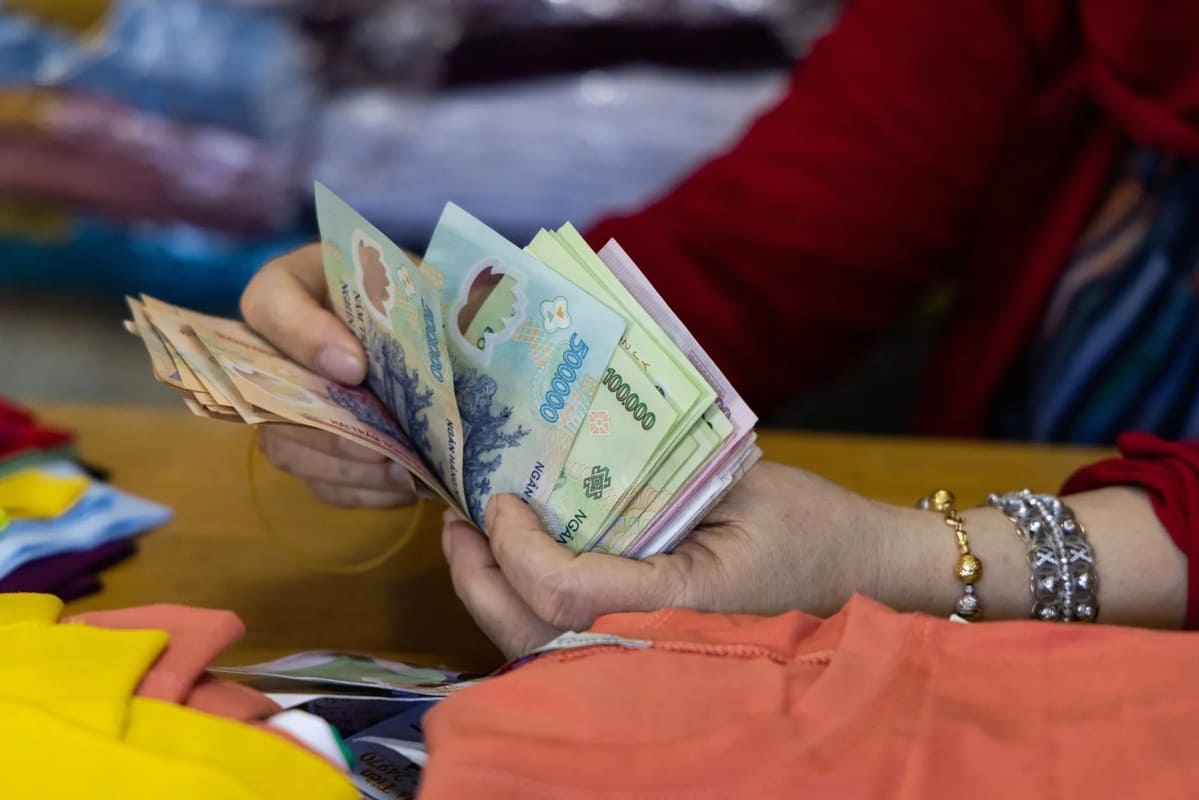
The official currency of Vietnam is the Vietnamese Dong (VND), issued by the State Bank of Vietnam. Its symbol is ₫. Dong banknotes are available in denominations ranging from 1,000 VND ($0.04) to 500,000 VND ($19.68), with notes from 10,000 up to 500,000 being the most common for daily transactions.
Vietnam operates entirely on paper and polymer money. The government officially suspended the issuance of coins in 2011 due to low usability and high production costs. You will never receive coin change from a Circle K cashier or a street food vendor in Ho Chi Minh City's District 1.
Because the numerical values are so large, locals routinely drop the "thousand" during quick exchanges. If a cafe owner asks for "fifty" for an iced brown coffee (Ca Phe Sua Da), hand over 50,000 VND ($1.96). Written menus at modern cafes and expat bars frequently abbreviate this pricing format as 50k. Memorizing this shorthand prevents serious confusion during your first few days on the ground.
.jpg)
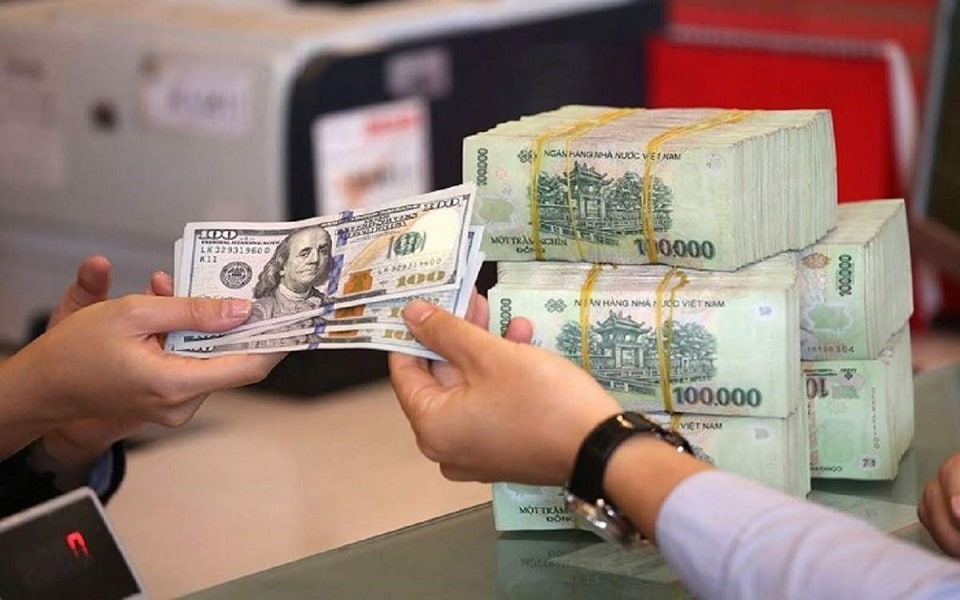
As of this year, $100 US dollars equals approximately 2,540,000 Vietnamese Dong. This exchange rate fluctuates daily based on market conditions, and you will see distinct variations depending on where you execute the trade. Handing over a crisp, uncreased 2013-series $100 bill with the blue security ribbon at a licensed jewelry shop on Ha Trung Street in Hanoi yields a rate almost identical to the mid-market Google standard. These gold shops run high-volume, low-margin currency operations that easily beat airport kiosks.
Bring pristine money. If you present torn, folded, or older USD bills from the 1990s, money changers in major hubs like Hanoi or Da Nang will either reject the currency outright or slash the exchange rate by up to 5 percent. Smaller US denominations, like $10 or $20 notes, automatically command lower exchange rates than $100 bills. Pack high denominations inside a hard-sided passport wallet to keep the bills perfectly flat during your flight.
20,000 Vietnamese Dong ($0.78) purchases a standard small item, local snack, or quick service. Common examples include a 500ml bottle of Aquafina water at a grocery store, a fresh coconut from a bicycle vendor in the Mekong Delta, a basic street-side serving of Banh Mi with egg, or a short Grab bike ride down a single long avenue. This denomination functions as the baseline unit of trade for inexpensive daily goods across the country.
Keep a stack of 20,000 VND notes easily accessible in your front pocket. This note serves as the default tip for a hotel bellhop carrying your suitcase, the standard entry fee for public restrooms at rest stops between Hue and Hoi An, and the flat parking fee when leaving your rented Honda scooter outside a night market. Avoid breaking large bills like a 500,000 VND note to pay for these micro-transactions, as vendors often lack sufficient change early in the morning.
.jpg)
$1000 US dollars (about 25.4 million VND) is comfortably sufficient for two weeks in Vietnam for budget to mid-range travelers. Breaking this down yields approximately $71 per day. This allowance easily covers a $25 private room in a District 3 homestay, three daily meals of regional specialties like Bun Cha or Pho costing 50,000 VND ($1.96) each, two short Grab taxi rides at 40,000 VND ($1.57) each, and entry tickets to historical sites like the War Remnants Museum for 40,000 VND ($1.57).
This $1000 budget leaves adequate headroom for regional transport and organized excursions. You can purchase a sleeper train ticket on Vietnam Railways from Hanoi to Hue for roughly 850,000 VND ($33.46) or book a shared minibus to Sapa for 400,000 VND ($15.74). Travelers strictly drinking 20,000 VND ($0.78) Bia Hoi draft beer on Ta Hien street rather than $8 craft cocktails will find their daily expenses fall well below the $71 threshold.
.jpg)
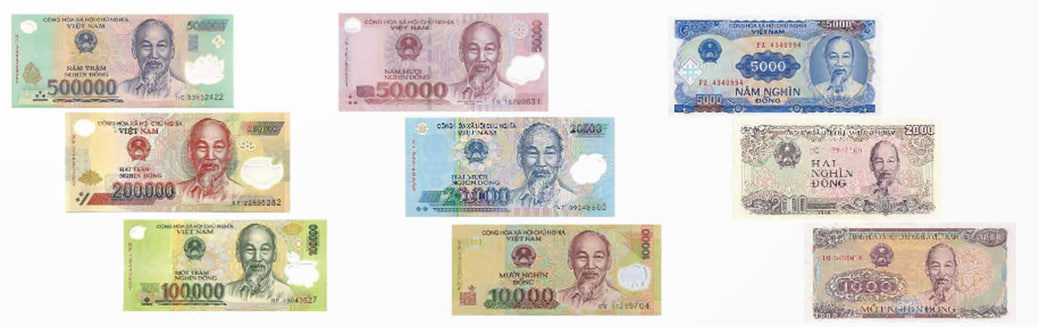
Common Vietnamese Dong banknotes include 10,000 ($0.39), 20,000 ($0.78), 50,000 ($1.96), 100,000 ($3.93), 200,000 ($7.87), and 500,000 VND ($19.68). Smaller denominations like 1,000 ($0.04), 2,000 ($0.07), and 5,000 VND ($0.19) circulate heavily for minor purchases and exact change. Since 2003, the State Bank of Vietnam has printed all notes above 10,000 VND on durable, waterproof polymer rather than cotton paper. This synthetic material easily withstands the heavy tropical humidity, monsoon downpours, and intense daily handling of street commerce.
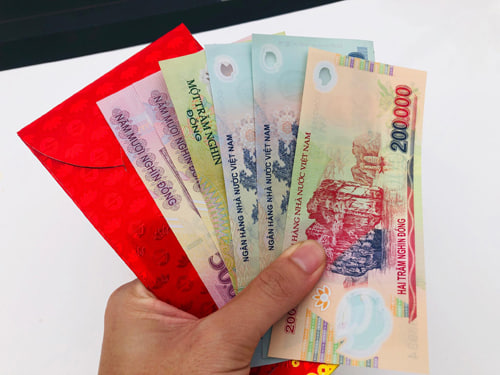
Cotton notes remain in circulation strictly for the 1,000, 2,000, and 5,000 denominations. Expect these low-value cotton bills to reach you heavily creased, faded, or taped together. Every polymer note features a portrait of Ho Chi Minh on the obverse side, meaning you must differentiate them primarily by their size, color scheme, and the distinct national landmarks printed on the reverse side. Polymer notes occasionally stick together when damp; rub them between your thumb and index finger to avoid accidentally handing a vendor two 100,000 VND notes instead of one.
| Banknote Value | USD Equivalent | Color | Featured Landmark |
|---|---|---|---|
| 10,000₫ | $0.39 | Yellow-green | Bach Ho oil field |
| 20,000₫ | $0.78 | Light blue | Covered Japanese Bridge (Hoi An) |
| 50,000₫ | $1.96 | Pink-purple | Ngoc Son Temple (Hanoi) |
| 100,000₫ | $3.93 | Yellow-green | Temple of Literature (Hanoi) |
| 200,000₫ | $7.87 | Orange-red | Ha Long Bay |
| 500,000₫ | $19.68 | Dark blue | Ho Chi Minh's birthplace (Kim Lien) |
.jpg)
📌 Insider note:
The 20,000 VND ($0.78) note and the 500,000 VND ($19.68) note are nearly identical shades of blue and share a similar size. Separate these bills into completely different compartments of your wallet before a night out in Bui Vien or the Old Quarter. Opportunistic taxi drivers will happily accept a 500,000 note in the dark when the meter only reads 20,000.
Vietnam operates a sovereign economy tied exclusively to the Vietnamese Dong. Two decades ago, hyperinflation made the US dollar a preferred secondary currency, but strict government regulations now require all local businesses to list their prices in VND. Attempting to force a street transaction with foreign currency places the burden of exchange on the local vendor, guaranteeing you a heavily penalized conversion rate.
.jpg)
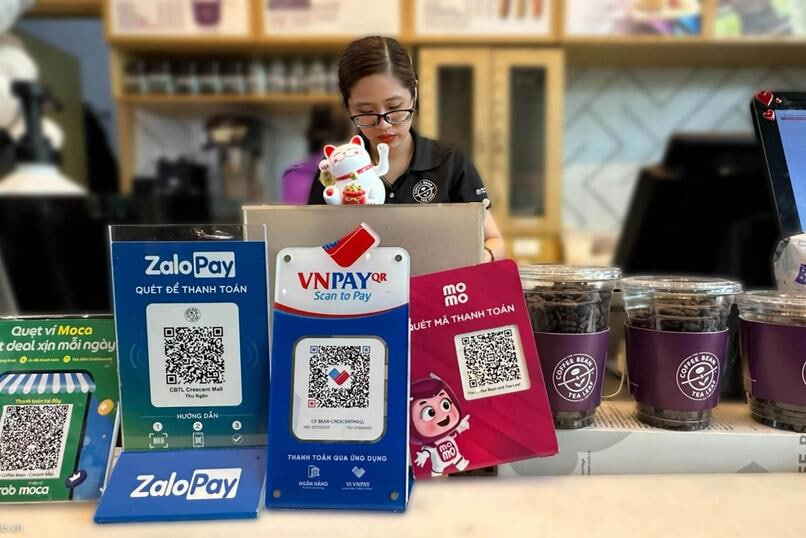
Cash remains king for neighborhood transactions, but digital payments dominate the modern sectors of Hanoi, Ho Chi Minh City, and Da Nang. Supermarkets like Lotte Mart and convenience chains accept international contactless payments via Apple Pay and Google Pay without friction. However, relying entirely on a plastic card leaves you stranded when trying to buy a 30,000 VND ($1.18) bowl of noodles from a pushcart vendor who only accepts local Momo QR codes.
| Business Type | Card Acceptance | Surcharges | Cash Needed |
|---|---|---|---|
| High-end Hotels (Sofitel, Park Hyatt) | Universal (Visa/Mastercard) | Usually absorbed by hotel | Zero |
| Mid-range Restaurants | Very common | 2% to 3% point-of-sale fee often added | For server tips only |
| Convenience Stores (Circle K, WinMart) | Universal for small amounts | None | Zero |
| Street Food Carts (Banh Mi, Pho) | Zero | N/A | 100% cash required |
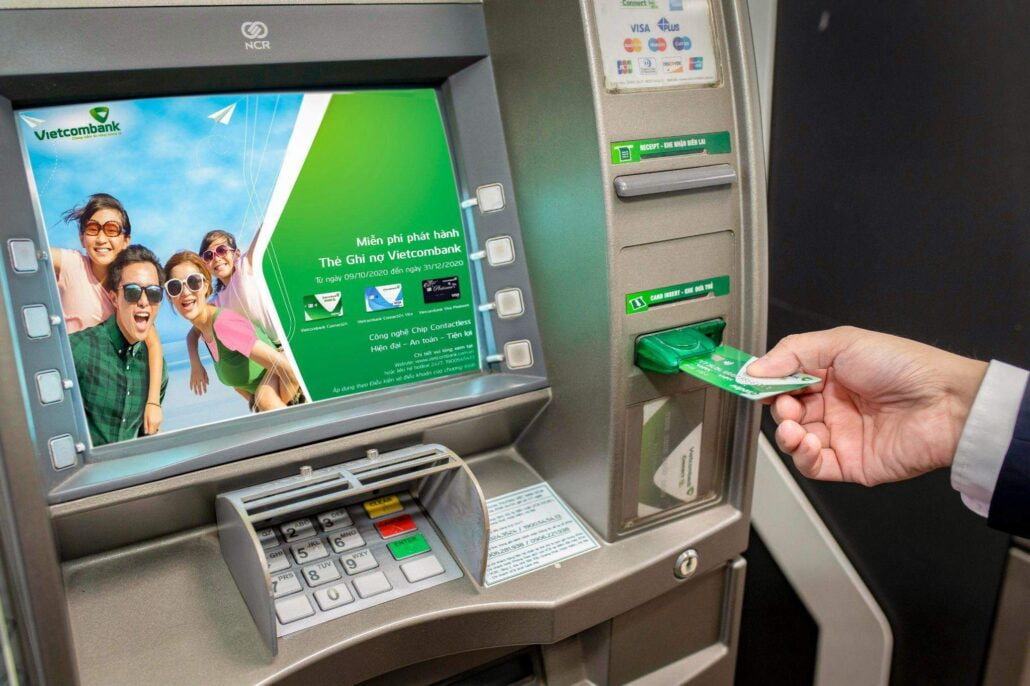
Managing your money in Vietnam requires balancing security, convenience, and fees. Dozens of domestic and international banks operate thousands of ATMs across the country, but their individual withdrawal policies drastically affect your travel budget. Every ATM charges a flat local operator fee, and withdrawing cash multiple times per week adds up quickly if your home bank does not refund international terminal charges.
| Exchange Method | Exchange Rate | Fees | Convenience | Security |
|---|---|---|---|---|
| Local ATMs (Agribank, TPBank) | Set by your home bank network (Visa/MC) | 30,000-100,000 VND ($1.18-$3.93) | Very High (available 24/7 on most streets) | Moderate (beware of card skimmers) |
| Gold Shops (Ha Trung st.) | Premium rate, near exact mid-market | No explicit fee, margin built into rate | High (instant cash swap, zero paperwork) | Moderate (verify and count notes carefully) |
| Major Banks (Vietcombank) | Official mid-market rate | Processing fee of 1-2% often applied | Poor (requires passport, takes 30+ minutes) | High (safest environment for large sums) |
.jpg)
A solo traveler can realistically budget 1,000,000 to 1,500,000 VND ($39.37 to $59.05) per day. This amount fully covers a clean $20 hotel room, local transit, and daily meals like a 55,000 VND ($2.16) bowl of Pho. Luxury travelers should allocate upwards of 3,000,000 VND ($118.11).
A standard Grab car ride operating between Hoan Kiem Lake and the Old Quarter usually costs between 30,000 and 50,000 VND ($1.18 to $1.96). Fares fluctuate depending on traffic density, but linking your card to the app guarantees a fixed, upfront price without street haggling.
Local ATM fees range from 30,000 to 100,000 VND ($1.18 to $3.93) per transaction, plus any international fees levied by your home bank. Withdrawal limits typically cap at 3,000,000 VND ($118.11) per transaction. Seek out Agribank or TPBank machines to minimize these local operator surcharges.
Calculate the 25,400 VND to $1 exchange rate independently before handing over your money. Ignore individuals approaching you with rates drastically exceeding official bank figures. Count your notes sequentially, verifying you received the correct polymer denominations and zero taped or severely damaged cotton notes.
ảnh CTA
Best visited during dry season (November to April) for ideal weather.
Book accommodations in advance during peak travel season.
Carry local currency (Vietnamese Dong) for markets and small vendors.
Respect local customs and dress modestly when visiting temples.