Overview
Tour overview
This Vietnam 2 week tour runs the length of the country in 13 days, Hanoi to Ho Chi Minh City, with both domestic flights in the price. The first week is the north: a guided day in the capital that ends with a coffee workshop, two treks from Sapa through Hmong, Giay and Red Dao villages, Ninh Binh by bicycle, rowed boat and the Mua Cave steps, and a night in a cabin on Ha Long Bay.
A flight then brings you to Hoi An for two nights, with a free day for the tailors, the lanterns and the beach. The south closes the trip: the Cu Chi tunnels, a day on the Mekong near My Tho, and the airport transfer on the last morning. Groups are 1 to 20 people, and an English-speaking guide leads the sightseeing days.
Itinerary
Day by day itinerary
Day 1Arrive in Hanoi, a free evening and a street food walk as an option
Your driver waits at Noi Bai International Airport and brings you into the city, about 45 minutes to the centre when the roads are clear. The rest of the day is unplanned, so you can settle in, sleep off the flight or head straight out into the Old Quarter, whose narrow streets still carry the names of the trades once sold in them.
For the evening there is a guided street food walk (optional, extra cost): six or seven dishes tasted on foot, pho, banh mi and bun cha among them, a cup of Vietnamese coffee, and a stop at the train street, where the rails pass within a metre of the house fronts. It starts in the early evening and takes two to three hours.
Day 2Hanoi guided day: the Ho Chi Minh complex, One Pillar Pagoda, the Ethnology Museum and a coffee workshop
The guided morning begins at the Ho Chi Minh complex, where the mausoleum holds the embalmed body of the man who declared Vietnam independent in 1945; the line moves quickly, and the gardens of the presidential palace are in the same grounds. A few steps away is the One Pillar Pagoda, a small wooden shrine on a single stone column, dedicated to the goddess of mercy. The Museum of Ethnology follows, with rooms on the country's 54 ethnic groups and full-size houses in its garden. On Mondays, when it is closed, the Women's Museum takes its place.
The afternoon is a two-hour coffee workshop. After a short talk on how coffee came to Vietnam, you brew five drinks with the baristas: egg coffee, coconut coffee, the salted coffee of Hue, a classic brown with condensed milk and a pour-over, and you take a recipe book home. A massage at a spa in the city is the evening option (optional, extra cost).
Day 3Hanoi to Sapa by road and a free afternoon in the hill town
You leave the city on the expressway that follows the Red River north-west to Lao Cai, then climb the switchbacks into the Hoang Lien Son range to Sapa, a hill station at about 1,500 metres that the French laid out in the early twentieth century. Allow five to six hours with stops.
Nothing is scheduled once you arrive, and that suits the place: the air is cooler, the cloud drifts through the streets, and the market and the stone church by the central square are a short walk from most of the town. Women from the Hmong and Red Dao villages in the valley come up to sell indigo cloth and embroidery. Our guides suggest an early night, as tomorrow is the longest walk of the tour.
Day 4Sapa trek of 9 km: Y Linh Ho, the Muong Hoa valley, Lao Chai and Ta Van
This is the main walking day. A short drive takes you to Y Linh Ho, where the trail leaves the road and follows the Muong Hoa stream along the valley floor, with rice terraces stepped up both flanks and Fansipan, the highest mountain in Vietnam, somewhere in the cloud above. The route is about nine kilometres and takes roughly three and a half hours at an easy pace.
You pass through Lao Chai, a Black Hmong village where the women wear hemp dyed almost black with indigo, and finish at Ta Van, home to the Giay people, whose houses stand closer to the river. The paths are earth and stone and get slippery after rain, so shoes with grip matter more than fitness. A car waits at the Ta Van bridge to bring you back up to town.
Day 5Giang Ta Chai trek through bamboo forest, then the long road back to Hanoi
A second, shorter walk fills the morning: about four kilometres and two hours from the trailhead, first across rice paddies and then through a stretch of bamboo forest to Giang Ta Chai, a Red Dao village where the women wear red headscarves and heavy silver. There is time for photographs in the village and a rest before you meet the car at the Giang Ta Chai bridge for the drive back up to Sapa.
From there you start the long run south to Hanoi, around six hours including two stops, so the mountains fade into the delta flatlands by the afternoon and you reach the capital in the evening with nothing else on the programme.
Day 6Ninh Binh day trip: Hoa Lu by bicycle, Tam Coc or Trang An by boat and the Mua Cave steps
A full day south of Hanoi in the limestone country of Ninh Binh. A shuttle bus leaves the city for the two-hour run to Hoa Lu, the seat of Vietnam's kings in the tenth century, and you cover the last stretch on a bicycle, a flat twenty-minute ride between the paddies (or by bus, if you tell the guide beforehand). Inside the old citadel you walk to the temples of King Dinh and King Le, the first rulers of an independent Vietnam, and a second half-hour ride takes you through the lanes of a farming village.
In the afternoon you choose a boat: a rowed sampan through the rice fields and low caves of Tam Coc, or the longer trip through the tunnel caves of Trang An, a UNESCO World Heritage landscape. The day ends with the climb of around 500 steps to the top of Mua Cave for the view down the Tam Coc valley, then the bus back to Hanoi.
Day 7Hanoi to Ha Long Bay: Surprise Cave, Luon Cave by kayak or bamboo boat, Titop Island and a night on board
A shuttle bus collects you in Hanoi for the drive east to the harbour, where you board Cozy Bay Cruise or a boat of the same class and head out among the islands; there are close to 2,000 of them, which is why the bay is a UNESCO World Heritage site. The afternoon stops are Surprise Cave, a large chamber lit to show its stalactites and stalagmites, and Luon Cave, a low arch you pass through either by kayak or in a rowed bamboo boat into the lagoon on the far side.
On Titop Island there are steps up to a summit viewpoint, or you can stay on the small beach and swim when the season allows. Back on board the crew lays on a sunset gathering on the top deck with wine, tea, cakes and fruit, and the boat anchors for the night in a sheltered corner of the bay.
Day 8Morning on the bay, back to Hanoi airport and a flight south to Hoi An
You wake on the water and the boat cruises back towards the harbour through the morning light, with time for a coffee on deck before the islands give way to the shoreline. From the pier the shuttle returns you towards Hanoi and on to Noi Bai, where you board the Da Nang flight, roughly 80 minutes gate to gate. A car then runs the half hour south along the coast into Hoi An.
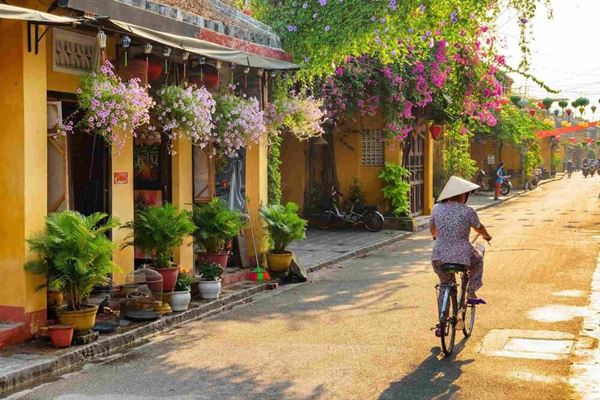
The old town, a trading port from the sixteenth to the nineteenth century and a UNESCO World Heritage site, is closed to cars in the evening, and the lanterns come on along the Thu Bon river after dark. It is a short walk from most central addresses, so you can wander down for a first look before you sleep.
Day 9Free day in Hoi An: bicycles, tailors, lanterns and the beach, then an evening meal in the old town
No fixed programme, so the day is yours in Hoi An. The old town is small enough to cover on foot or by bicycle (hire optional, extra cost), with the merchant houses, the assembly halls and the riverside market packed into a few streets. Hoi An's tailors can cut a suit, a dress or a pair of shoes to measure and have it ready the next day (optional, extra cost), a lantern-making workshop teaches the silk-and-bamboo craft the town is known for (optional, extra cost), and the beach is a short ride away for a swim.
In the evening a car takes you to Ngon Pho Hoi, a restaurant in a traditional building on La Hoi street, for a meal of central Vietnamese dishes.
Day 10Fly from Da Nang to Ho Chi Minh City and a first evening in Saigon
A car runs you north again to the airport at Da Nang for the flight south, around an hour and a half to Tan Son Nhat. On arrival your driver brings you into the centre of Ho Chi Minh City, which most people here still call Saigon, and the rest of the day is free.
District 1 holds the main sights within walking distance of each other: the red-brick basilica, the central post office from the French period, the Opera House and Ben Thanh market. The pavement cafes and the beer corners fill up as the heat drops in the evening, and it is an easy city to walk around at night.
Day 11Cu Chi tunnels: the underground network of the war, and a free afternoon
A van or bus collects you from the centre for the ride of about an hour and a half out to Cu Chi, where the Viet Cong dug more than 200 kilometres of tunnels during the war with the United States. A short film explains how the network was built and how people lived in it. You then go underground into the surviving sections: living quarters, kitchens with smoke vents hidden metres away, meeting rooms, and the trapdoors and traps around them. Some tunnels have been widened for visitors, but they are still low and warm, and you can skip any section.
Tea and boiled cassava, the staple of the fighters, are served before the drive back. There is a shooting range on the site for anyone who wants to try it (optional, extra cost). The afternoon in Saigon is free.
Day 12Mekong Delta day trip from My Tho: Vinh Trang Pagoda, island orchards and a rowed sampan
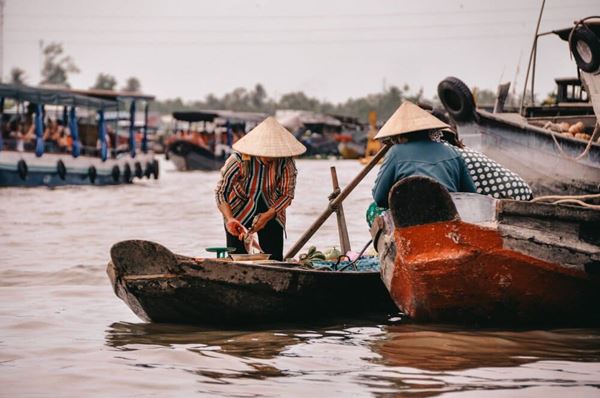
A bus takes you south-west for about two hours to My Tho on the northern arm of the Mekong, which reaches the sea here after more than 4,000 kilometres from the Tibetan plateau. The first stop is Vinh Trang Pagoda, a nineteenth-century temple with giant Buddha statues in its gardens. You then board a motor boat and cruise past the four river islands, each named after a sacred animal: dragon, unicorn, phoenix and tortoise.
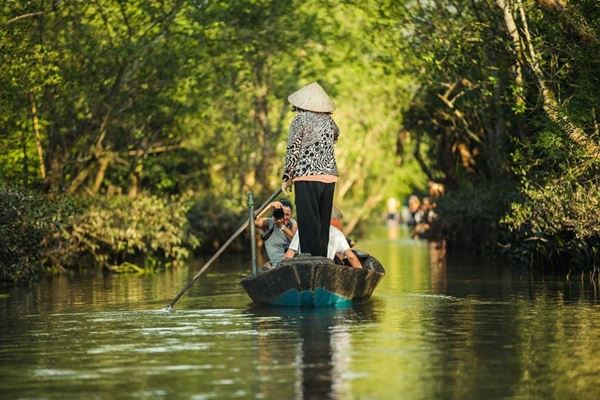
Ashore on Unicorn Island you follow the lanes between the orchards, taste the fruit in season, see the hives at a honey farm and watch coconut candy being boiled, cut and wrapped by hand. The quietest part is a hand-rowed sampan along the narrow Thoi Son canal under the water palms. Later you choose between a bike ride around Tan Thach village and a rest in a hammock before the bus returns to Ho Chi Minh City.
Day 13Last morning in Ho Chi Minh City and the transfer to Tan Son Nhat
The tour ends with the transfer to Tan Son Nhat International Airport, timed to your departure. If you fly in the afternoon or evening, the morning is free for a last walk around the centre, an iced coffee with condensed milk at a pavement cafe or some final shopping for gifts.
Tell us your flight time when you book and we set the pickup to match. Extra nights in the city, or a few days at the coast, can be added at the end of the tour, and we can also arrange a later pickup if your flight leaves at night.
Hotels
Where you sleep
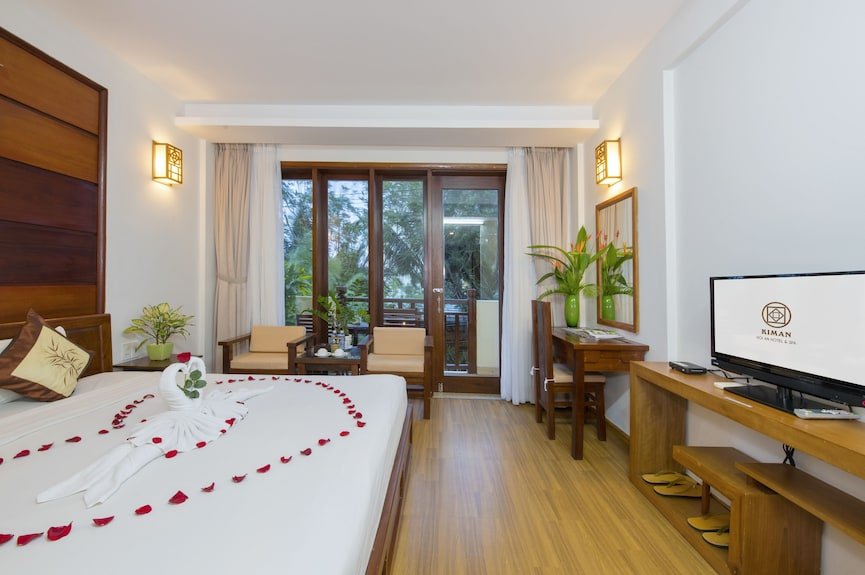
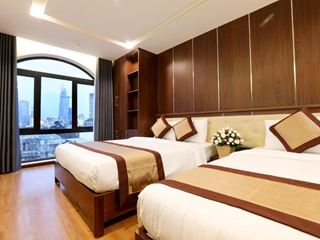
Stays may change to similar ones depending on availability for your dates. We will let you know in advance. You can also upgrade to 4-star or 5-star hotels.
Transport
Transport on this tour


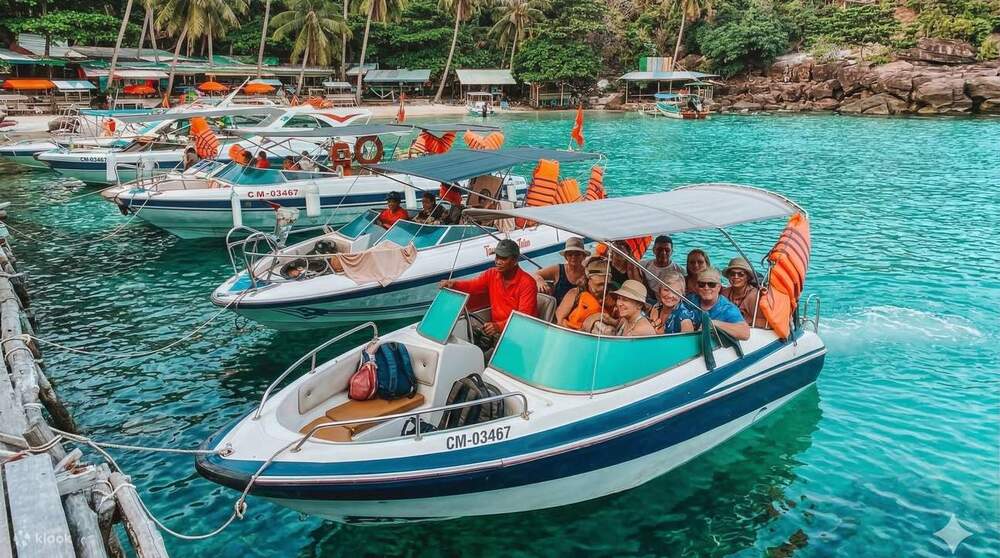
Vehicle type depends on the size of your group.
Inclusions
What is included
- 12 nights in 3- to 4-star hotels, twin or double room (one night in a cabin on a Ha Long Bay cruise boat)
- Meals in the programme
- Domestic flights: Hanoi to Da Nang, Da Nang to Ho Chi Minh City
- Airport pickup, drop-off and all road transfers in the programme
- English-speaking guide on the sightseeing days
- Entrance tickets, boat trips, the coffee workshop and activities in the programme
- International flights
- Vietnam visa or e-visa fees
- Travel insurance
- Meals and drinks not shown in the itinerary
- Optional activities, such as the Hanoi street food walk, the spa massage, bicycle hire, the tailors and the lantern workshop in Hoi An, and the Cu Chi shooting range
- Single room supplement
- Tips and personal spending
This tour is also listed on TourRadar. If you would rather book through them, or you want to read what other travellers wrote, the listing is public.
View on TourRadarGood to know
Good to know
Before you go
- The tour starts at Noi Bai Airport in Hanoi on day 1 and ends at Tan Son Nhat Airport in Ho Chi Minh City on day 13, so book your international flights into Hanoi and out of Ho Chi Minh City.
- Keep your passport to hand on days 8 and 10: the domestic flights need it at check-in, and our team sends you the flight times with your final documents.
- Free time falls on the afternoon of day 3 in Sapa, the whole of day 9 in Hoi An, the afternoon of day 11 in Saigon and the last morning. Optional activities can be arranged through your guide.
- Pack shoes with grip for the two Sapa treks and the Mua Cave steps, a warm layer for Sapa (cool all year, cold from December to February), swimwear for the bay and Hoi An, long trousers and a top that covers the shoulders for the mausoleum and the pagodas, and insect repellent for the Mekong.
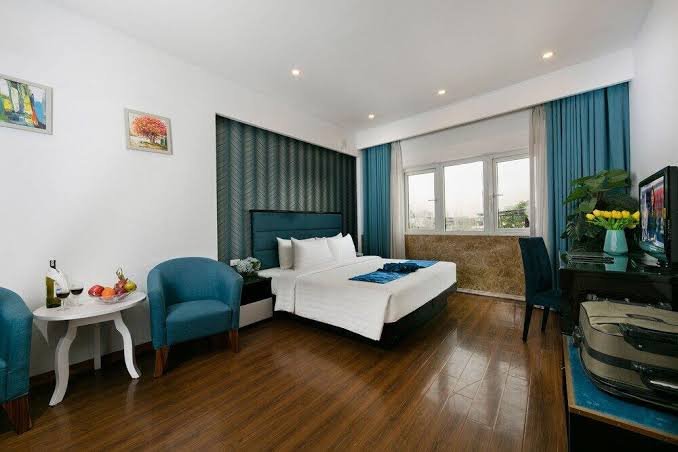
- Rooms are at the 3- to 4-star hotels named on this page or at a hotel of the same standard, with one night in a cabin on Cozy Bay Cruise or a boat of the same class. Higher hotel classes are available on request.
- Your passport must be valid for at least six months after the tour ends.
Cancellation policy
If you cancel, we refund what you have paid minus a cancellation fee. The fee depends on how long before your arrival date you cancel:
- More than 60 days before: 10%
- 30 to 59 days before: 20%
- 15 to 29 days before: 40%
- 8 to 14 days before: 80%
- 7 days or less before, or no-show: 100%
The two domestic flight tickets are booked in your name once the tour is confirmed, and any airline charge for cancelling them is added to the fee above.
FAQ
Frequently asked questions
Is a Vietnam 2 week tour of 13 days enough to see the whole country?
Yes, for a first visit it covers the main stops in all three regions: in the north Hanoi, Sapa, Ninh Binh and Ha Long Bay; in the centre Hoi An; in the south Ho Chi Minh City, Cu Chi and the Mekong. Two flights replace the longest road legs, so no day disappears into a drive, and there is free time in Sapa, Hoi An and Saigon.
Which airports should my international flights use?
Hanoi in, Ho Chi Minh City out. Day 1 begins with your pickup at Noi Bai, and on day 13 your driver drops you at Tan Son Nhat, so an open-jaw international ticket saves you a flight back to the start. Extra nights at either end are easy to add, and we can hold your luggage on the last day.
Do I pay extra for the two domestic flights?
No. Both flights, Hanoi to Da Nang on day 8 and the onward hop to Ho Chi Minh City on day 10, are covered, economy class, with the airport transfers at each end. The tickets go in your name after confirmation and the times reach you with your final documents, so you only need your passport at check-in.
Do we travel as a group or privately?
As a group of up to 20, and the tour runs even if you are the only booking. On the day trips to Ninh Binh, Ha Long Bay, Cu Chi and the Mekong you may share the bus and the guide with other guests. If you would rather have every day private, ask us for a quote when you enquire.
How fit do I need to be for the Sapa treks?
Moderately. Day 4 is about nine kilometres in three and a half hours, day 5 about four kilometres in two hours, both on earth paths with descents that turn slippery after rain. Day 6 adds the 500 steps of Mua Cave. Anyone who walks regularly manages them with shoes that grip; a local guide sets the pace and there are plenty of stops.
What is free time on this tour, and what costs extra?
The afternoon of day 3 in Sapa, all of day 9 in Hoi An, the afternoon of day 11 in Saigon and the last morning are yours. Extras you pay locally include the Hanoi street food walk, the spa massage, bicycle hire, the tailors and the lantern workshop in Hoi An, the Cu Chi shooting range, drinks, meals not in the itinerary and tips.
More tours