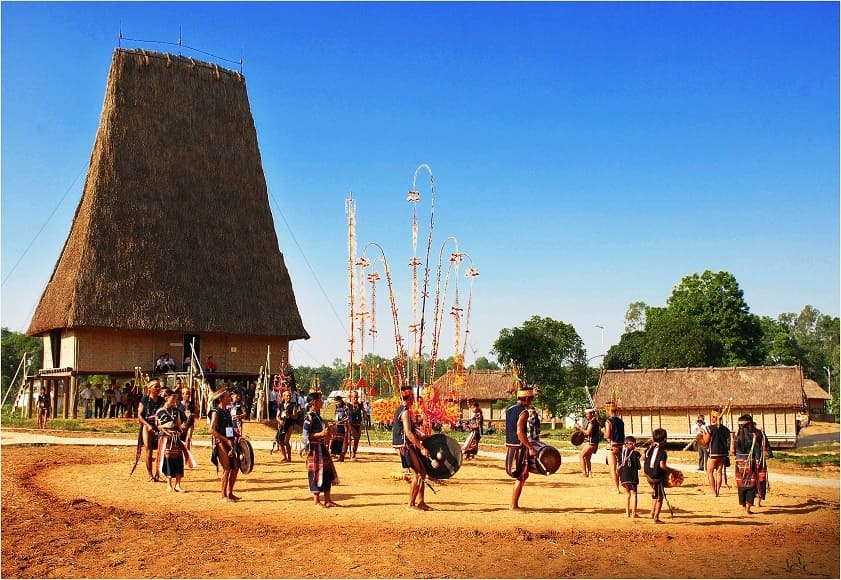

The Central Highlands (Tay Nguyen) is Vietnam's coffee-growing, waterfall-chasing, ethnic-village-visiting interior, spread across five provinces between the coast and the Cambodian border. Most travelers skip it entirely for the beach towns east, which means fewer crowds, lower prices, and a side of Vietnam that feels unpolished in the best way. Plan 5 to 7 days to hit the highlights, or 3 days if you only want Dalat.
The Central Highlands offers what the coastal tourist trail does not: UNESCO-recognized gong culture, 40+ ethnic minority groups living in traditional longhouses, and Vietnam's entire coffee belt. Dalat gets the lion's share of visitors, but the real draw is everything north of it. Kon Tum lets you walk into Bahnar and Jarai villages within minutes of the town center. Buon Ma Thuot is the country's coffee capital, surrounded by waterfalls and M'nong communities that still practice centuries-old traditions. And Mang Den, tucked in the pine forests of Kon Tum province, is the kind of cool-climate retreat Dalat was 30 years ago, before the concrete arrived.
.jpg)
The region's Gong Cultural Space was recognized by UNESCO as an Intangible Cultural Heritage in 2005. It spans 17 ethno-linguistic communities across the highlands. The gongs are not performance props. For the Ede, Jarai, Bahnar, and other groups here, every gong houses a spirit, and the instruments accompany every major life event from harvest ceremonies to funerals.
The most accessible and most visited highland city, sitting at 1,500m with year-round temperatures of 15 to 24°C. Dalat is a former French hill station packed with pine forests, lakes, waterfalls, and a booming cafe scene. The city works as a 2-3 day stop and a launching point for deeper highland exploration. Ride the cog railway to Trai Mat village (7km east), visit Datanla or Elephant Falls, and eat your way through the Dalat night market on the streets around Nguyen Thi Minh Khai. Skip Crazy House unless you are specifically into its architecture. The queues rarely justify the experience.
.jpg)
Vietnam produces roughly 20% of the world's coffee, and Buon Ma Thuot is the center of it. The World Coffee Museum (opened 2018) on Nguyen Dinh Chieu Street is a solid introduction. Outside the city, Dray Nur and Dray Sap waterfalls sit side by side on the Serepok River, each about 30m high. Lak Lake, 50km south, is one of Vietnam's largest natural freshwater lakes and home to M'nong villages where you can paddle a dugout canoe at dawn. Yok Don National Park, Vietnam's largest by area, borders the Cambodian frontier and is best explored with a park-assigned guide.
.jpg)
The most relaxed provincial capital in the highlands and the best base for ethnic village visits without a government permit fuss. The Kon Tum Wooden Church (built 1935) blends French Gothic design with local hardwood. Walk across the Dak Bla River to visit Kon K'lor, a towering Bahnar communal house (rong) that is one of the largest in the region. Eight different minority groups live within day-trip range. Kon Tum is also the closest town to Chu Mom Ray National Park, a dry-forest reserve on the Laos-Cambodia border.
.jpg)
A small mountain town in Kon Plong district at 1,200m elevation, still largely off the group-tour map. Pine forests, a handful of waterfalls (Pa Sy, Dak Ke), and cool mornings with mist rolling through valleys. Accommodation is limited but improving. Come here for quiet, not nightlife.
.jpg)
Pleiku itself is not a tourist destination, but the surroundings are. Bien Ho (Sea Lake) is a volcanic crater lake fringed with pine trees, 7km north of the city. The Jarai and Bahnar villages around Pleiku are less visited than those near Kon Tum, though access sometimes requires a local guide due to permit requirements. Chu Dang Ya, a dormant volcano surrounded by wildflower fields, is worth the detour from October to December when the wild sunflowers bloom.
.jpg)
Highland food is simple, smoky, and rice-heavy, shaped by ethnic minority cooking traditions that rely on grilling, bamboo, and foraged ingredients. Pho bo Buon Ma Thuot is spicier and more peppery than Hanoi's version. Com lam (glutinous rice cooked inside bamboo tubes over charcoal) shows up across the region and is best eaten with grilled chicken rubbed in green chili salt. Bo mot nang (sun-dried beef) is a Dak Lak specialty, chewy and salty, served with rice wine. In Dalat, the night market stalls on Nguyen Thi Minh Khai sell banh trang nuong (Vietnamese pizza, grilled rice paper with egg and toppings) for 15,000 to 25,000 VND (~0.6 to 1 USD). And coffee: skip the Instagram-ready cafes charging 80,000+ VND per cup. A proper ca phe sua da at a street-side stall in Buon Ma Thuot runs 15,000 to 20,000 VND (~0.6 to 0.8 USD) and the beans are better.
.jpg)
💡 Sondax tip:
If someone offers you ruou can (rice wine sipped through bamboo straws from a shared jar), accept. It is the default welcome drink in ethnic minority villages across the highlands. Refusing is considered rude. Sip slowly. It is stronger than it tastes.
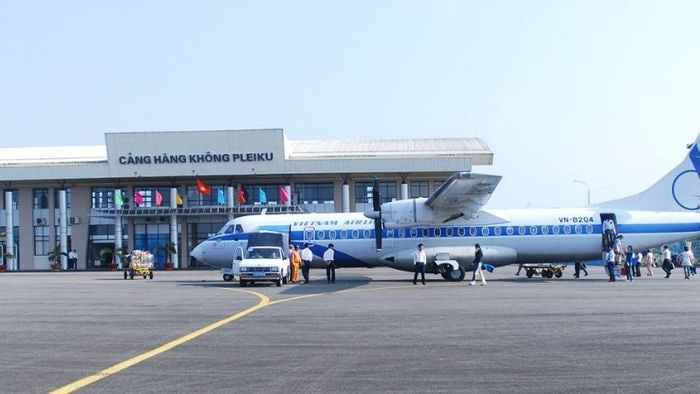
Three airports serve the region: Lien Khuong (DLI) for Dalat, Buon Ma Thuot (BMV), and Pleiku (PXU) for Gia Lai and Kon Tum. All three have daily flights from Ho Chi Minh City and Hanoi on Vietnam Airlines and Vietjet.
| Route | Airline | Duration | Price (one-way, from) |
|---|---|---|---|
| HCMC to Dalat (DLI) | Vietjet / Vietnam Airlines | ~55 min | 680,000 VND (~27 USD) |
| HCMC to Buon Ma Thuot (BMV) | Vietjet / Vietnam Airlines | ~1 hr | 650,000 VND (~26 USD) |
| HCMC to Pleiku (PXU) | Vietjet / Vietnam Airlines | ~1 hr 10 min | 700,000 VND (~28 USD) |
| Hanoi to Buon Ma Thuot (BMV) | Vietjet / Vietnam Airlines | ~1 hr 40 min | 1,470,000 VND (~58 USD) |
| Hanoi to Dalat (DLI) | Vietjet / Vietnam Airlines | ~1 hr 50 min | 1,300,000 VND (~51 USD) |
By bus, sleeper services from HCMC to Dalat take about 7 to 8 hours on Phuong Trang (FUTA) buses, around 250,000 VND (~10 USD). HCMC to Buon Ma Thuot is 8 to 9 hours. From Da Nang, minibuses reach Kon Tum in about 6 hours. Dalat to Nha Trang by bus is a scenic 4-hour ride through mountain passes for around 150,000 VND (~6 USD).
Distances between cities are long (Dalat to Kon Tum is 600km+) and public transport between highland towns is slow. Your options: rent a motorbike in Dalat or Buon Ma Thuot for 120,000 to 180,000 VND (~5 to 7 USD) per day if you are an experienced rider, hire a car with driver through your hotel (typically 1,200,000 to 1,500,000 VND or ~47 to 59 USD per day), or join a motorbike tour with a local Easy Rider guide. Grab works in Dalat and Buon Ma Thuot for short trips. In Kon Tum and Pleiku, Grab coverage is patchy; rely on xe om (motorbike taxis) or your hotel's contacts.
.jpg)
The dry season from November to April is the most comfortable window, with clear skies, cooler mornings (12 to 15°C), and little rain. November to December is peak season for wildflower blooms (Mexican sunflowers around Chu Dang Ya, coffee blossoms near Buon Ma Thuot). February through April gets hot, with temperatures pushing into the low 30s. The wet season from May to October brings daily afternoon downpours but also the greenest landscapes and fewer tourists. Some dirt roads to remote villages can become difficult during heavy rain months (July to August).
.jpg)
How many days do you need for the Central Highlands?
Five to seven days covers the main destinations (Dalat, Buon Ma Thuot, Kon Tum) comfortably. Three days is enough for Dalat alone. If you add Mang Den and Pleiku, allow 8 to 10 days. The long distances between cities eat into your time, so do not try to rush.
Is the Central Highlands safe for tourists?
Yes. Crime against tourists is rare across the region. The main safety concern is road conditions, especially on motorbike routes through mountain passes. Some remote areas near the Cambodian and Lao borders may require a local guide or permit, but the main tourist circuits in Dalat, Buon Ma Thuot, and Kon Tum are straightforward.
Do people speak English in the Central Highlands?
Limited, outside of Dalat's tourist zone. Hotel staff in Buon Ma Thuot and Kon Tum often speak basic English. In villages, almost none. A few Vietnamese phrases or a translation app will help. Hiring a local guide who speaks both Vietnamese and the ethnic group's language makes village visits far more rewarding.
Can you visit ethnic minority villages independently?
In Kon Tum, yes. Several Bahnar villages are within walking distance of the town center and welcome visitors without a guide, as long as you are respectful (ask before photographing, accept hospitality gracefully). In Pleiku and Buon Ma Thuot, some areas require a permit or guide. Your hotel can usually arrange this on short notice.
CTA
Best visited during dry season (November to April) for ideal weather.
Book accommodations in advance during peak travel season.
Carry local currency (Vietnamese Dong) for markets and small vendors.
Respect local customs and dress modestly when visiting temples.


Phu Quoc, Vietnam
Priority immigration clearance at Phu Quoc International Airport. Fast entry to paradise island.

Da Nang, Vietnam
Priority immigration clearance at Da Nang International Airport. Skip the queue and clear immigration quickly.

Nha Trang, Vietnam
Priority immigration clearance at Cam Ranh International Airport. Quick entry to Nha Trang.

Tan Son Nhat, Ho Chi Minh City
Beat the immigration queue at Tan Son Nhat Airport. Our team escorts you through priority lanes — arrival or departure done in under 30 minutes.

Noi Bai International Airport, Hanoi
Walk past the immigration queue at Noi Bai Airport. A dedicated Sondax escort guides you through priority lanes - typically done in under 20 minutes.