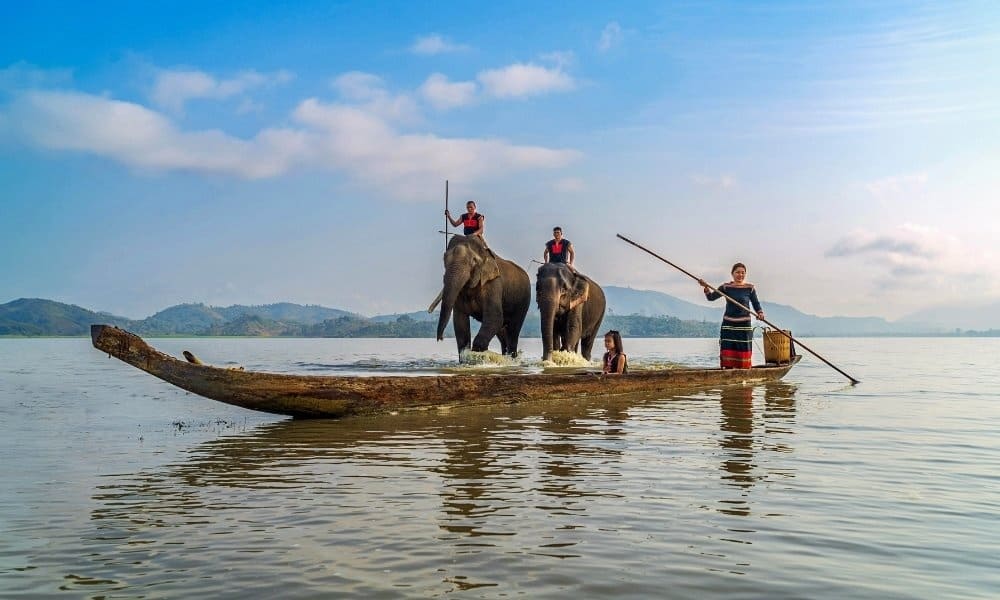

Mang Den is a small highland town in Kon Plong district, Kon Tum province, sitting at 1,200 meters with year-round temperatures between 16 and 22 degrees Celsius. It has the pine forests, cool air, and lake scenery that Dalat is famous for, minus the weekend crowds and inflated prices. Two to three days is enough to cover the waterfalls, ethnic villages, and cloud-hunting viewpoints. The catch: getting here takes planning.
Mang Den delivers Dalat's altitude and climate without the tour-bus traffic, overpriced cafes, or construction noise that now dominate Dalat's center. The town sits on a plateau surrounded by primeval forest, lakes, and waterfalls, and the local Mo Nam and Ba Na ethnic communities still live in traditional villages with communal Rong houses within walking distance of town. Domestic Vietnamese tourists have started arriving on weekends, but foreign visitors remain rare. That means lower accommodation prices (from 300,000 VND, roughly 12 USD per night), no entrance queues, and genuine interaction with locals who are not yet tired of cameras.
.jpg)
The main natural attraction in Mang Den, Pa Sy Waterfall sits at 1,500 meters in Mang Canh commune. The waterfall forms where three highland streams converge. Entry is 20,000 VND (~0.80 USD). Go before 9 AM to avoid domestic tour groups. The surrounding forest trail takes about 30 minutes and passes a wooden statue garden built in 2013.
.jpg)
A 3-hectare lake in the center of town, also called Toong Ro Pong Lake. No entry fee. The lake is surrounded by pine trees and a few wooden stilt houses. Rent a pedal boat if you are in a group, or walk the perimeter trail in 20 minutes. Best visited in early morning when mist sits on the water.
.jpg)
At 1,720 meters, Ngoc Le Peak is the best cloud-hunting spot in Mang Den, about 10 kilometers from the town center. Serious cloud-hunters camp overnight and wake at 4:30 to 5:00 AM for the thickest fog layer. You need a motorbike or private car to reach the base. The trail is moderate but steep in sections.
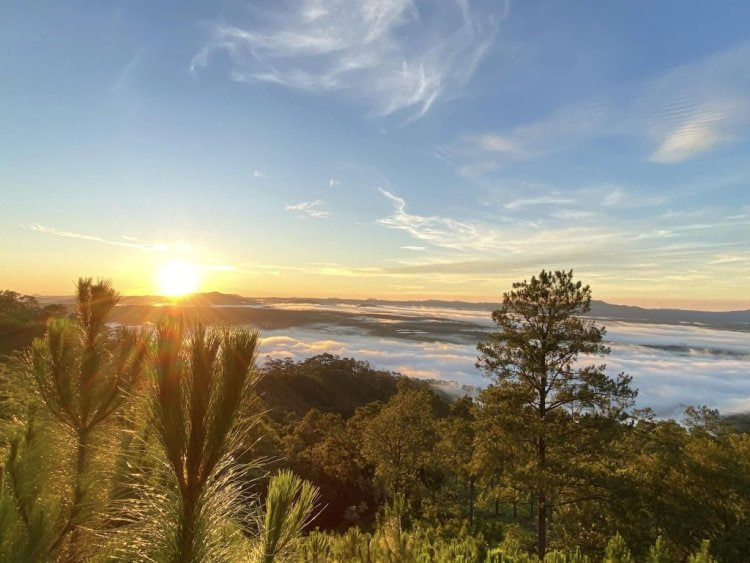
One of the few Central Highlands villages where the Xo Dang ethnic group still maintains traditional stilt houses and a communal Rong house. Cross a small suspension bridge through forest to enter. No fee. You can watch gong performances (a UNESCO-recognized intangible heritage) if you arrange through your homestay host ahead of time.
.jpg)
Mang Den's volcanic soil and cool climate support strawberry, avocado, orange, and cantaloupe farms. E Ban Farm and Orfarm are the most popular. Entry is around 30,000 VND (~1.20 USD). You pick fruit directly and pay by weight if you want to take it home. The farms are free to walk through otherwise.
.jpg)
A newer attraction offering guided horseback rides through pine forest trails. TripAdvisor reviews from 2025 rate it highly for the quality of horses and friendly staff. Contact the farm directly for current pricing, as rates change seasonally.
.jpg)
The nearest airport is Pleiku (PXU) in Gia Lai province, about 100 kilometers from Mang Den. Vietnam Airlines and Vietjet Air fly daily from both Hanoi and Ho Chi Minh City. Budget fares on Vietjet start around 350,000 VND (~14 USD) one-way if booked early. From Pleiku Airport, you have three options to reach Mang Den:
| Option | Price | Duration | Notes |
|---|---|---|---|
| Taxi (airport to Mang Den) | 1,000,000-1,200,000 VND (~40-47 USD) | ~2 hours | Most convenient. Split cost with other travelers via Mang Den Facebook groups. |
| Huy Han Bus | 100,000 VND (~4 USD) | ~2.5 hours | One trip per day. Picks up at airport at 07:40. Call 032 705 8181 to confirm. |
| Public bus (2 legs) | 85,000 VND (~3.35 USD) total | 3+ hours | Bus 02: Pleiku to Kon Tum (35,000 VND). Bus 06 (Green Line): Kon Tum to Mang Den (50,000 VND). Slow, stops often. |
Sondax tip:
The Huy Han Bus departs the airport at 07:40, so it only works if your flight lands before 07:30. Most Hanoi and HCMC morning flights arrive around 08:00 to 09:00, meaning you will likely need a taxi or shared car. Check the Mang Den travel Facebook group to find ride shares posted daily.
If you are coming overland from Dalat, the distance is roughly 480 kilometers and requires a full day on the road. The Dalat to Mang Den route is popular with Easy Riders (experienced motorbike guides who take passengers on multi-day Central Highlands trips). From Da Nang or Hoi An, it is about 240 kilometers west through mountain passes.
.jpg)
Mang Den town is compact, but the attractions spread across 10 to 15 kilometers. A motorbike is the most practical option. Rental costs about 120,000 to 150,000 VND (~5-6 USD) per day from homestays like Nang Homestay. The roads between town and Pa Sy Waterfall or Ngoc Le Peak are paved but include sharp curves, steep grades, and morning fog. If you are not comfortable on two wheels, ask your accommodation to arrange a car with driver for the day, which typically runs 800,000 to 1,000,000 VND (~32-40 USD).
There is no Grab in Mang Den. Local taxis exist but are limited. Walk or cycle for anything within town (Dak Ke Lake, restaurants, the pine forest road).
Accommodation in Mang Den is almost entirely homestays and small guesthouses. No international chain hotels exist here. Budget rooms start around 300,000 VND (~12 USD). Mid-range homestays with better design and breakfast included run 500,000 to 800,000 VND (~20-32 USD).
Budget: Nang Homestay, Soc's House, La Maison Homestay (near Dak Ke Lake, dorm beds available). Clean, basic, friendly owners who help arrange transport and motorbike rental.
.jpg)
Mid-range: Sum Villa Homestay (rated 9.0 on Booking.com, garden setting), Glamprose Mang Den (glamping concept in pine forest), De Vivre Homestay (17 rooms, breakfast included at around 675,000 VND per night).
Boutique: Golden Sun Hotel and Xing Retreat and Spa represent the higher end of what Mang Den currently offers. Book directly by phone for the best rates.
Mang Den food leans highland: smoky, peppery, and built around forest ingredients. The signature dish is grilled chicken with wild mountain pepper, served alongside com lam (sticky rice cooked in bamboo tubes). Order this at Nau Tui restaurant on 35 Hung Vuong street (0906 925 902).
Other dishes worth trying: pepper hotpot at Mang Den Lu Quan on 55 Ngo Quyen, jumping shrimp noodle at Co Vy Mang Den on 04 Phan Chu Trinh, and mushroom porridge at Nha Lanh Mushroom on 01 Hung Vuong. For coffee, T'Mang Deeng on 32 Pham Van Dong serves locally grown Arabica. Expect meals to cost 50,000 to 100,000 VND (~2-4 USD) per person.
.jpg)
Mang Den stays cool year-round (16-22 degrees Celsius average), so there is no "bad" season. The dry months from October to April bring clear skies and comfortable hiking weather. January and February feature blooming cherry-like mai anh dao blossoms. Cloud hunting is best from February through September, when morning fog is thickest before 5:30 AM. The rainy season (May to September) means afternoon showers but also golden rice fields and purple wildflowers on the hillsides. December nights can drop below 10 degrees Celsius, so pack layers.
How many days do you need in Mang Den?
Two full days cover the main sights: Pa Sy Waterfall, Dak Ke Lake, one ethnic village, and the pine forest road. Add a third day for Ngoc Le Peak cloud hunting (requires a 4:30 AM start) or a day trip to Kon Tum city, 60 kilometers away, to see the 1918 Wooden Church and Kon Klor suspension bridge.
Is Mang Den worth visiting for international travelers?
Yes, if you want a quiet highland experience without the tourist infrastructure of Dalat or Sapa. Mang Den works best for travelers already in the Central Highlands (coming from Kon Tum, Pleiku, or on an Easy Rider route) rather than as a standalone destination requiring a domestic flight from Hanoi or HCMC.
Can I visit Mang Den without a motorbike?
You can. Ask your homestay to arrange a car with driver for 800,000 to 1,000,000 VND per day. The town center (Dak Ke Lake, restaurants, cafes) is walkable. Pa Sy Waterfall and the farms are 5 to 10 kilometers out, so you do need wheels for those.
What is the closest city to Mang Den?
Kon Tum city is 60 kilometers southwest (about 1.5 hours by car). Pleiku is 100 kilometers south (about 2 hours). The nearest beach cities are Quy Nhon at 200 kilometers and Da Nang at roughly 350 kilometers via National Highway 24.
CTA
---Related Articles---
Best visited during dry season (November to April) for ideal weather.
Book accommodations in advance during peak travel season.
Carry local currency (Vietnamese Dong) for markets and small vendors.
Respect local customs and dress modestly when visiting temples.


Phu Quoc, Vietnam
Priority immigration clearance at Phu Quoc International Airport. Fast entry to paradise island.

Da Nang, Vietnam
Priority immigration clearance at Da Nang International Airport. Skip the queue and clear immigration quickly.

Nha Trang, Vietnam
Priority immigration clearance at Cam Ranh International Airport. Quick entry to Nha Trang.

Tan Son Nhat, Ho Chi Minh City
Beat the immigration queue at Tan Son Nhat Airport. Our team escorts you through priority lanes — arrival or departure done in under 30 minutes.

Noi Bai International Airport, Hanoi
Walk past the immigration queue at Noi Bai Airport. A dedicated Sondax escort guides you through priority lanes - typically done in under 20 minutes.