
Where is Ba Be Lake located?
Ba Be Lake sits inside Ba Be National Park in Bac Kan Province, northeastern Vietnam. Positioned 240 to 250 kilometers north of Hanoi, the lake rests at an altitude of 150 meters above sea level, surrounded by a massive mountainous limestone karst region.
The drive from Hanoi takes you deep into the northeastern mountains near the Chinese border. You will trace National Highway 3 (QL3) through Thai Nguyen province before the road narrows into steep, serpentine mountain passes in Bac Kan. Once you pass through Cho Ra town, the final 16 kilometers drop you into a dense, closed canopy valley isolated from major commercial trade routes.
.jpg)
What ethnic groups reside around Ba Be Lake?
The Tay people represent the primary ethnic group living around Ba Be Lake, occupying traditional wooden stilt houses in settlements like Pac Ngoi and Coc Toc. The wider Ba Be National Park boundary also supports scattered communities of Nung, Dao, and H'Mong minority groups.
The Tay have farmed this specific valley for over two millennia. They build their homes on sturdy wooden stilts to stay elevated above floodwaters and wild animals, traditionally keeping their livestock on the ground floor. High up on the mountain slopes overlooking the lake, the H'Mong and Dao communities cultivate corn and cassava.
.jpg)
These groups migrated into Bac Kan province roughly 300 years ago and maintain entirely separate languages and textile traditions. If you trek above 800 meters in elevation, you will transition from Tay rice paddies directly into H'Mong corn terraces.
How to get to Ba Be Lake from Hanoi
Public transit from My Dinh Bus Station vs private shuttles
Reaching Bac Kan Province historically required mapping out chaotic transfers along Highway 3. You would catch a local bus from My Dinh Bus Station in Hanoi, ride 150 kilometers north to Thai Nguyen city, wait for a connecting transit to Cho Ra town, then haggle for a motorbike taxi to the park gates. This multi-vehicle relay takes up to eight hours and costs around $12 to $15 total. Drivers frequently stop to load cargo and pick up passengers on the side of the road, killing momentum.
Today, booking a direct transfer saves you half a day of travel time. Mr. Linh’s Adventure operates a daily shuttle that cuts the journey down to a clean five hours. The driver picks you up directly at your hotel in Hanoi's Old Quarter at 7:00 AM, utilizes the newer expressways where possible, and drops you right at the wooden stairs of homestays in Pac Ngoi or Bo Lu villages by noon.
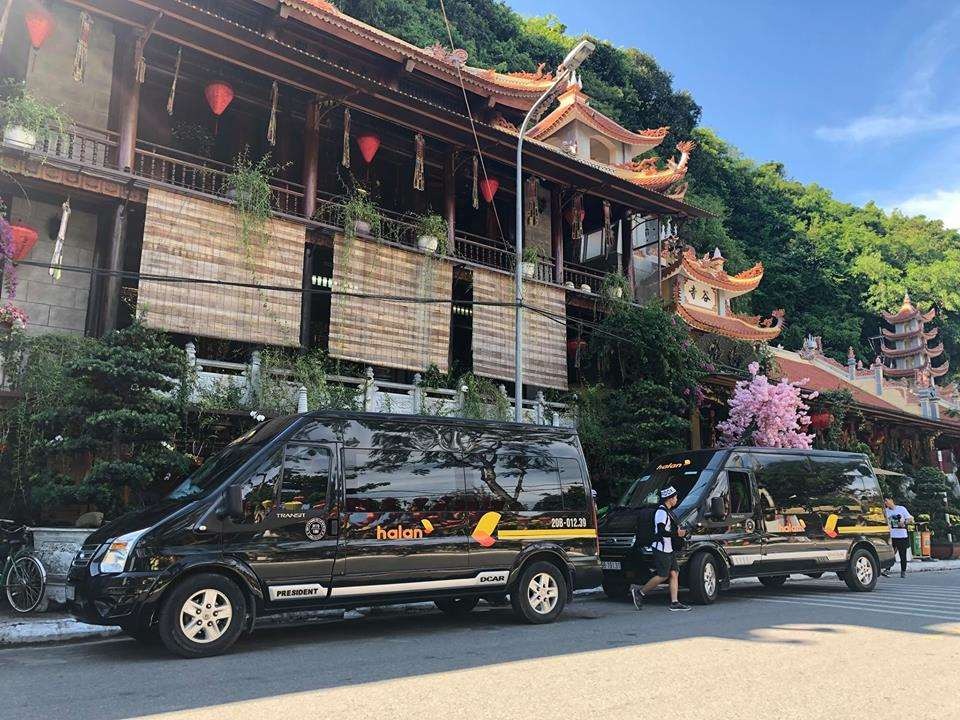
If you travel solo and watch every dollar, the public bus from My Dinh Bus Station runs from 6:00 AM to 1:00 PM. You must board a bus bound for Cao Bang, tell the driver you want to get off at the Phu Thong junction, and then catch a secondary local bus to Cho Ra. From Cho Ra, xe om drivers charge 100,000 VND ($3.90) for the final 16-kilometer ride to the lake edge. If you miss the Phu Thong connection, you will sleep on the highway.
| Transit Mode | Cost USD | Departure Times | Comfort Level | Departure Point |
|---|---|---|---|---|
| Mr. Linh's Shuttle | $15 | 7:00 AM daily | High (A/C, direct drop-off) | Hanoi Old Quarter |
| 16-Seater Minivan | $12 | 6:00 AM, 12:00 PM | Medium (drops at Cho Ra) | My Dinh Bus Station |
| Public Bus | $8 | Multiple morning runs | Low (frequent stops) | My Dinh Bus Station |
| Private Transfer | $200 | Custom schedule | High (door-to-door SUV) | Any Hanoi hotel |
.jpg)
Structured itineraries for Ba Be National Park
The sheer scale of the park means you cannot see everything in a single weekend. Choose your itinerary based on your tolerance for humidity and your interest in deep jungle trekking versus relaxed boat cruising.
Ba Be Lake in 1 day: the essentials
A 24-hour visit restricts you to the water. You will bypass the deep jungle trails and focus entirely on the main three-lake system and the river tributaries feeding it.
- Hire a private motorboat at the Buoc Lom dock by 8:00 AM to beat the mid-day heat.
- Cruise upstream along the Nang River, watching local fishermen cast traditional throw nets from the banks.
- Disembark at Puong Cave, walking through the 300-meter limestone tunnel to see thousands of roosting bats.
- Navigate back toward the main lake basin and stop at Widow Island (Dao Ba Goa) for a quick photo.
- Dock near An Ma Temple on the central island and walk up the stone steps to view the shrine.
- Eat a late lunch of grilled lake fish, bamboo shoots, and wild banana flower salad at a local restaurant near the main headquarters.
- Rent a kayak for two hours before sunset to paddle the quiet waters near Coc Toc village.
.jpg)
Ba Be Lake in 2 days: extended exploration
Adding a second night lets you step away from the boat traffic and access the higher elevation trails surrounding the water basin. You can tackle the steep limestone grades and witness the agricultural divide between the lowland rice farmers and the highland corn cultivators.
- Wake up at 5:30 AM to walk across the damp rice fields outside Pac Ngoi as the morning fog burns off the lake surface.
- Eat a heavy breakfast of pho or egg banh mi at your homestay before meeting your local Tay guide at 8:00 AM.
- Trek six kilometers up steep, unpaved jungle paths toward the remote H'Mong settlement of Dan Mai, located at 800 meters elevation.
- Share green tea with a local family while your guide translates questions about their terraced corn farming techniques and indigo dyeing process.
- Hike back down to the lake shore by mid-afternoon, stopping to cool off with a swim near the forest edge.
- Soak your legs in a traditional Dao herbal bath prepared by your homestay hosts using boiled forest leaves and bark.
- Drink homemade corn wine (rượu ngô) over dinner with other travelers at the communal stilt house dining table.
.jpg)
Ba Be Lake in 3+ days: the complete experience
Three or more days turns a standard lake visit into a serious northern expedition. You now have the time to link Bac Kan province with the Chinese border region or go deep underground.
- Book the $494 Tham Phay Cave expedition through a licensed operator like Mr. Linh's Adventure well in advance, as park authorities permit only 300 people annually.
- Drive out to the remote Nam Dai village trailhead and hike through dense, primary forest to reach the concealed sinkhole entrance.
- Strap on an 800-lumen headlamp and climbing harness to navigate underground rivers, waist-deep mud, and massive stalagmite formations inside Tham Phay.
- Camp overnight inside the cavern system or near the entrance with a full crew of porters and cooks preparing a barbecue feast.
- Return to the surface the next morning, hiking back to the main road for a transfer back to your homestay.
- Skip the cave entirely and instead hire a private driver for $80 to connect Ba Be with Cao Bang province via QL279.
- Drive four hours north on QL3 and DT206 to witness Ban Gioc Waterfall crashing down a 30-meter vertical drop directly on the international border with China.
.jpg)
Top attractions and unique experiences
The park operates as a massive geological vault. Tectonic pressure over 200 million years carved out extreme vertical drops and subterranean voids within the limestone mountains. You will find over a dozen mapped cave systems, though park rangers restrict access to the majority to protect fragile stalactite formations.
Hua Ma Cave and Puong Cave explorations
The karst geology in Bac Kan province rivals the famous formations found in Phong Nha-Ke Bang, but sees a fraction of the foot traffic. Hua Ma, locally dubbed "Horse Head Mountain," sits completely dry on a hillside surrounded by scrub brush. Inside, the main cavern stretches 500 meters deep with ceilings vaulting 50 meters high.
Puong Cave operates entirely differently, functioning as an active river tunnel that pierces straight through the base of Lung Nham mountain. The Nang River carved this 300-meter-long passage, creating a subterranean ecosystem that now supports 18 distinct species of bats.
.jpg)
📌 Insider note:
Hua Ma Cave requires a sweaty climb up 300 meters of concrete stairs from the road level, so carry a water bottle. Conversely, you can only access the 30-meter-high Puong Cave by boat, floating directly into the gaping mouth on the Nang River.
Boat tours to An Ma Temple on the Nang River
The spiritual center of the lake sits on a raised limestone island covered in thick tree canopy right in the middle of Ba Be. Locals rebuilt An Ma Temple in 2006 to honor loyal Mac Dynasty generals who allegedly committed suicide in the 16th century rather than surrender to the opposing Le Dynasty forces. You walk up 30 stone steps from the boat dock to reach the shrine. Buy a bundle of incense for 10,000 VND ($0.40) from the lone vendor at the bottom to leave an offering.
.jpg)
📌 Insider note:
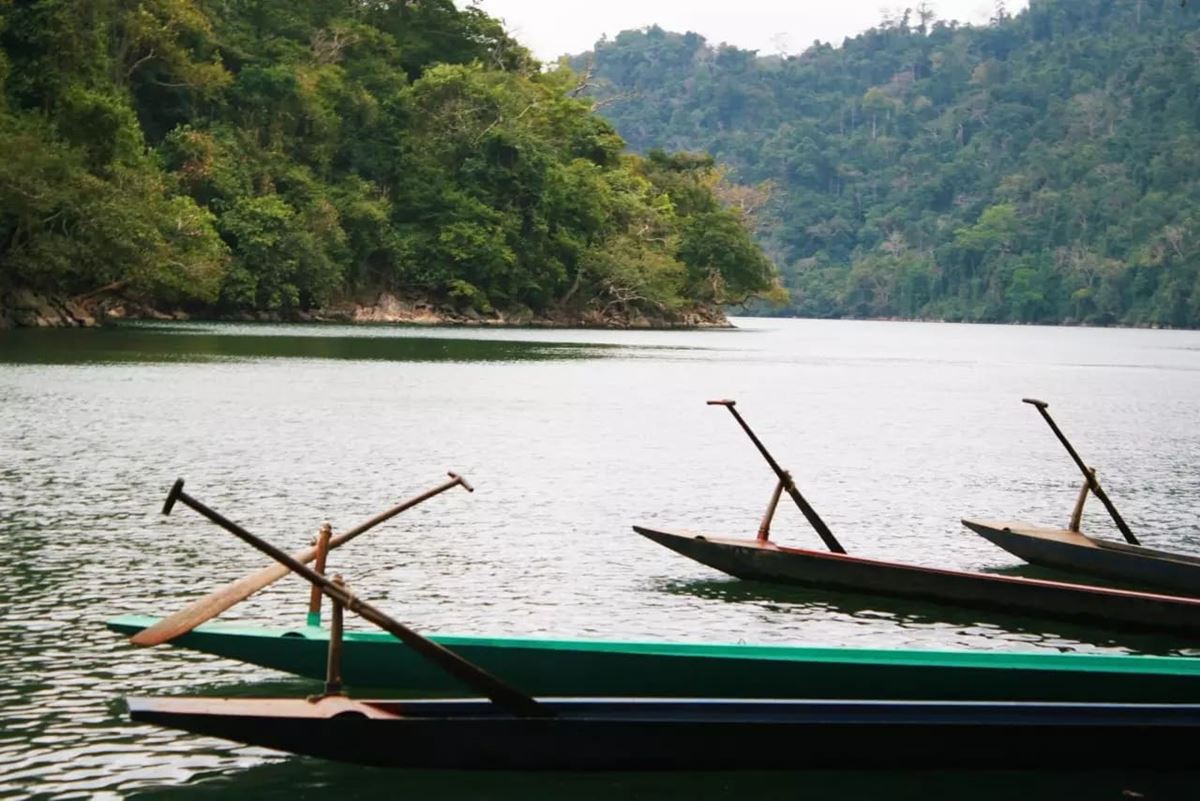
Watch the shallow banks closely while cruising toward An Ma Temple. You will occasionally spot local fishermen maneuvering "độc mộc"—narrow, traditional pirogue boats carved by hand from a single solid tree trunk.
Trekking to Dau Dang Waterfall
Where the Nang River hits the dense jungle borders of Tuyen Quang province, the navigable water channel abruptly collapses. The river drops violently over hundreds of massive, house-sized boulders, creating a multi-tiered cascade stretching for over 1,000 meters. The drop prevents boats from passing further downstream, forcing all lake traffic to turn around here.
- Locate the main trailhead at the boat drop-off point near Hua Tang village, where the two-kilometer path remains mostly flat but features heavy mud and slippery rocks after afternoon rain storms.
- Walk past the first set of minor rapids to reach the upper wooden viewing platform, which overhangs the main choke point where the river drops 500 meters in elevation through a narrow stone gorge.
- Stop at the small wooden restaurant near the trailhead before getting back on your boat to order a plate of "Lợn Cắp Nách" (free-range black pig) roasted over charcoal, priced around 150,000 VND ($5.90).
.jpg)
Frequently asked questions
What is the best time of year to visit Ba Be Lake?
The optimal window for dry jungle trekking runs from October to June. If your priority is swimming and kayaking around Widow Island, plan your trip during the hot, humid months of July through September. During this rainy season, water levels peak, filling out the river tributaries completely.
How much does a boat trip on Ba Be Lake cost?
A standard motorboat charter exploring the three connected lake basins costs between $10 and $30 (254,000 to 762,000 VND). You pay on the lower end for a seat on a shared two-hour loop, while $30 secures a private boat for a full five-hour Nang River run.
Are there guided tours available for Ba Be National Park?
You can book dozens of multi-day guided tours through Hanoi agencies. A standard three-day trekking and kayaking package averages $274 per person. Operators like Mr. Linh's Adventure also run technical four-day Tham Phay Cave expeditions for $494, which cover private transport, specialized caving gear, and jungle meals.
Can you swim in Ba Be Lake?
You can swim in designated areas of Ba Be Lake, particularly near local homestays and traditional villages. The freshwater remains clear and safe year-round. For optimal water temperatures, plan your swimming sessions during the hot and humid season running from July through September.
ảnh
CTA TA

Comments