
Da Nang is far more than just pristine beaches and luxury resorts; its true magic lies hidden in bustling local markets, alleyway food stalls, and the raw beauty of its coastal roads. For many travelers, navigating the city's unwritten rules, street food etiquette, and chaotic scooter traffic can be overwhelming. This comprehensive guide strips away the tourist fluff to give you the ultimate blueprint for a flawless, deeply authentic Da Nang adventure.
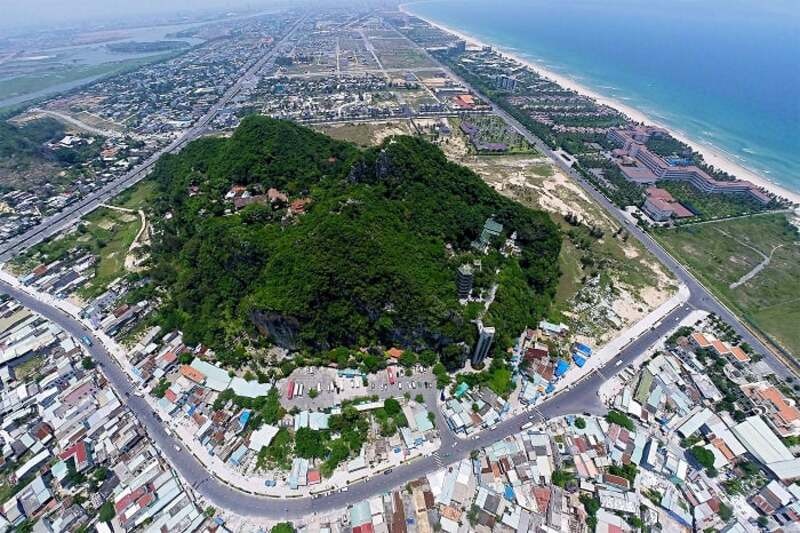
Da Nang anchors central Vietnam with a 30-kilometer coastline, dominated by the wide sands of My Khe Beach. Five marble and limestone hills known as the Marble Mountains rise abruptly from the coastal plain just south of the city center. Each mountain represents one of the five elements in traditional Eastern philosophy: Thuy (water), Moc (wood), Hoa (fire), Kim (metal), and Tho (earth). Local authorities host the Da Nang International Fireworks Festival annually across June and July, drawing pyrotechnic teams from eight different countries to compete over the Han River.
.jpg)
Geographically, the city functions as the primary transit hub for three UNESCO World Heritage Sites. Hoi An Ancient Town sits 30 kilometers south, while the abandoned Hindu temples of My Son Sanctuary lie 70 kilometers southwest. Travelers use Da Nang International Airport (DAD) to bypass the longer overland routes from Hanoi or Ho Chi Minh City, placing them within a 45-minute drive of these historical zones.
Choosing where to base your trip depends entirely on your travel priorities. Da Nang operates as a modern coastal metropolis with late-night infrastructure, while Hoi An restricts motorized traffic in its center to preserve its historical merchant-town aesthetic. Many travelers opt to split their week, spending four days in Da Nang and two days in Hoi An.
| Location | Cost USD | Time | Best for | Watch out for |
|---|---|---|---|---|
| Da Nang | $40 - $60 daily | 3 to 5 days | Surfing, modern amenities, cheap seafood, digital nomad cafes. | Heavy traffic on the main coastal road (Vo Nguyen Giap) during evening rush hour. |
| Hoi An Ancient Town | $60 - $90 daily | 1 to 2 days | Tailor-made clothing, historic architecture, lantern-lit romantic dinners. | Aggressive touts selling boat rides and overpriced leather goods in the central grid. |
.jpg)
The Marble Mountains sit nine kilometers south of the city center. The complex requires two separate admission tickets if you want to see everything. You pay 20,000 VND ($0.79) to enter the Am Phu Cave, which depicts a Buddhist vision of hell, and 40,000 VND ($1.57) for access to Thuy Son, the main mountain area featuring pagodas and panoramic viewpoints. Note that the site is not wheelchair accessible due to hundreds of steep, uneven stone steps cut directly into the rock.
Closer to the city center, the Museum of Cham Sculpture sits at the western base of the Dragon Bridge. Built by the French in 1915, it houses the world's largest collection of Cham artifacts. Entrance costs 60,000 VND ($2.36).
.jpg)
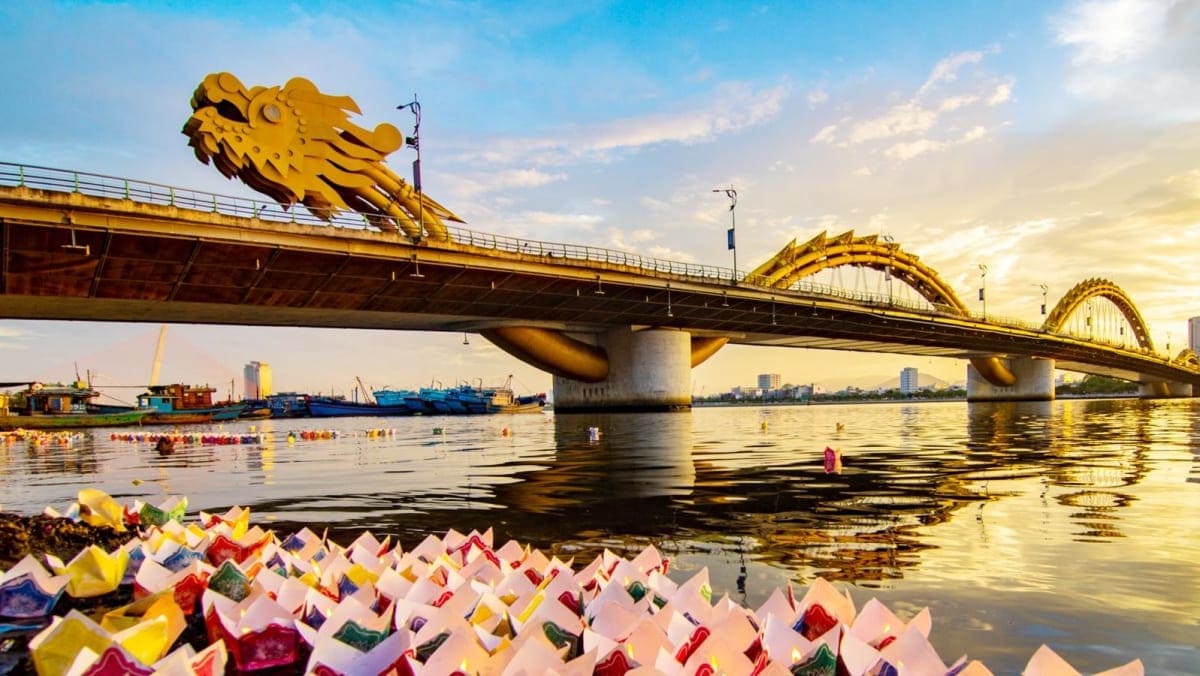
The 666-meter Dragon Bridge spans the Han River and serves as Da Nang's primary visual landmark. The steel dragon breathes fire and sprays water every Friday, Saturday, and Sunday at 9:00 PM. Watch from below the bridge on the Tran Hung Dao street side rather than standing directly on the pedestrian walkway. The wind frequently blows the water spray across the bridge, soaking anyone standing too close to the dragon's head.
.jpg)
Sun World Ba Na Hills operates 25 kilometers west of the city in the Truong Son Mountains. You ride a 5,801-meter cable car to reach the resort, which features the Golden Bridge—two massive stone hands holding a pedestrian walkway. General admission costs 900,000 VND ($35.43) per adult.
The mountain elevation drops temperatures by 10 to 15 degrees Celsius compared to the coast, so pack a light jacket. Arrive at the ticket gate precisely at 7:00 AM to photograph the Golden Bridge before the tour buses arrive at 9:00 AM.
.jpg)
The Hai Van Pass snakes along the mountainside north of Da Nang, peaking at 496 meters above sea level. This 21-kilometer stretch of coastal road separates Da Nang from Thua Thien Hue province. You can rent a high-powered motorcycle for 250,000 VND ($9.84) to ride the pass, stopping at the abandoned French and American bunkers at the summit. Heavy trucks use the tunnel beneath the mountain, leaving the pass largely clear for leisure riding, though sharp hairpin turns demand strict attention.
Landing at Da Nang International Airport (DAD) drops you just three kilometers from the city center. There is a dedicated Grab (ride-hailing app) taxi tent set up right outside the arrivals area at Da Nang International Airport (DAD), making transport straightforward. Open your app, book your ride to the beach district for roughly 80,000 VND ($3.15), and walk to the green tent where staff will help coordinate your license plate with the arriving driver. You avoid the aggressive traditional taxi touts lingering near the glass exit doors.
.jpg)
The monsoon pattern drives the rainy season in Da Nang from September through December. October and November see the highest precipitation, frequently exceeding 300 mm per month. During these two peak months, tropical depressions and occasional typhoons hit the central coast.
Flight delays increase, and localized flooding often occurs along lower-lying streets in the Hai Chau district. The ocean becomes too rough for safe swimming, prompting authorities to hoist red warning flags along My Khe and Non Nuoc beaches.
You should adjust your itinerary if traveling during this quarter. The Son Tra Peninsula roads become slick and prone to minor landslides, making scooter rentals dangerous. Boat tours to the Cham Islands suspend operations due to heavy swells.
Conversely, the dry season runs from January to August. February through May offers the optimal weather window. Temperatures hover around 25 to 28 degrees Celsius (77 to 82 degrees Fahrenheit) with low humidity, creating ideal conditions for climbing the stone steps at the Marble Mountains or walking through the open-air ruins at My Son.
.jpg)
Da Nang experiences strong coastal currents, particularly during the transitional months leading into the rainy season. Riptides frequently form along the 10-kilometer stretch from Pham Van Dong Beach down to Non Nuoc Beach. Local authorities deploy lifeguards every 100 meters, but their shifts typically end at 6:00 PM. Never swim after dark, and always stay between the red and yellow flags marking the patrolled swimming zones.
Road safety requires active defensive driving. The winding, steep roads of the Son Tra Peninsula, leading to the Ban Co Peak and the Giant Banyan Tree, pose severe risks for inexperienced riders. Several fatal accidents involving tourists prompted the municipal government to ban automatic scooters on specific high-elevation routes.
📌 Insider note:
The police checkpoint at the base of Ban Co Peak enforces the automatic scooter ban. You must ride a semi-automatic (like a Honda Wave) or a manual motorcycle to proceed past the InterContinental resort turnoff. Renting a semi-automatic costs around 120,000 VND ($4.72) per day.
Vietnamese culture places a high value on modesty and respect within religious sites. Da Nang hosts three separate Linh Ung Pagodas, with the most prominent located on the Son Tra Peninsula, marked by a 67-meter tall Lady Buddha statue. Security guards will deny you entry to the inner prayer halls if your attire violates the dress code.
.jpg)
Mapping out a daily budget requires a realistic look at how you prefer to travel. Da Nang accommodates tight backpacker margins just as efficiently as high-end resort expectations. The estimates below assume you are splitting accommodation costs with a travel partner, but paying individually for meals, transport, and activities.
| Expense Category | Backpacker (<$40/day) | Mid-Range ($60-$100/day) | Luxury (>$200/day) |
|---|---|---|---|
| Accommodation | $8 (Hostel dorm bed) | $35 (3-star beachside hotel) | $150+ (5-star resort suite) |
| 3 Meals | $6 (Street food, local markets) | $25 (Casual dining, cafes) | $80+ (Fine dining, seafood feasts) |
| 2 Grab Rides | $3 (GrabBike motorbike taxis) | $8 (GrabCar 4-seater) | $25 (Private hired driver) |
| 1 Major Activity | $2 (Marble Mountains entry) | $35 (Ba Na Hills cable car) | $120 (Private yacht tour) |
| Drinks | $3 (Local Bia Huda, iced coffee) | $12 (Craft beer, cocktails) | $40+ (Imported wine, rooftop bars) |
.jpg)
Sticking to a 40 USD daily budget is feasible if you eat where the residents eat. Western-style cafes in the An Thuong expat area charge upwards of 150,000 VND ($5.91) for a basic breakfast. Walk 10 minutes inland to bypass these markups entirely.
.jpg)
Da Nang operates a fleet of air-conditioned VinBus electric buses covering 14 distinct routes. Fares range from 6,000 to 8,000 VND ($0.24 to $0.31) per ride. Grab ridesharing remains the most efficient transit method. A typical three-kilometer GrabCar journey across the Han River bridge costs approximately 55,000 VND ($2.16).
You must present a valid passport, which the rental shop photographs or holds as a deposit. Standard 125cc automatic scooters cost 150,000 VND ($5.91) daily. Vietnamese law requires an International Driving Permit (IDP) to ride legally. Police issue fines of 1,500,000 VND ($59.06) to foreigners riding without proper documentation.
Family Medical Practice on Nguyen Van Linh Street provides English-speaking doctors and 24-hour emergency care for foreigners. A standard consultation costs roughly 1,800,000 VND ($70.87). For severe trauma, Vinmec Da Nang International Hospital in the Hai Chau district features modern surgical theaters and direct billing with major international travel insurance.
My Quang combines flat rice noodles, pork broth, shrimp, quail eggs, and crushed peanuts for 30,000 VND ($1.18). Banh Xeo is a crispy, turmeric-yellow rice flour crepe stuffed with pork and bean sprouts. You wrap it in rice paper with mustard greens before dipping it in warm peanut sauce.
Nha Trang offers superior scuba diving due to the protected Hon Mun Marine Reserve, where visibility routinely hits 15 meters. Da Nang caters better to surfing, specifically along My Khe Beach from September to March when two-meter swells hit the shoreline, making it ideal for intermediate longboarders.
CTA TA
---Related Articles---
Best visited during dry season (November to April) for ideal weather.
Book accommodations in advance during peak travel season.
Carry local currency (Vietnamese Dong) for markets and small vendors.
Respect local customs and dress modestly when visiting temples.