Overview
Tour overview
This Vietnam UNESCO heritage tour strings five World Heritage landscapes and towns into ten days, from Hanoi down the coast to Hoi An, without a single flight. In the capital you visit the Temple of Literature, the Ho Chi Minh Mausoleum and the Ethnology Museum and end the day at a water puppet show. In Ninh Binh you cycle to the Hoa Lu temples, row through the caves of Trang An and climb to the Mua Cave viewpoint, then spend a night on a cruise boat in Ha Long Bay.
A night train then carries you south to Quang Binh for the river caves of Phong Nha-Ke Bang, a stop most ten-day routes miss, before the Vinh Moc tunnels, the citadel and Minh Mang's tomb in Hue, the Hai Van Pass and the old trading town of Hoi An. Groups are 1 to 10 people with an English-speaking guide on the sightseeing days. Low intensity, built for families and anyone who prefers history to beaches.
Map
Tour map
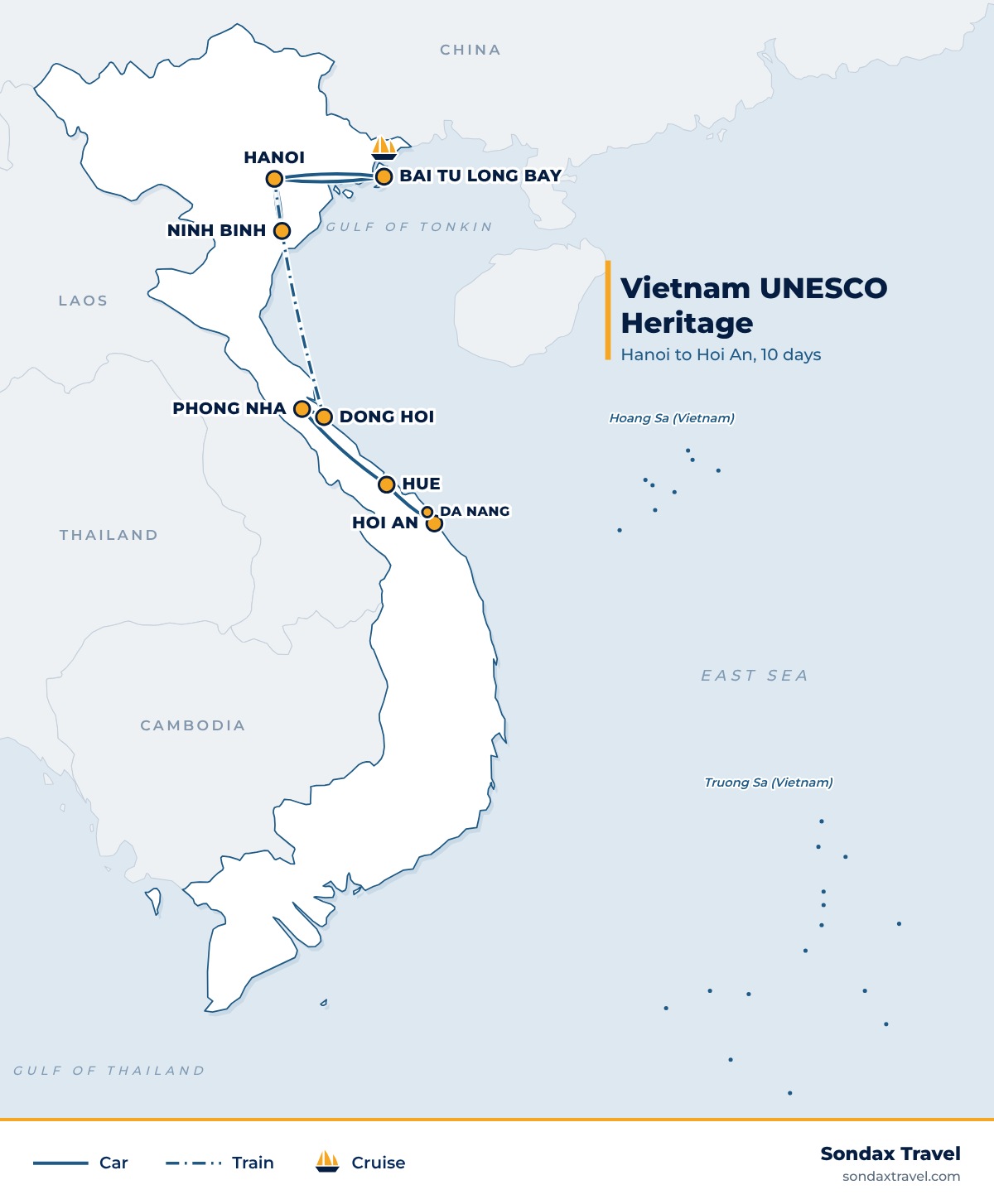
Tap the map to enlarge it. It stays one tap away in the corner while you read the days below.
Itinerary
Day by day itinerary
Day 1Arrive in Hanoi: Noi Bai pickup and a free evening in the Old Quarter
A driver meets you at Noi Bai Airport and takes you into Hanoi. Nothing else is planned today, so you can settle in after the flight.
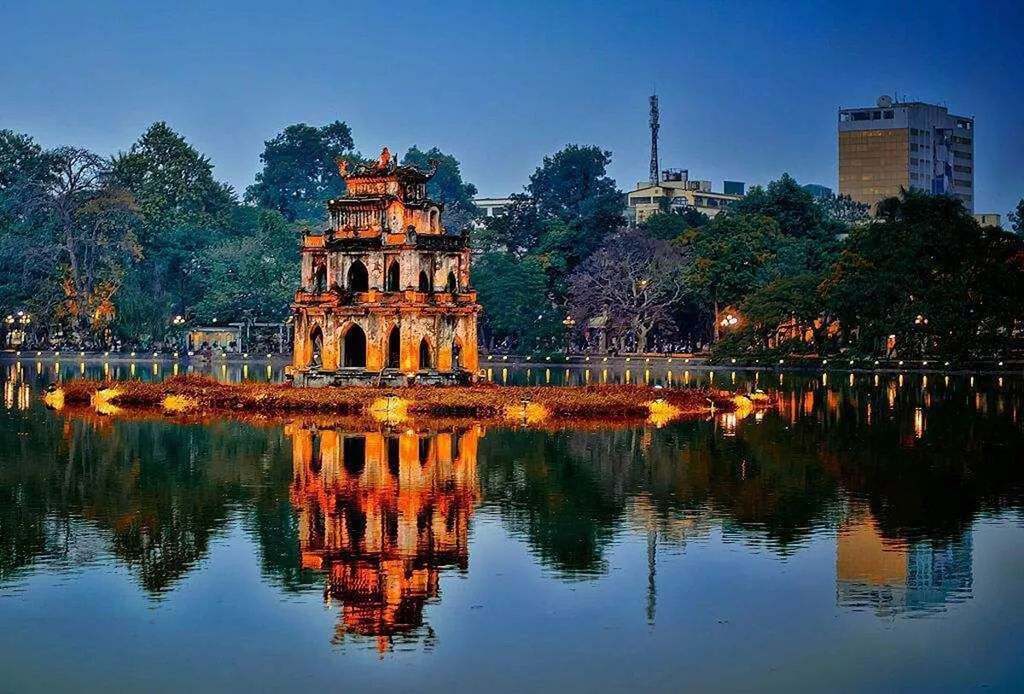
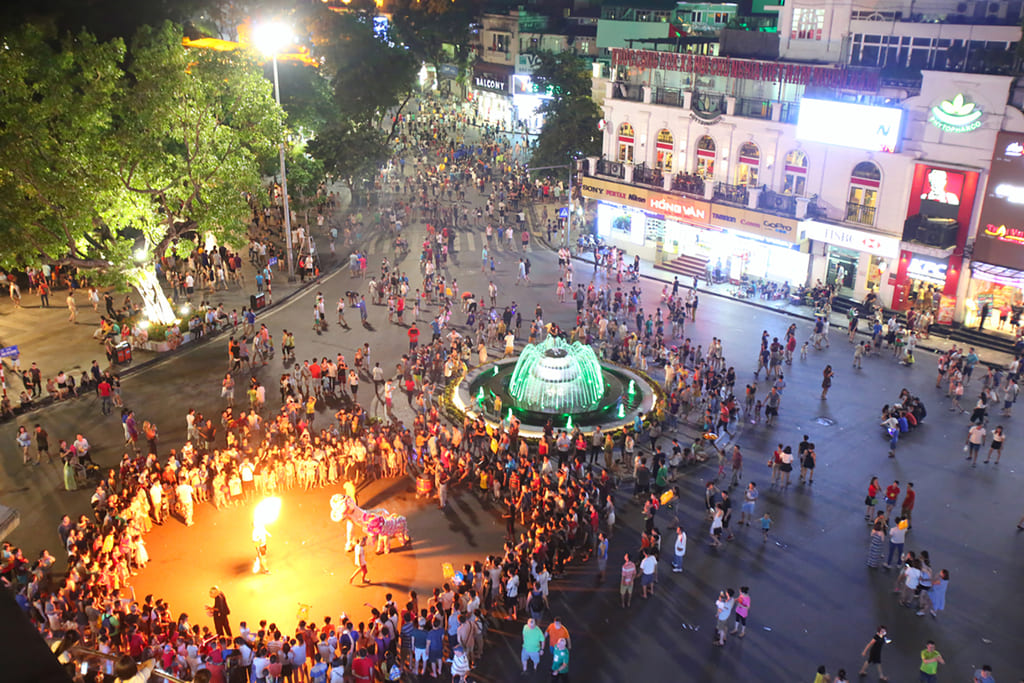
If you have the energy, walk the Old Quarter on your own. It grew up as a guild district beside the Red River, and many of its narrow streets still carry the name of the trade once sold there: Hang Bac for silver, Hang Ma for paper offerings, Hang Gai for silk. Look out for the tube houses and the temples squeezed between shopfronts, and finish at Hoan Kiem Lake and its small red bridge.
Day 2Hanoi’s heritage day: Temple of Literature, Ho Chi Minh Mausoleum and the water puppets
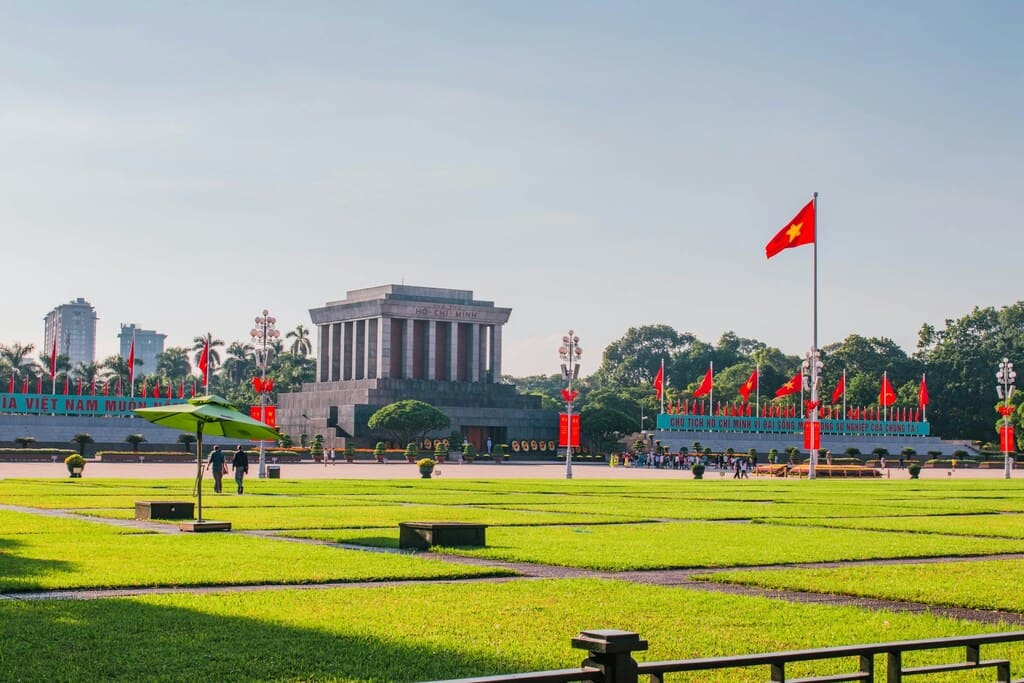
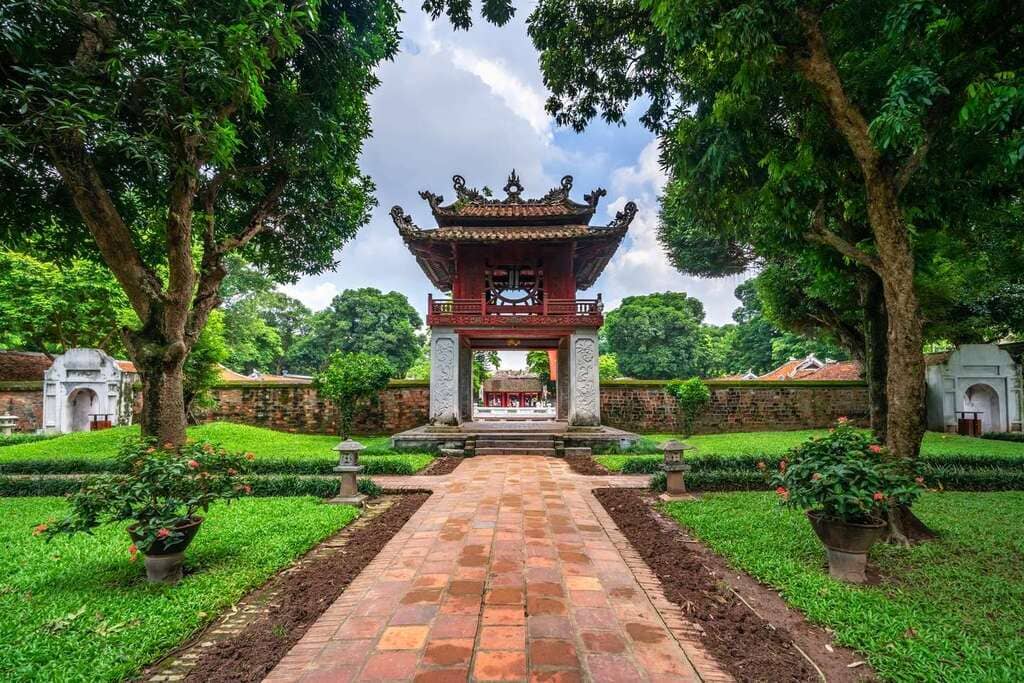
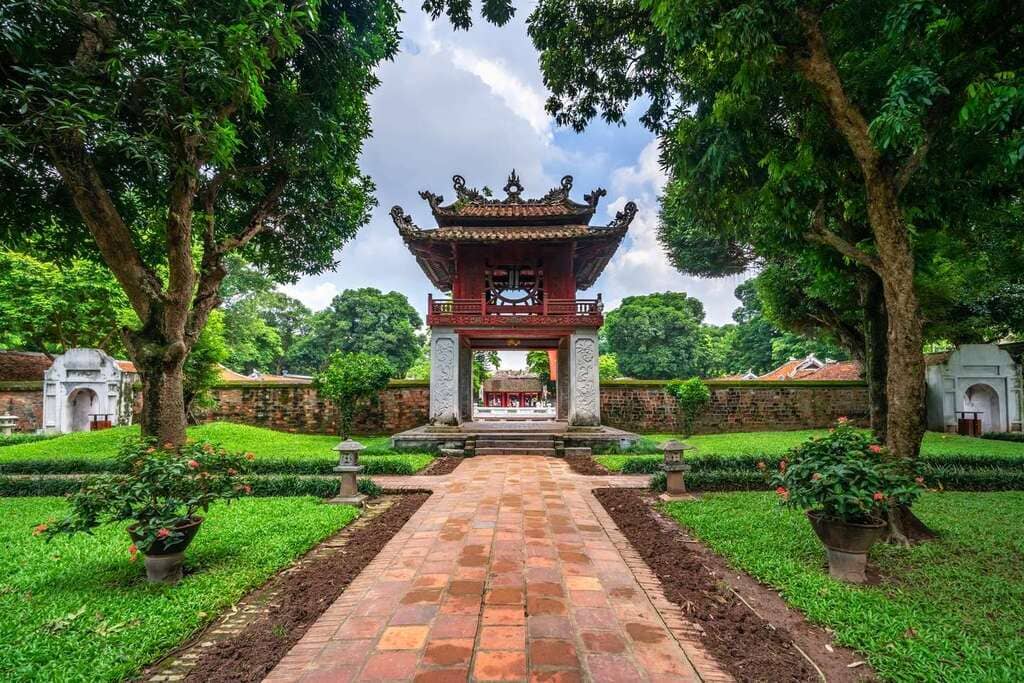
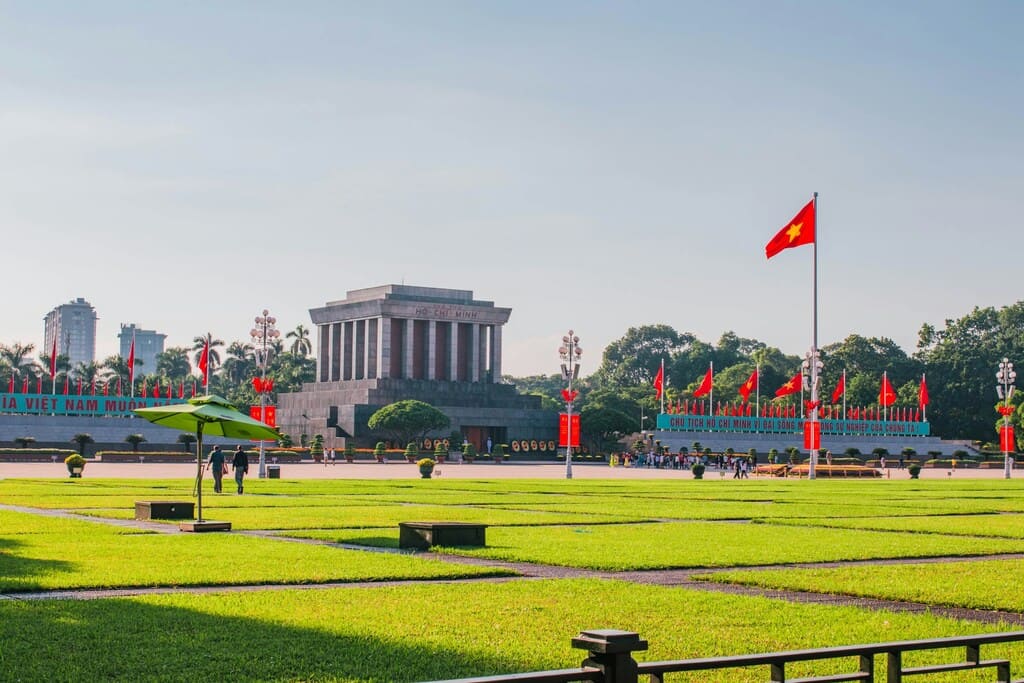
A car takes you between the capital's main historic sites. The Temple of Literature, built in 1070 and home to the country's first university, keeps its courtyards, gates and the stone turtles carrying the steles of doctoral graduates. From there you cross to Ba Dinh Square for the Ho Chi Minh Mausoleum, where the queue moves in silence past the body of the president, and the gardens, pond and stilt house in which he chose to live.
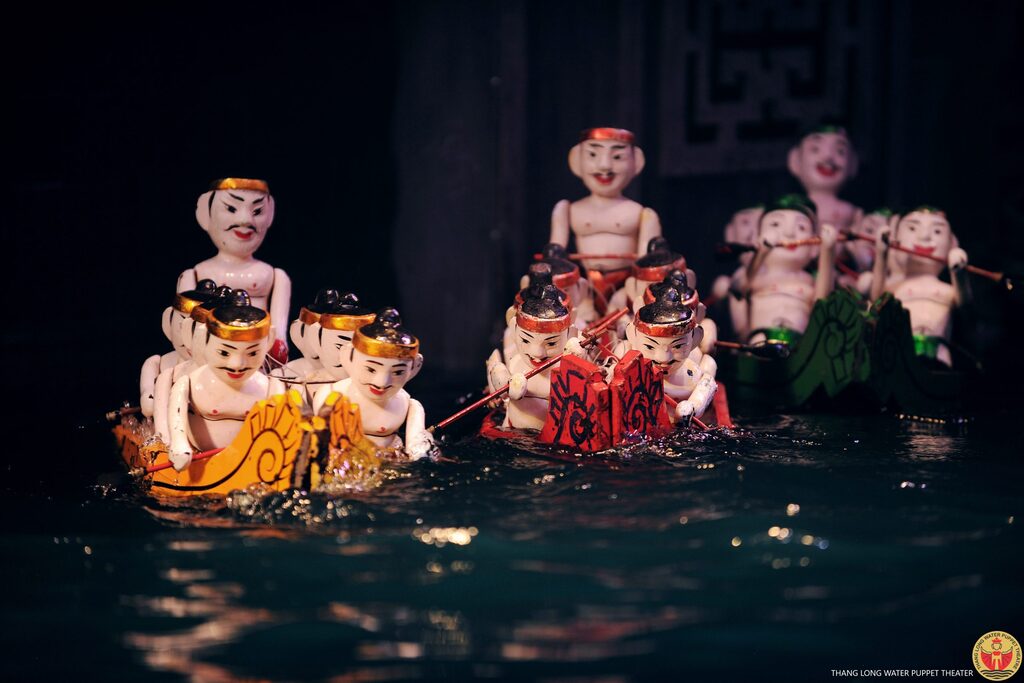
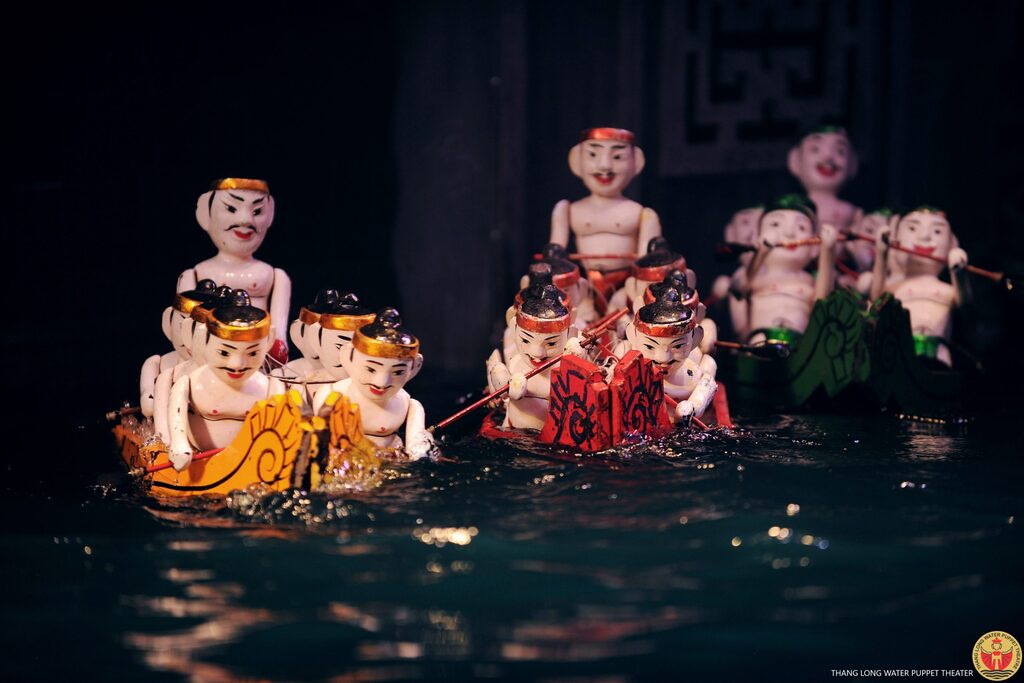
The Vietnam Museum of Ethnology, in the west of the city, explains the 54 ethnic groups through costumes, tools and a garden of full-size houses, including a Bahnar communal house with a roof as tall as a church. The day finishes with a water puppet show, a Red River delta tradition in which puppeteers stand waist-deep behind a screen and work the figures across a pool.
Day 3Ninh Binh: Hoa Lu by bicycle, the Trang An caves by rowboat and the Mua Cave viewpoint
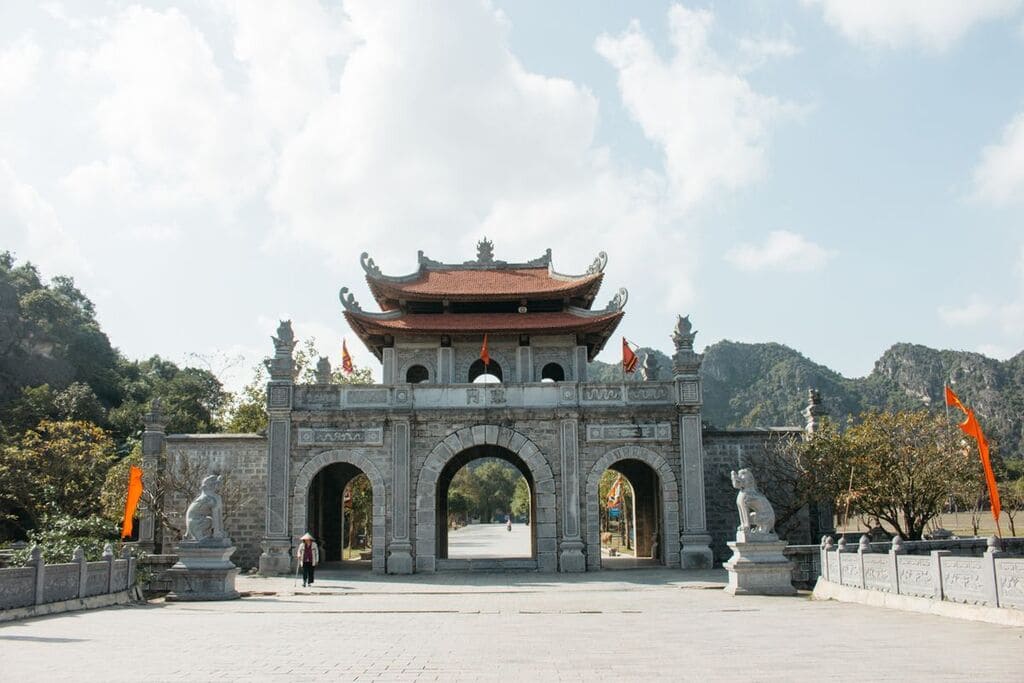
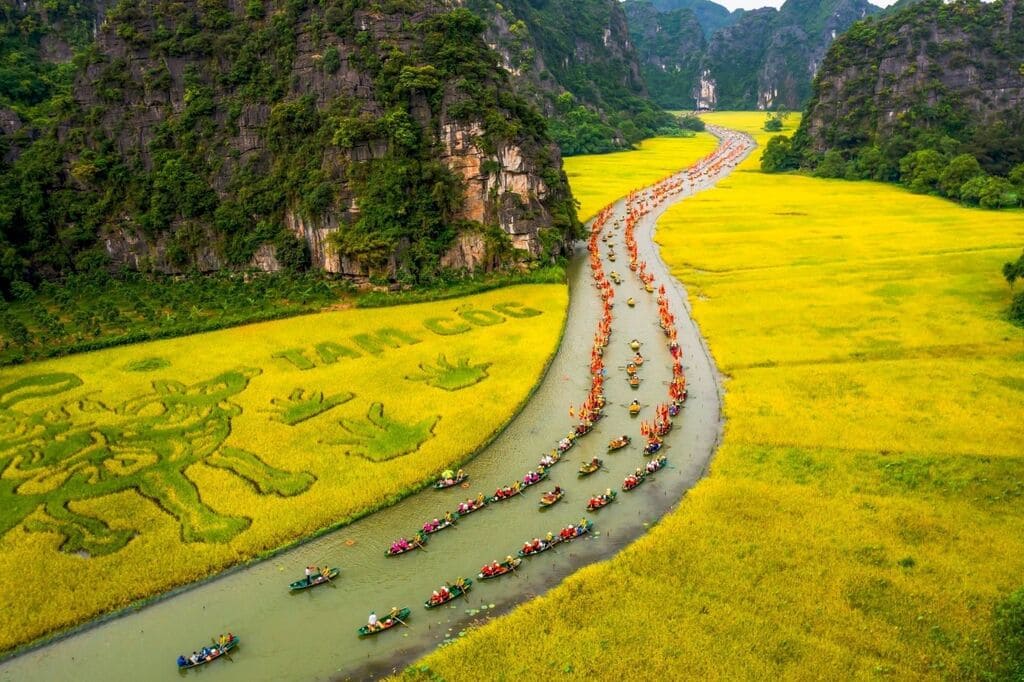
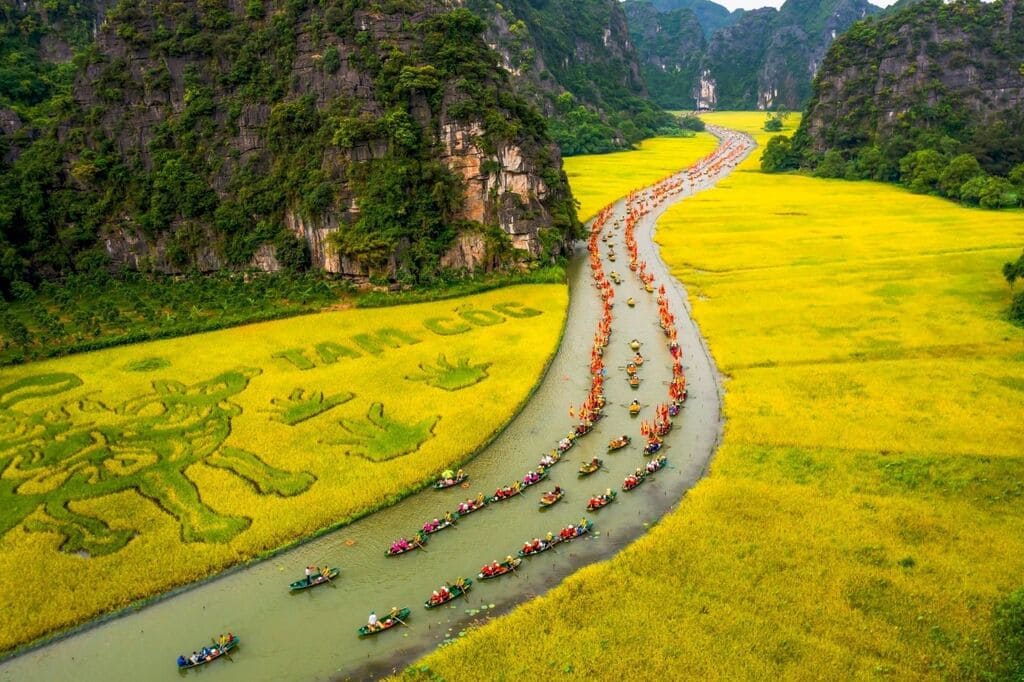
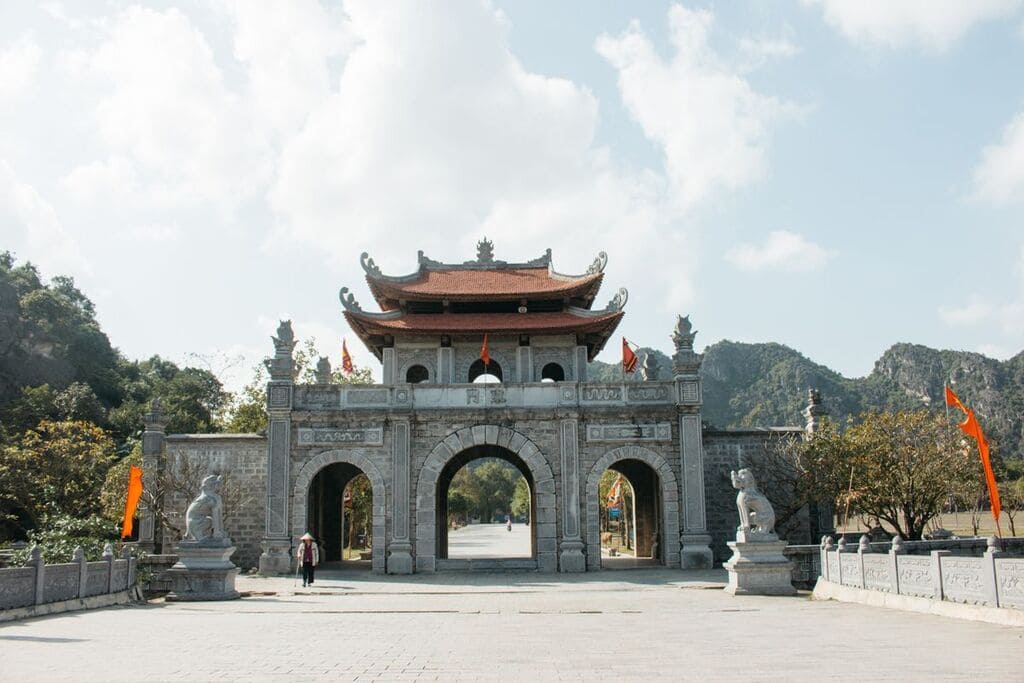
You drive south out of the delta into Ninh Binh province, where limestone peaks stand in the paddies in the same way they stand in the sea at Ha Long. Bicycles take you along flat lanes through the rice fields to the old royal capital at Hoa Lu, where your guide shows you its temples.
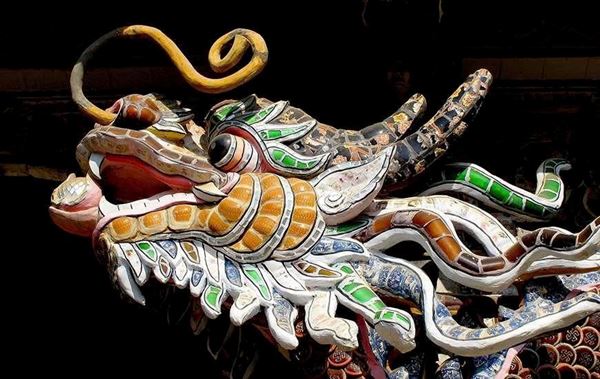
At Trang An, part of the same World Heritage landscape, a rower takes you along the river and through three caves, Sang, Toi and Nau Ruou, where the water passes straight under the mountains. Last comes the stairway of several hundred steps at Mua Cave, which zigzags up the rock to the dragon-topped ridge of the Dragon Mountain viewpoint, with the Ngo Dong River bending through the fields below.
After finishing your journey through Ninh Binh, you return to Hanoi, bringing the day’s exploration to a close.

Day 4Hanoi to Ha Long Bay: a night cruise among the karst, a cave and a kayak or swim
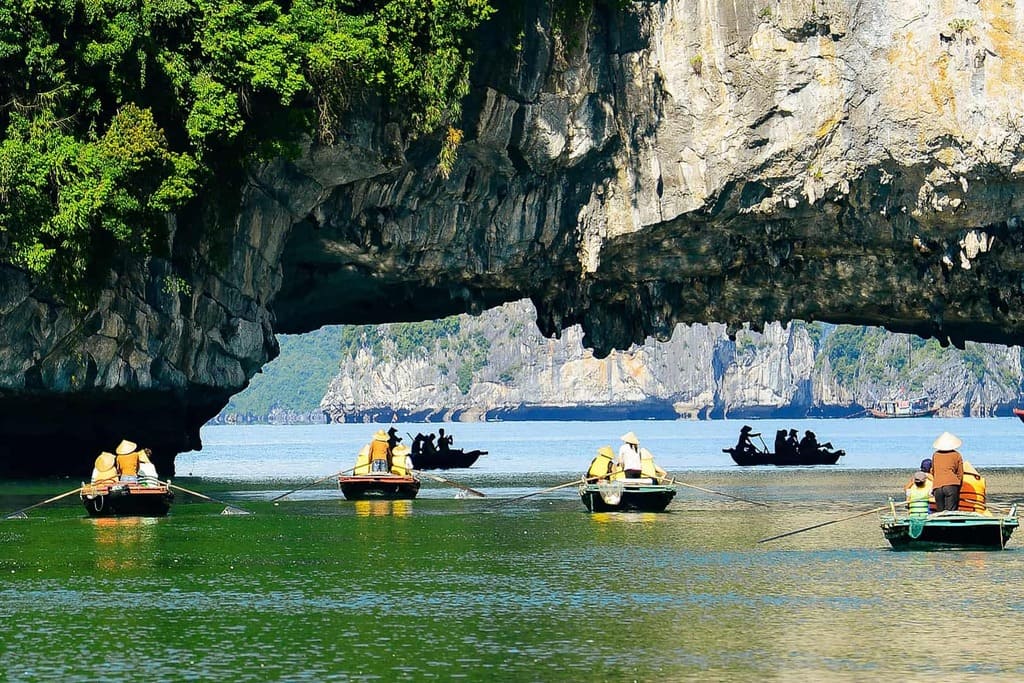
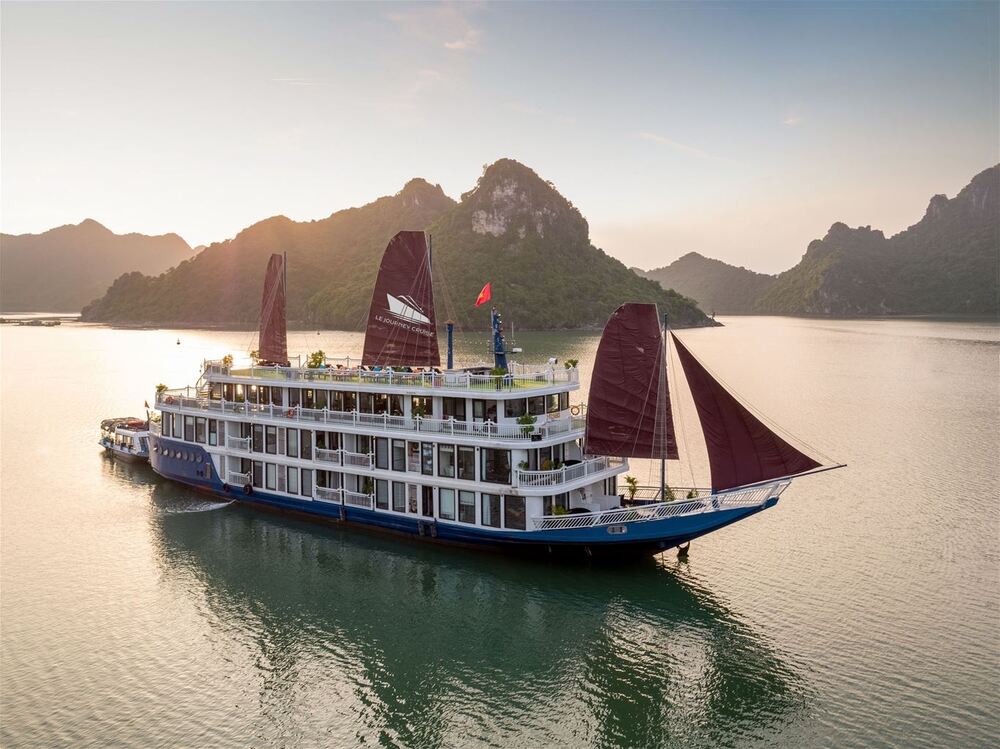
The road runs north-east from Ninh Binh to the coast, and at the harbour you board your cruise boat for Ha Long Bay. It sails out among the limestone islands and grottoes, with time on deck as the rocks slide past.
In the afternoon the boat stops at one of the bay's limestone caves, then anchors in calm water where you can take out a kayak or swim from the boat. The activities the crew run on board in the evening are optional and paid separately, and you sleep in your cabin on the bay.

Day 5Morning on the bay, back to Hanoi and the night train south to Dong Hoi
The day starts early on deck, where you can join a tai chi session or simply watch the light come up over the islands. The boat then stops at a limestone cave hung with stalactites and stalagmites before it cruises back towards the pier by a different channel.
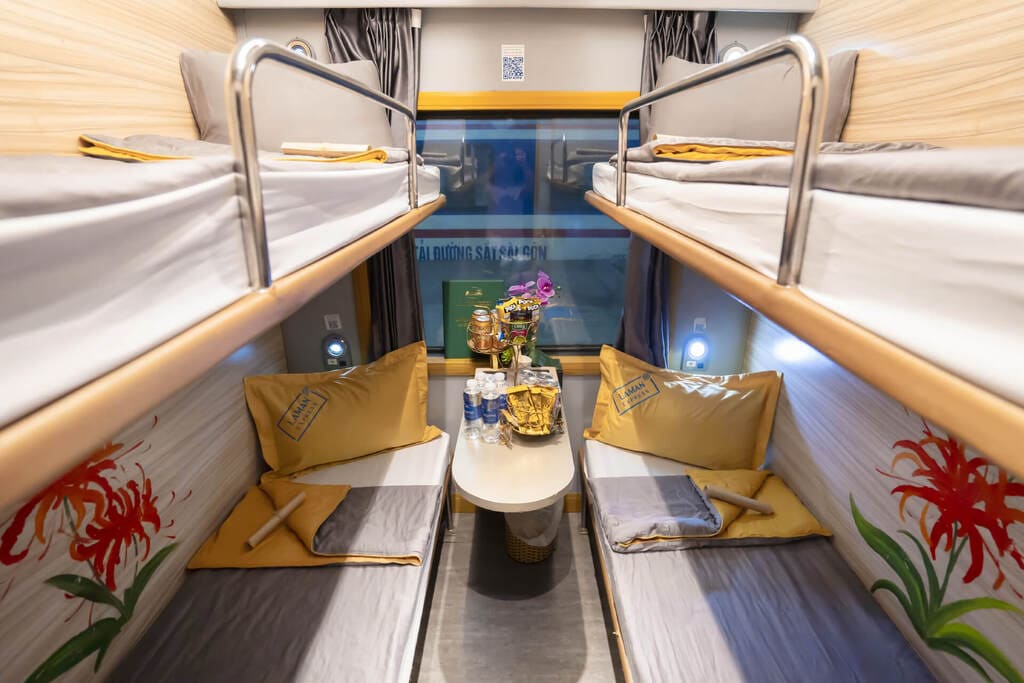
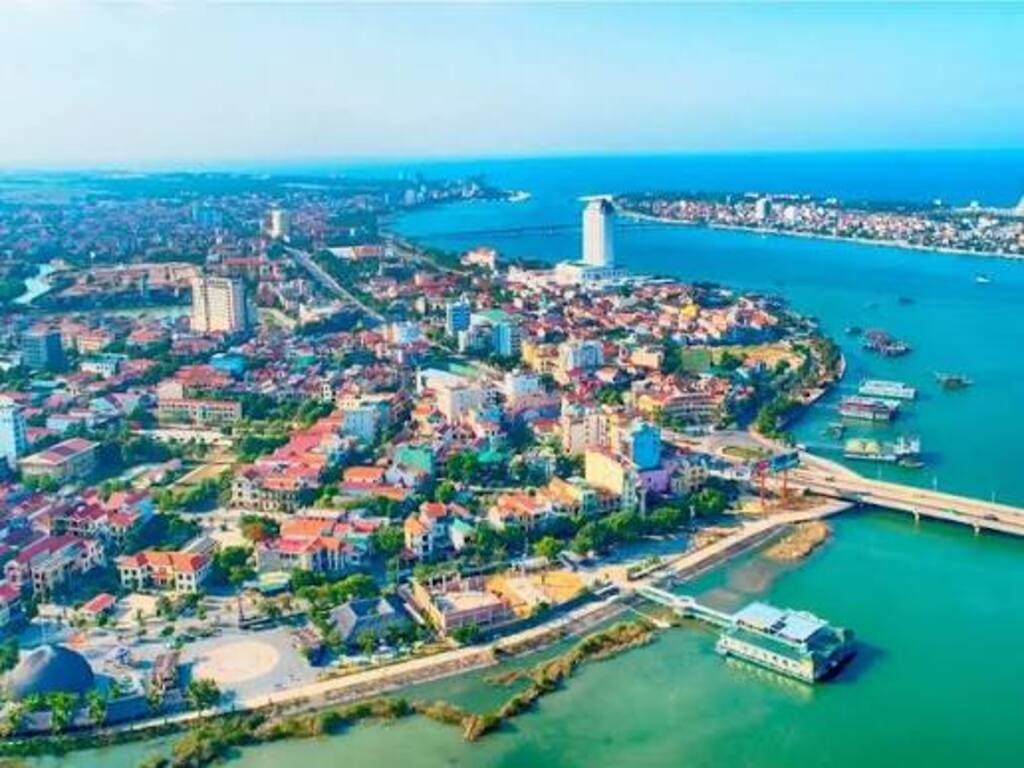
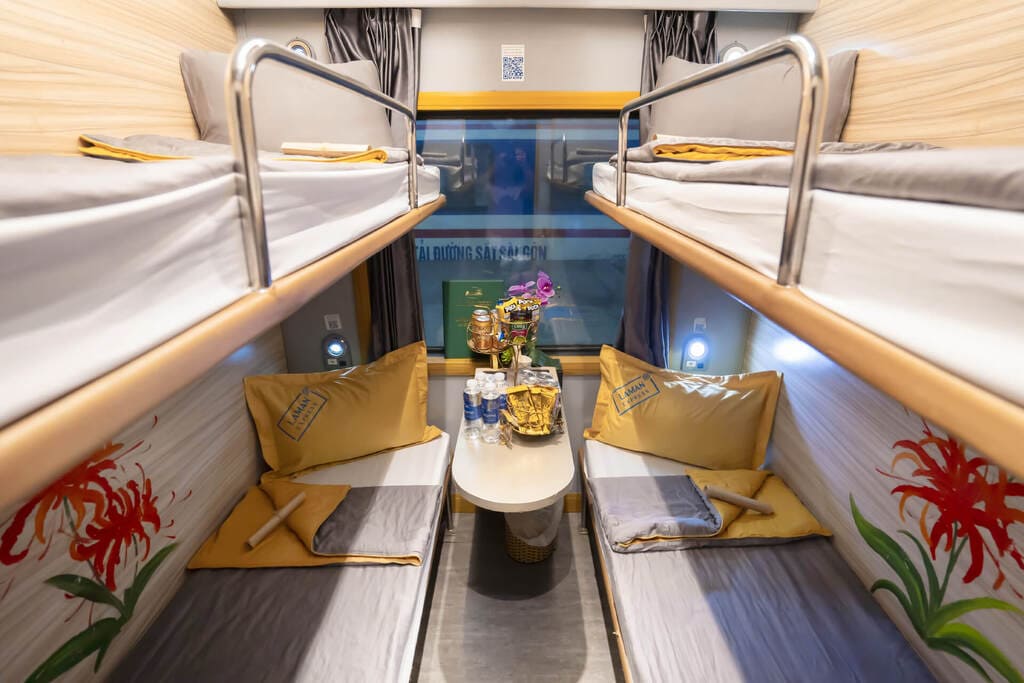
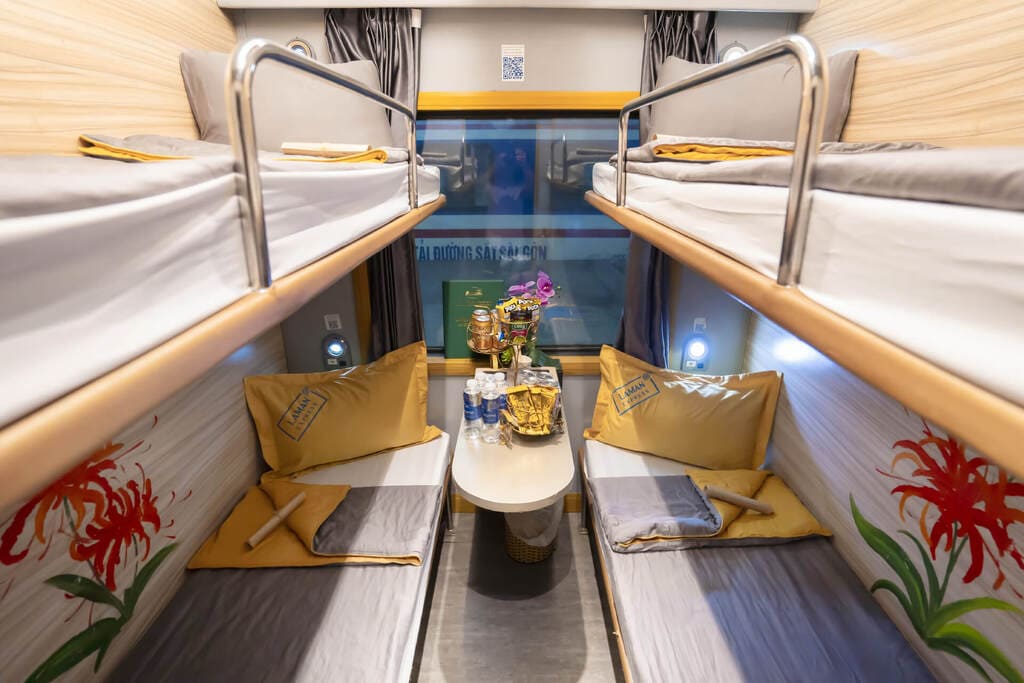
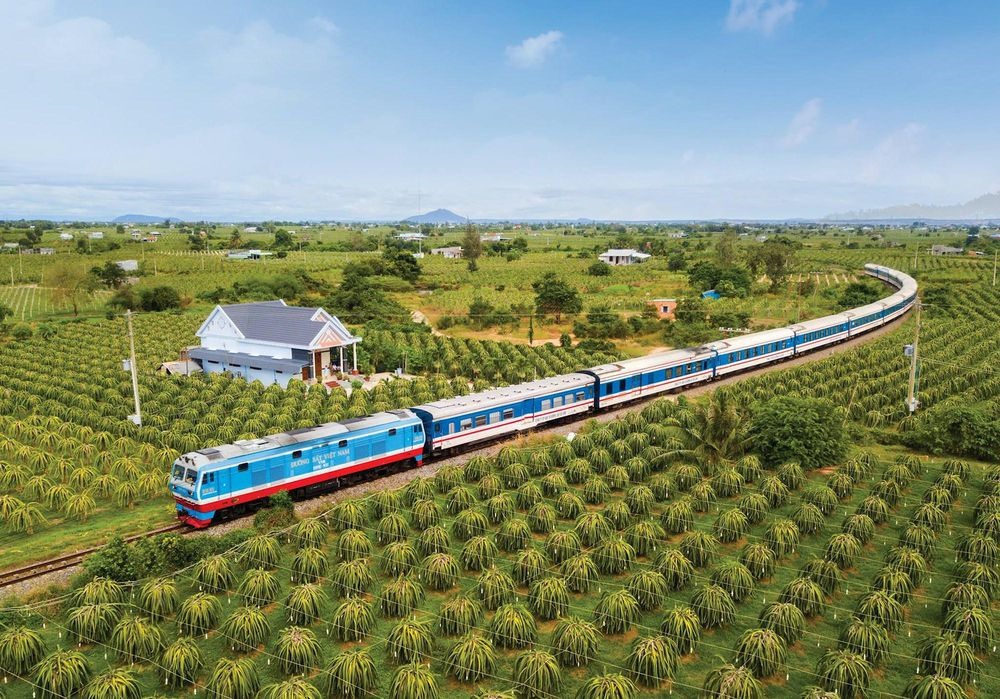
Ashore, your driver returns you to Hanoi, around three hours on the expressway, with time to collect your bag before the station. In the evening you board the sleeper train for Dong Hoi, the capital of Quang Binh province, roughly 500 km down the Reunification line. You share a four-berth compartment with bedding provided, and the train rolls through the night to arrive in the early morning.
Day 6Phong Nha-Ke Bang: by boat into Phong Nha Cave and up to Tien Son Cave
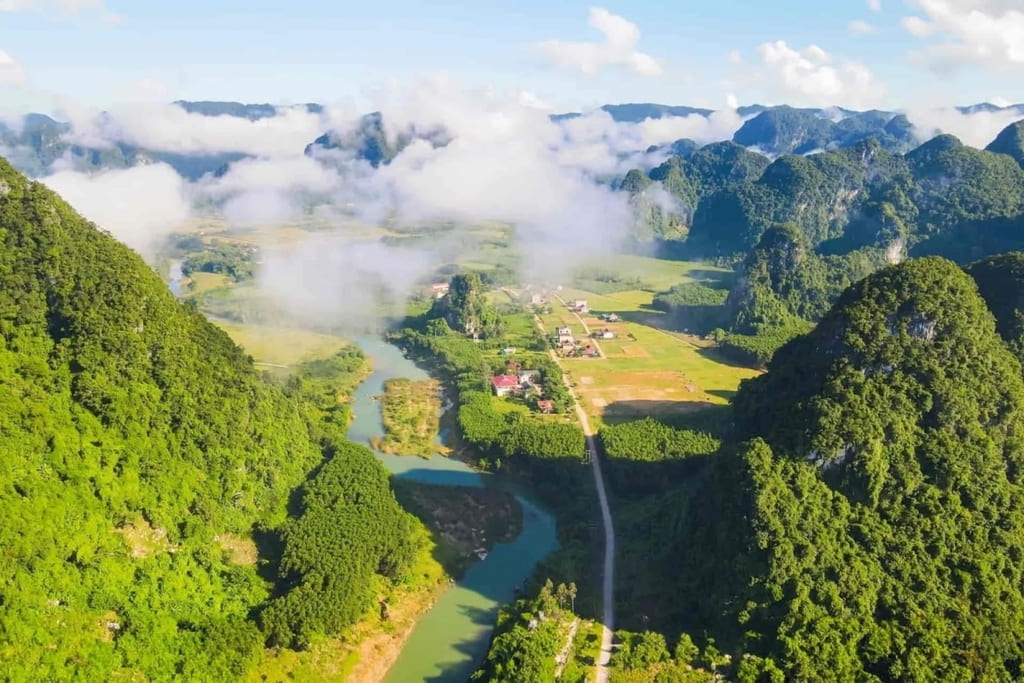
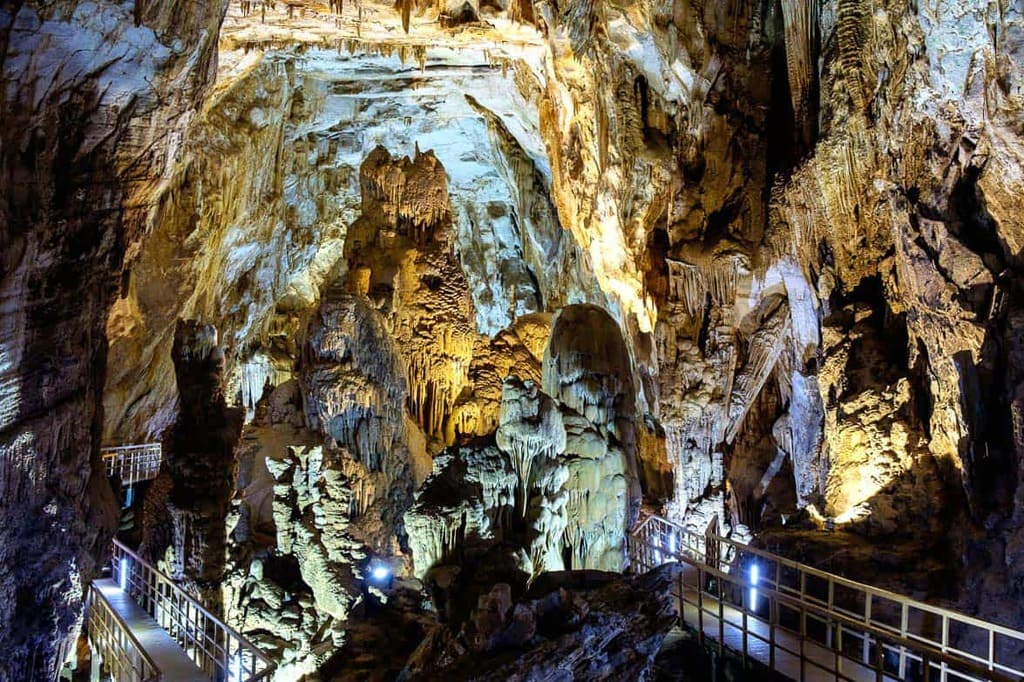
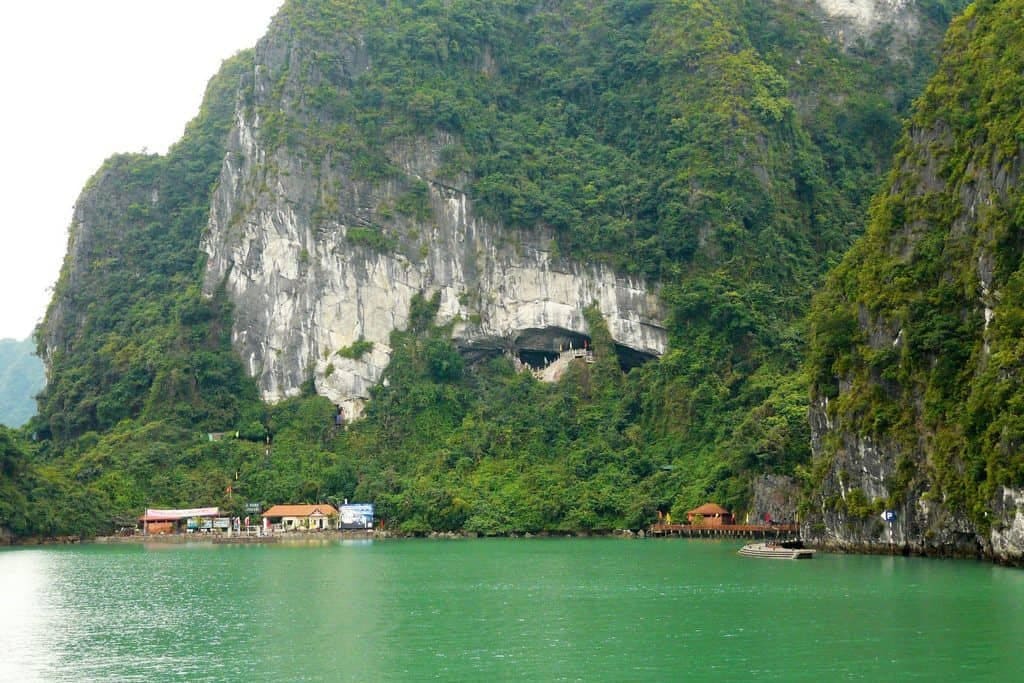
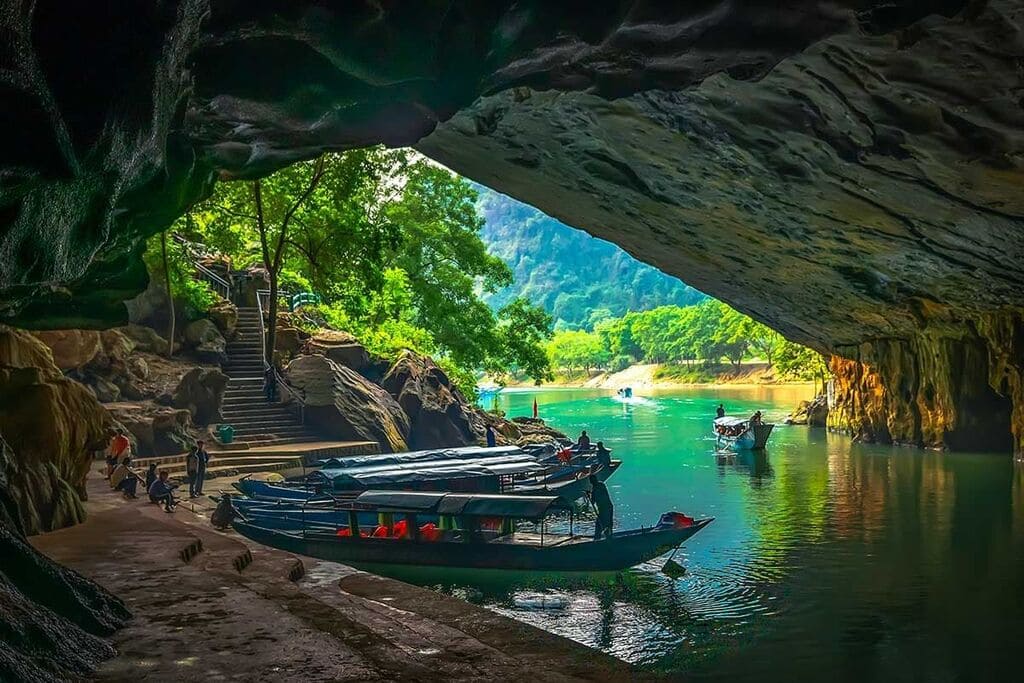
A driver collects you at Dong Hoi station for the 45 km run inland to Phong Nha-Ke Bang National Park, a World Heritage site for its limestone that is among the oldest in Asia and for a cave system still not fully mapped. From the village jetty a wooden boat takes you up the Son River between the karst walls and, with the engine cut, drifts into the mouth of Phong Nha Cave.
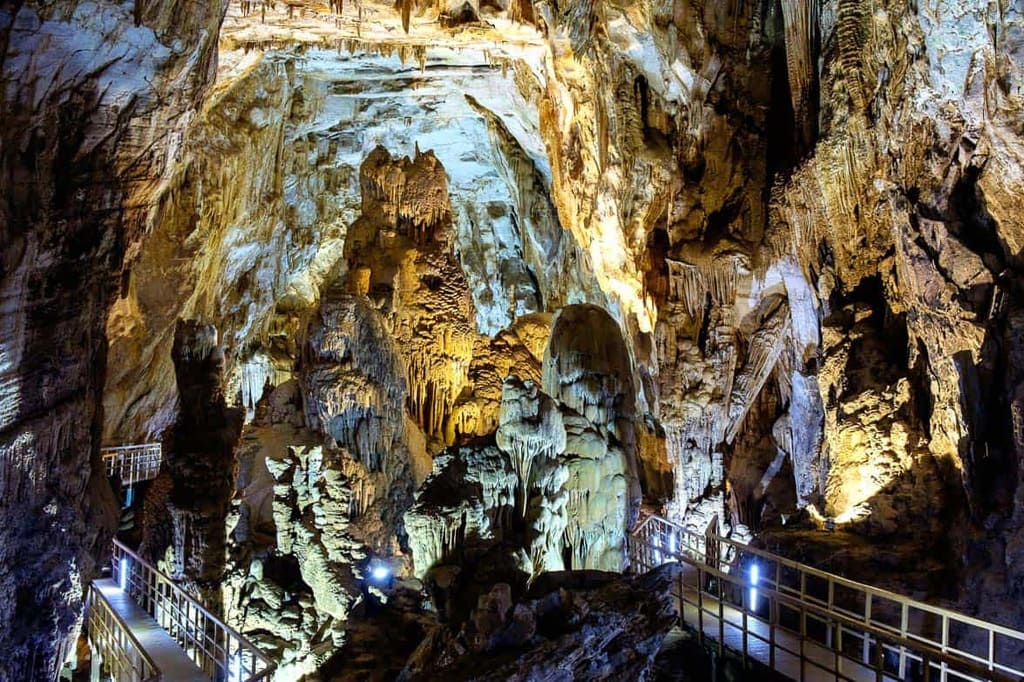
The river runs more than a kilometre into the mountain, and the boat glides under hanging stalactites before you land on a sandbank and walk back through the dry chambers. Tien Son Cave sits in the same cliff but higher up, reached by a stairway of a few hundred steps, and is drier and more ornate, with formations that ring when tapped. The rest of the day is at your own pace in the village.
Day 7Across the old DMZ: Cua Tung Beach and the Vinh Moc tunnels, then on to Hue
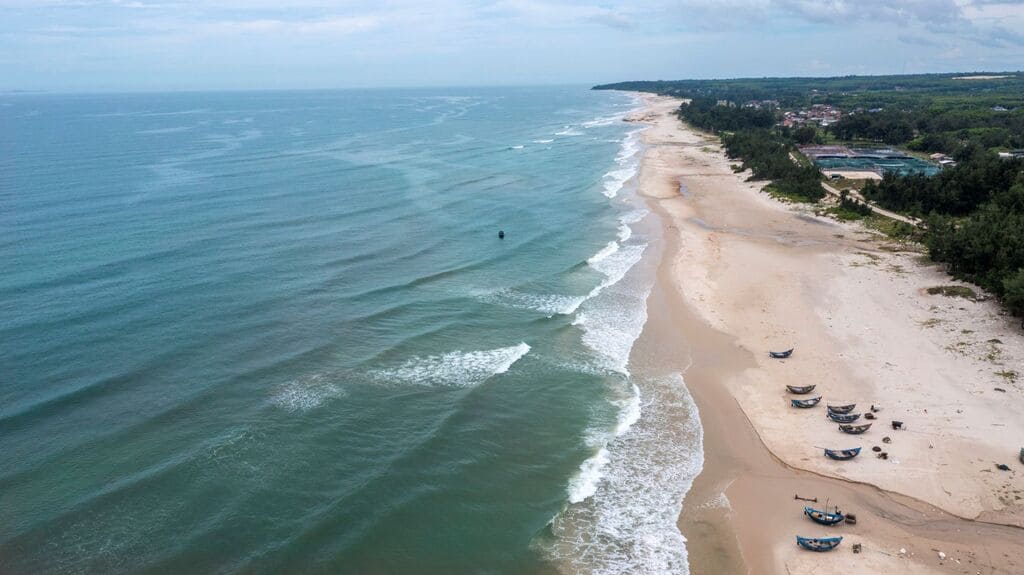
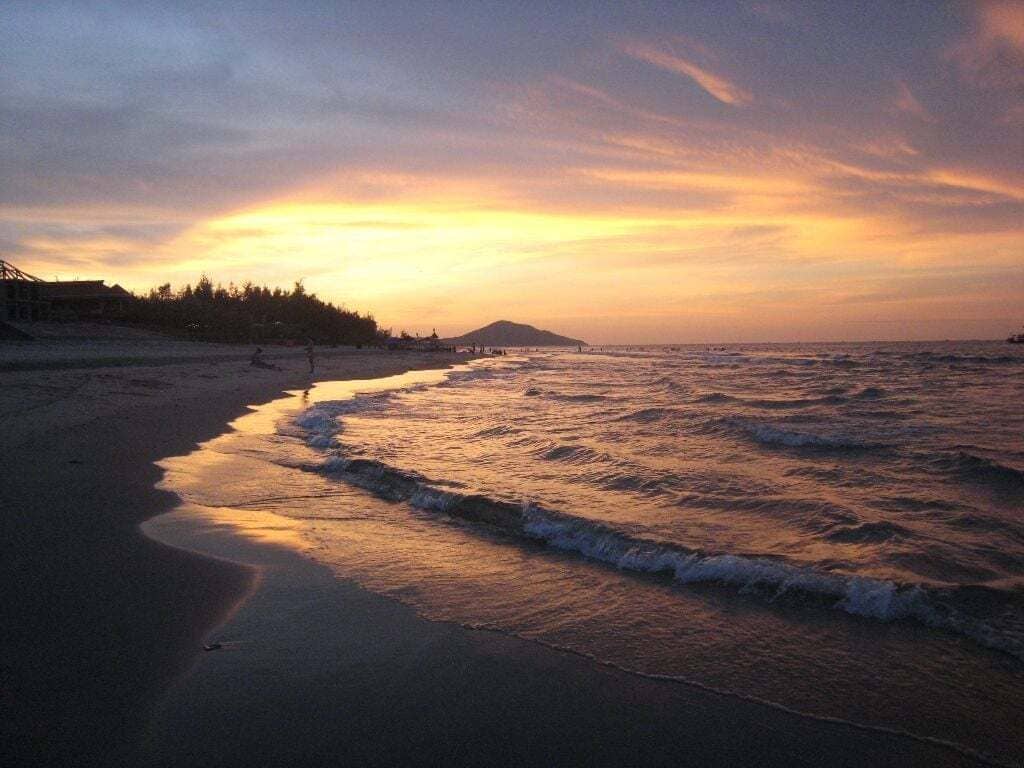
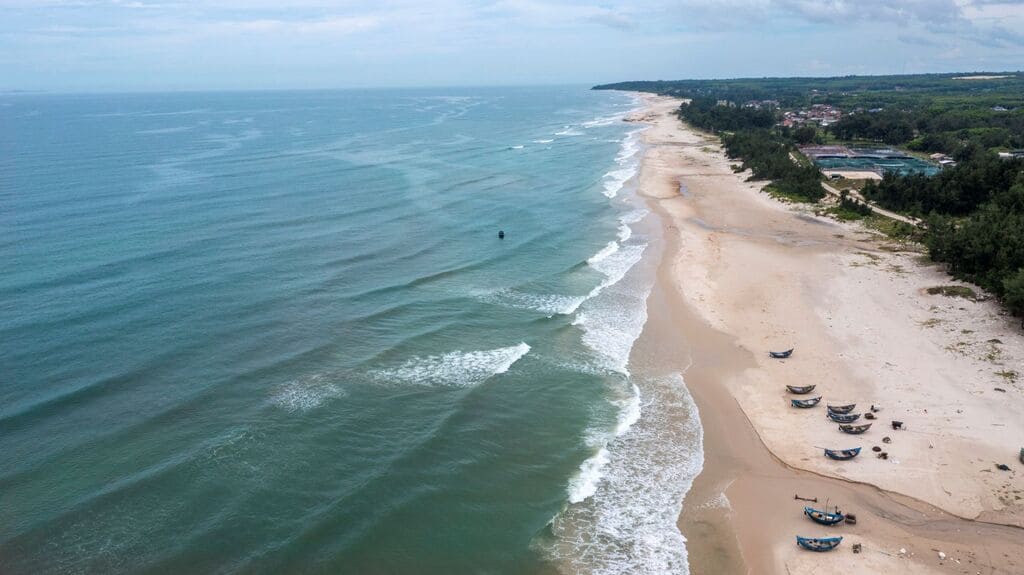
Leaving the park, you head south on the coast road through Quang Tri province, which was the demilitarised zone along the Ben Hai River from 1954 to 1975 and saw some of the heaviest bombing of the war. The first stop is Cua Tung, a long beach backed by casuarina trees that was once a summer resort for the Nguyen court and later sat right on the front line.
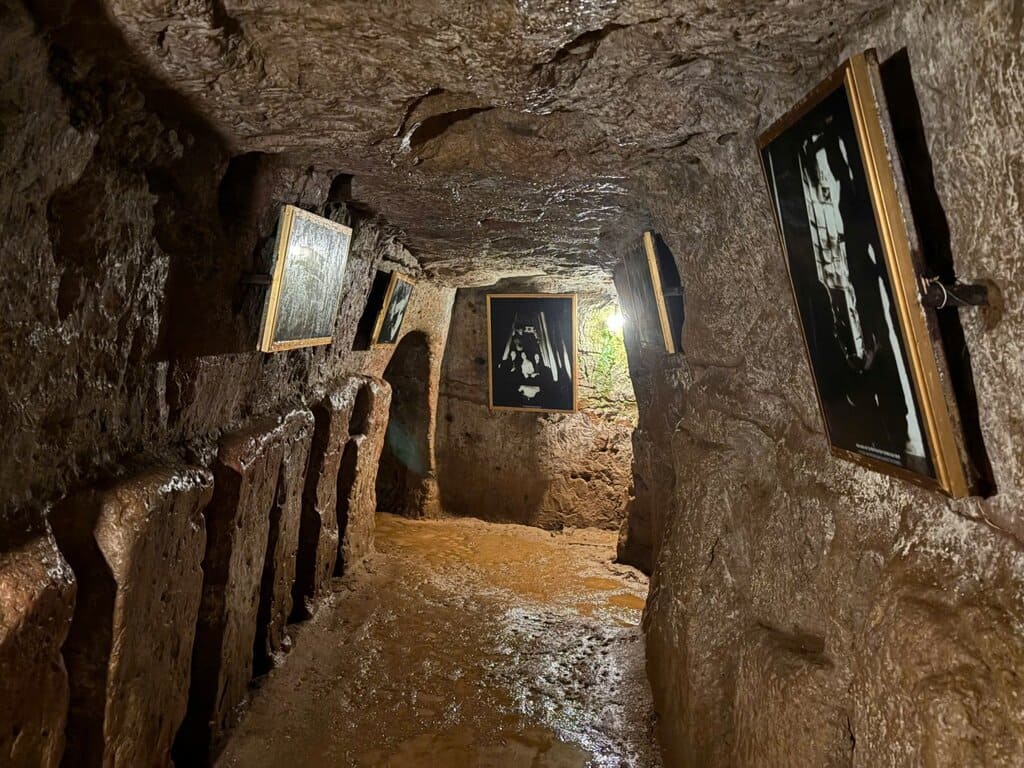
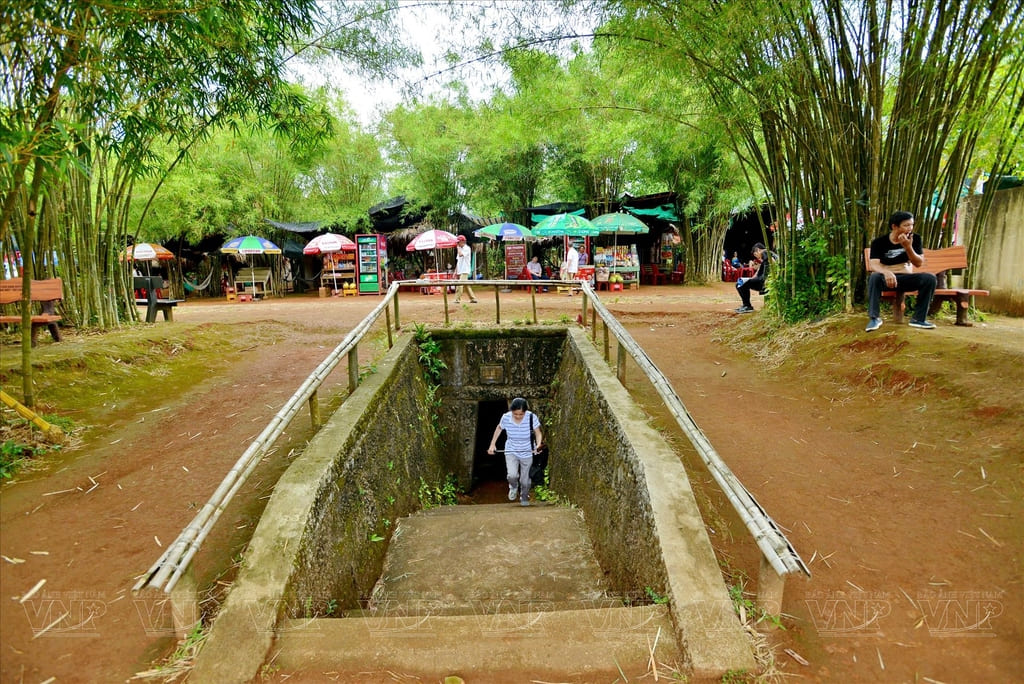
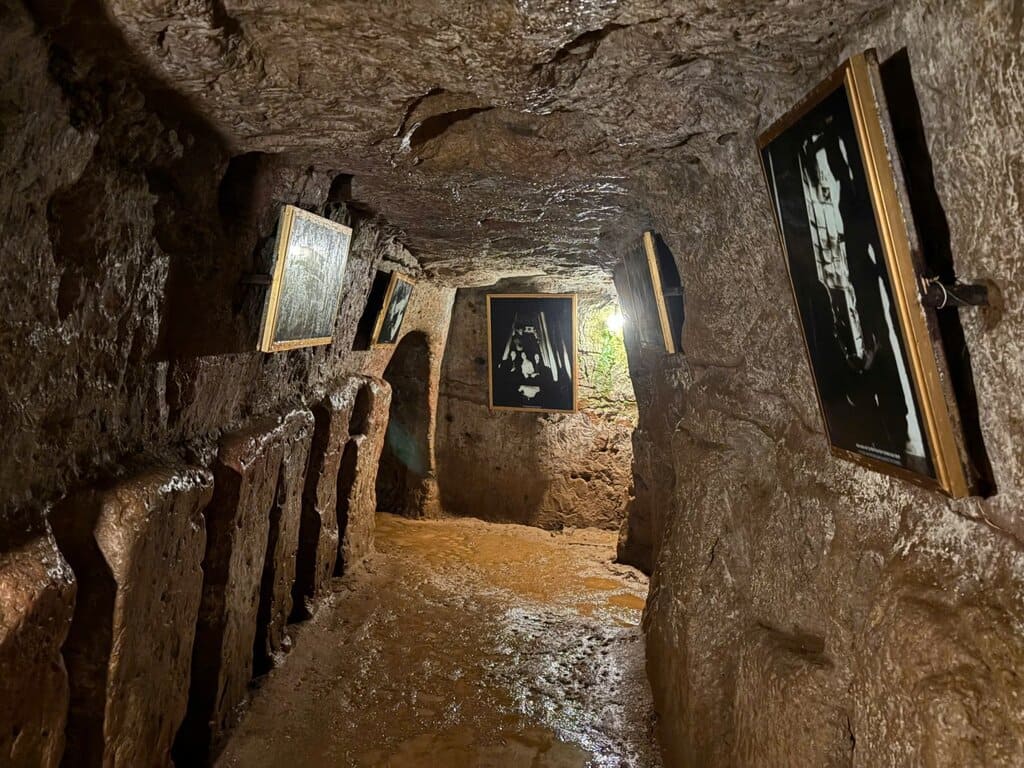
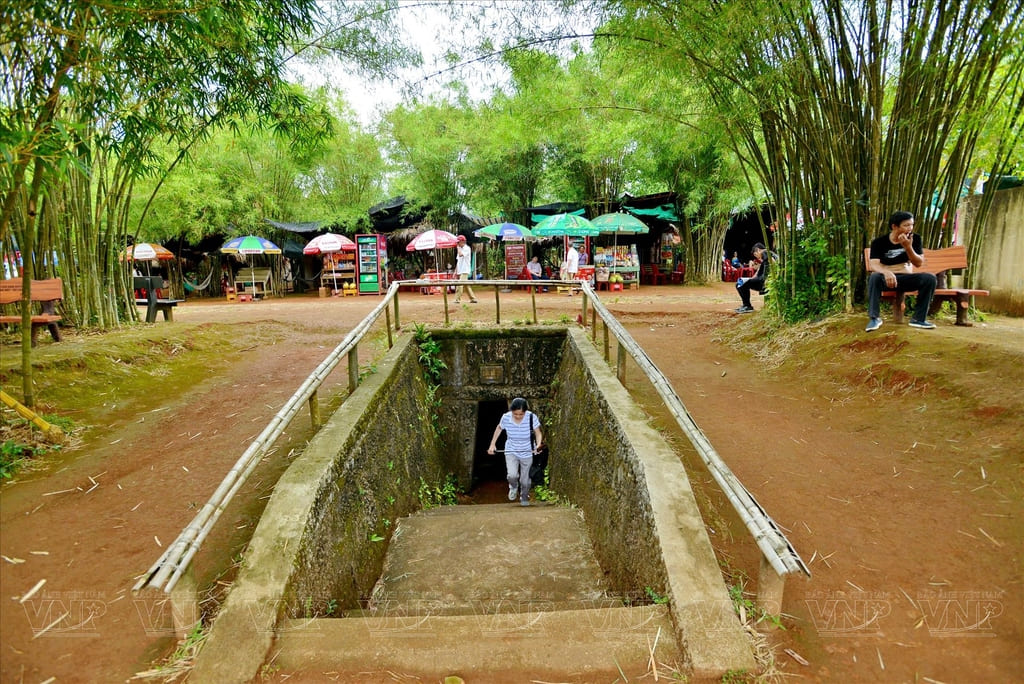
A few kilometres on is Vinh Moc, where a whole village dug itself underground to survive the bombardment. The tunnels run on three levels down to 23 metres, with family alcoves, a meeting hall, a well and a maternity room where 17 children were born; your guide walks you through the sections that are open and out to an exit facing the sea. You continue south to Hue for the evening.
Day 8Hue: the Imperial Citadel, Minh Mang’s tomb, Phu Mong village and a pagoda on the river
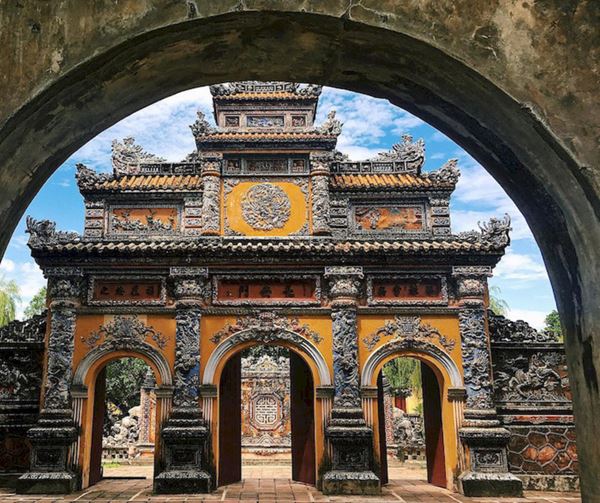
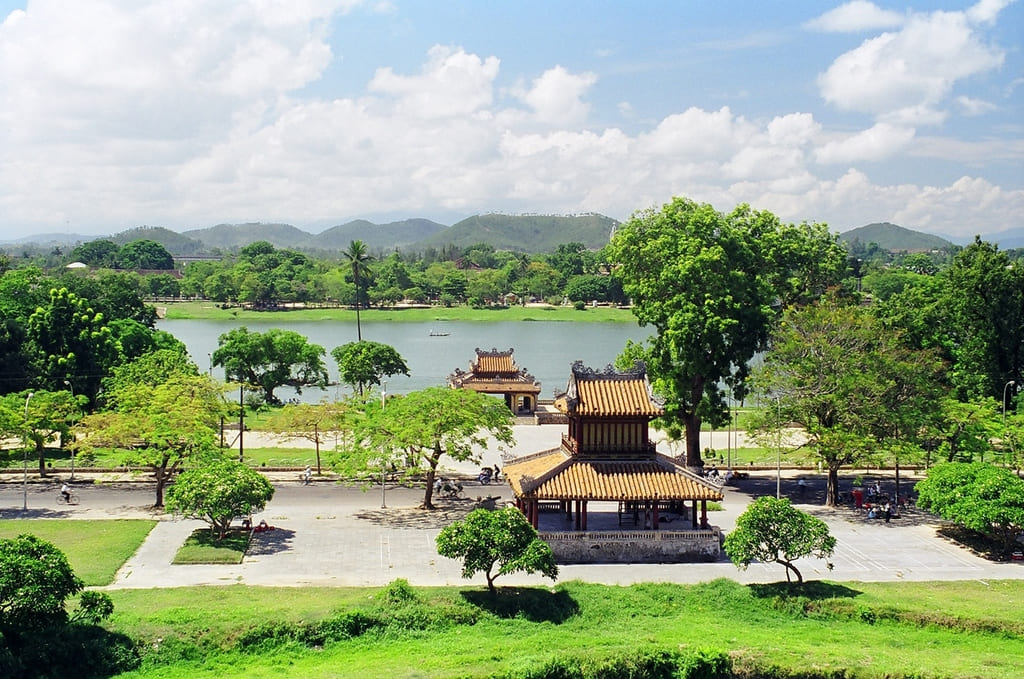
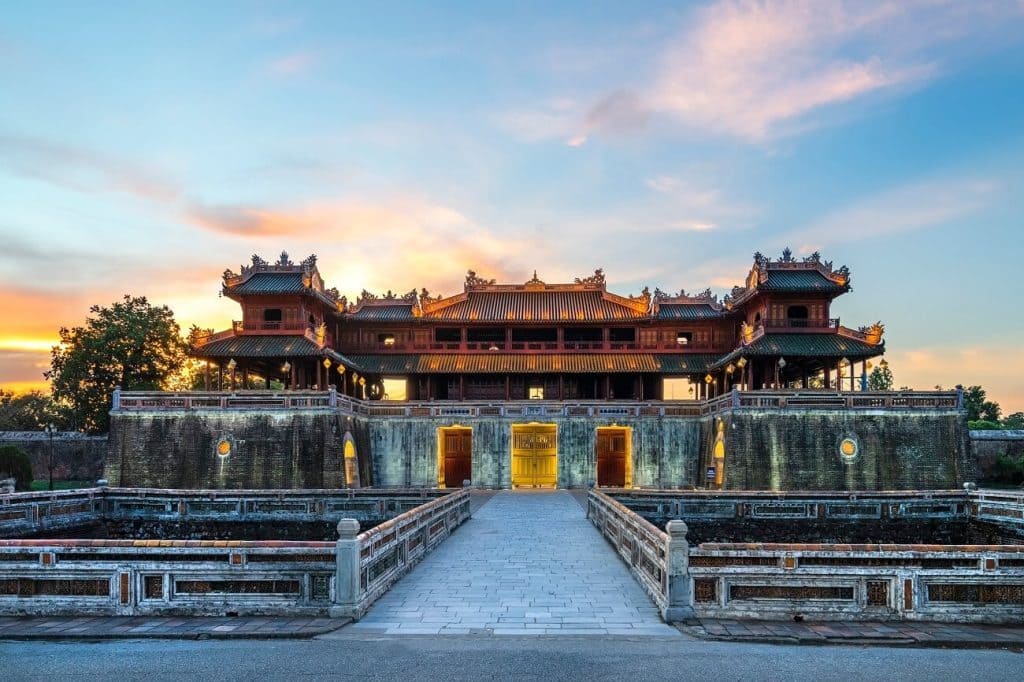
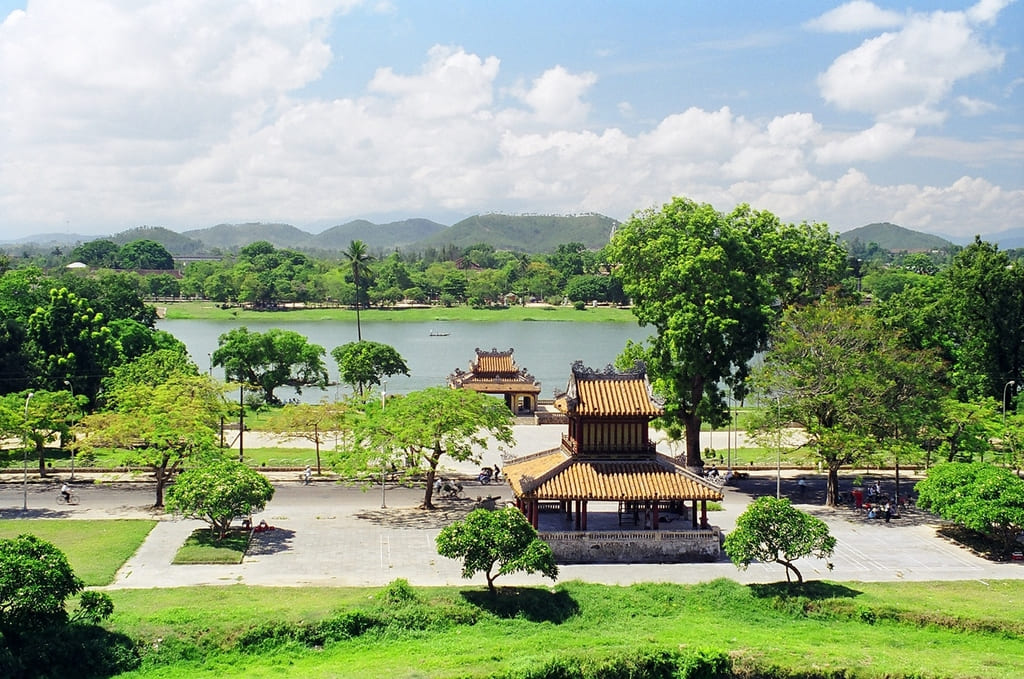
Thirteen Nguyen emperors ruled from Hue between 1802 and 1945, and what they built is now a World Heritage group. The day starts inside the Citadel, where you pass the Noon Gate into the walled Imperial City, see the restored Thai Hoa throne hall and walk the long covered corridors and gardens that are being rebuilt stone by stone after the fighting of 1968.
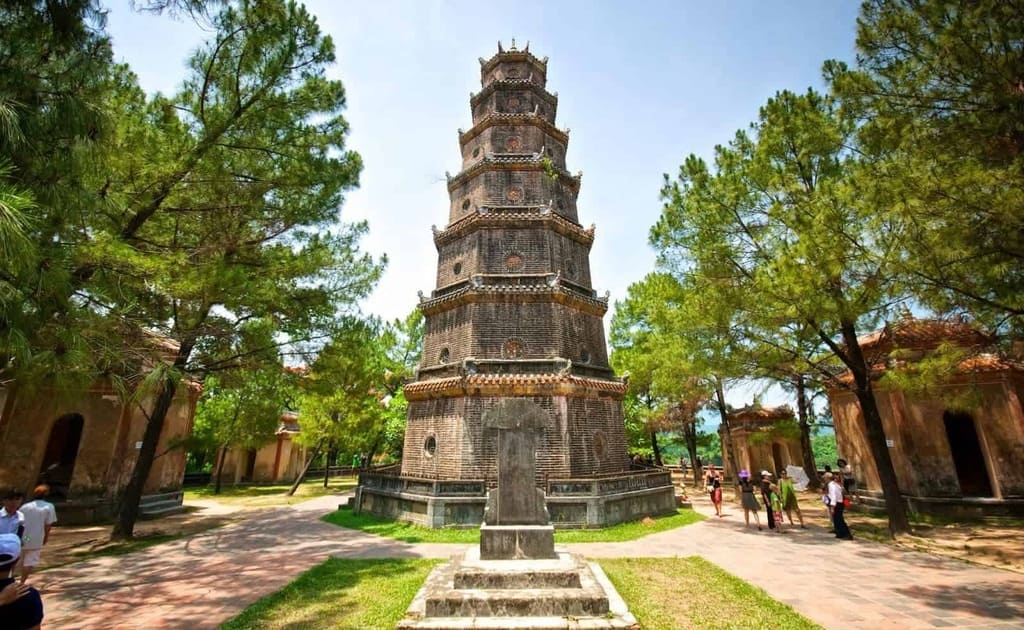
Out of town, Minh Mang's tomb is the most orderly of the royal tombs, laid out on one straight axis of gates, courtyards and lakes in a pine wood. Nearer the river you walk through Phu Mong, a garden village of old houses behind hedges, and stop at either Thien Mu, the seven-storey pagoda on the bank, or the quieter Tu Hieu, where Thich Nhat Hanh was ordained. Dong Ba, the city's main market, closes the day.
Day 9Hue to Hoi An the slow way: Thuan An, Lang Co and the Hai Van Pass
Instead of the tunnel, you take the coast road to Hoi An with stops along the way. The first is Thuan An, the beach at the mouth of the Tam Giang lagoon just outside Hue, followed by a pause among the lavish tiled family tombs that villagers of this coast build for their ancestors, often bigger than the houses of the living.
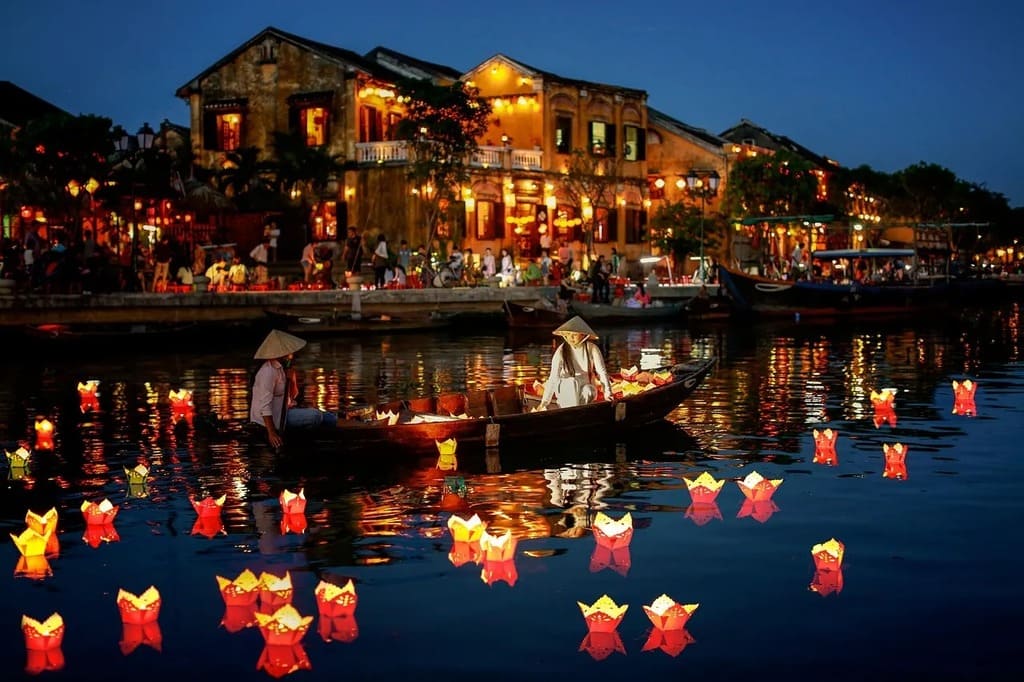
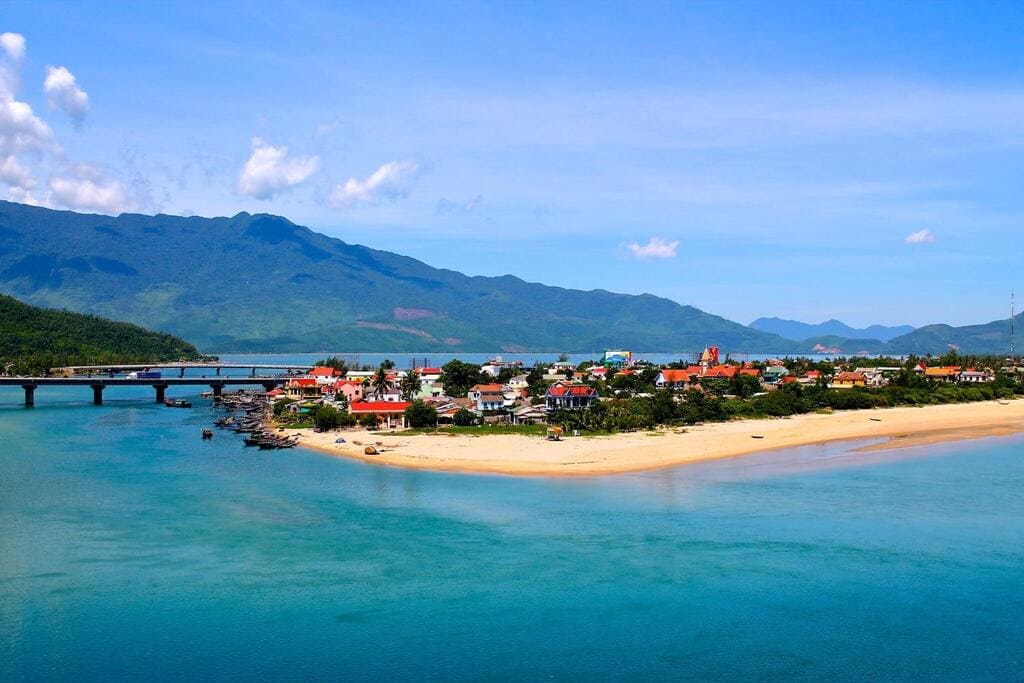
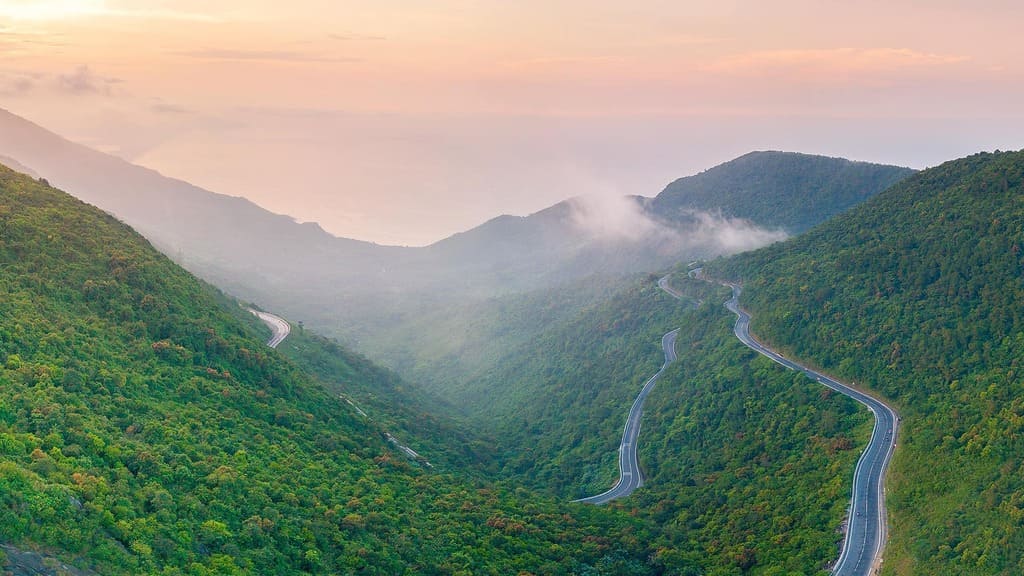
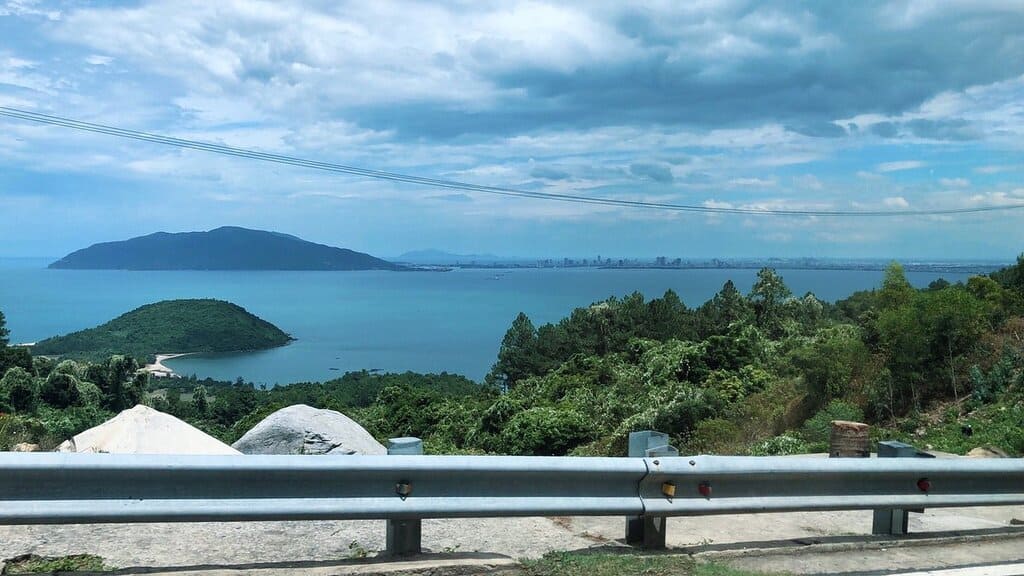
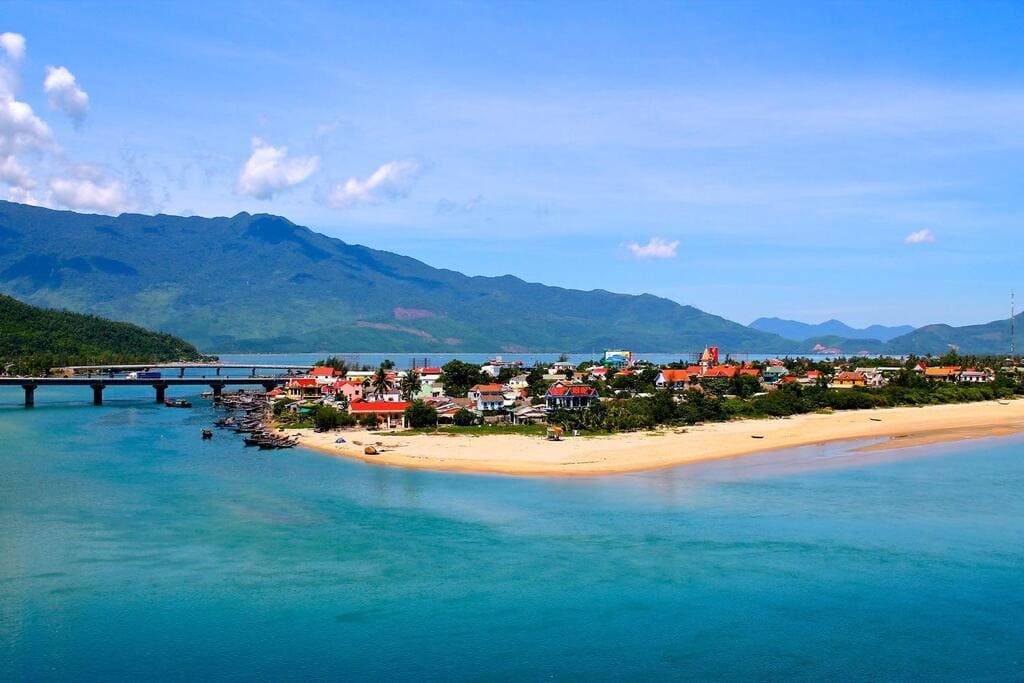
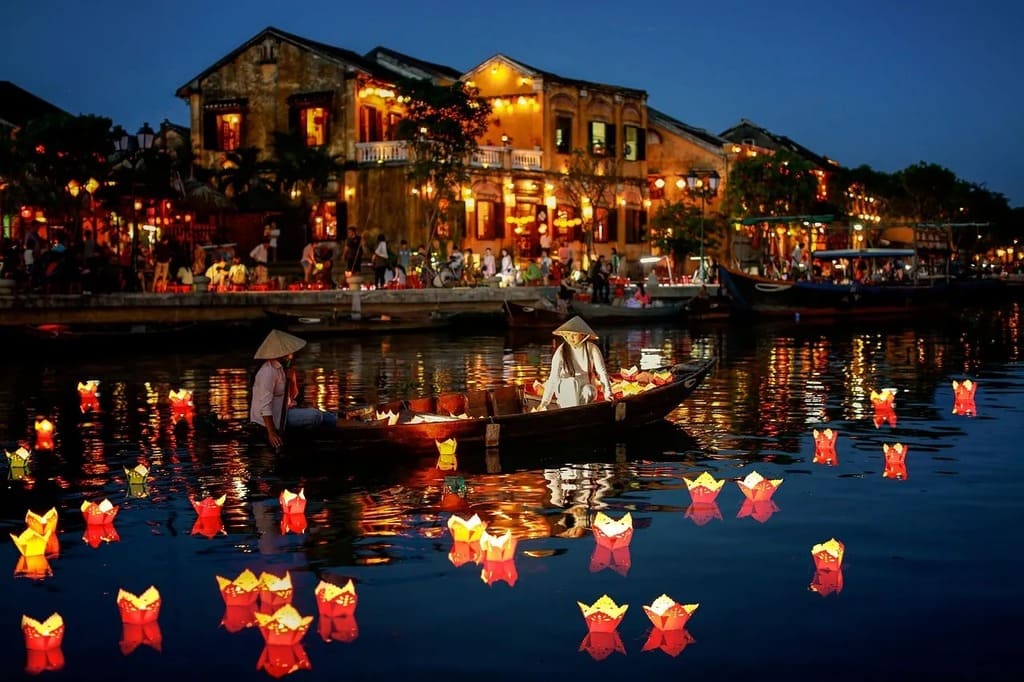
The road then follows the Lang Co lagoon, a strip of white sand between the mountains and the sea, before climbing the Hai Van Pass. The pass tops out at about 500 metres with old French and American bunkers at the summit and a view back to the lagoon on one side and over Da Nang Bay on the other. You descend past Da Nang to Hoi An, with the evening free for the lantern-lit old town.
Day 10Hoi An Ancient Town, then the transfer to Da Nang
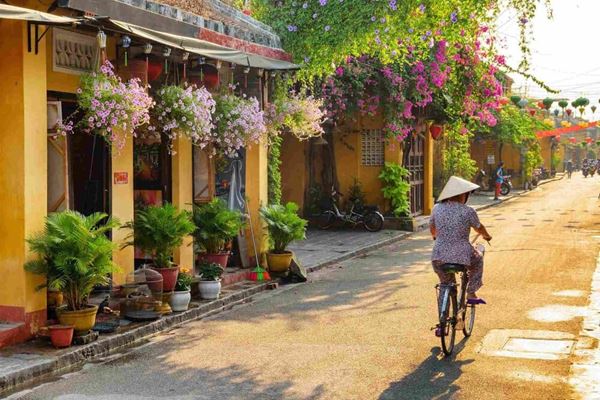
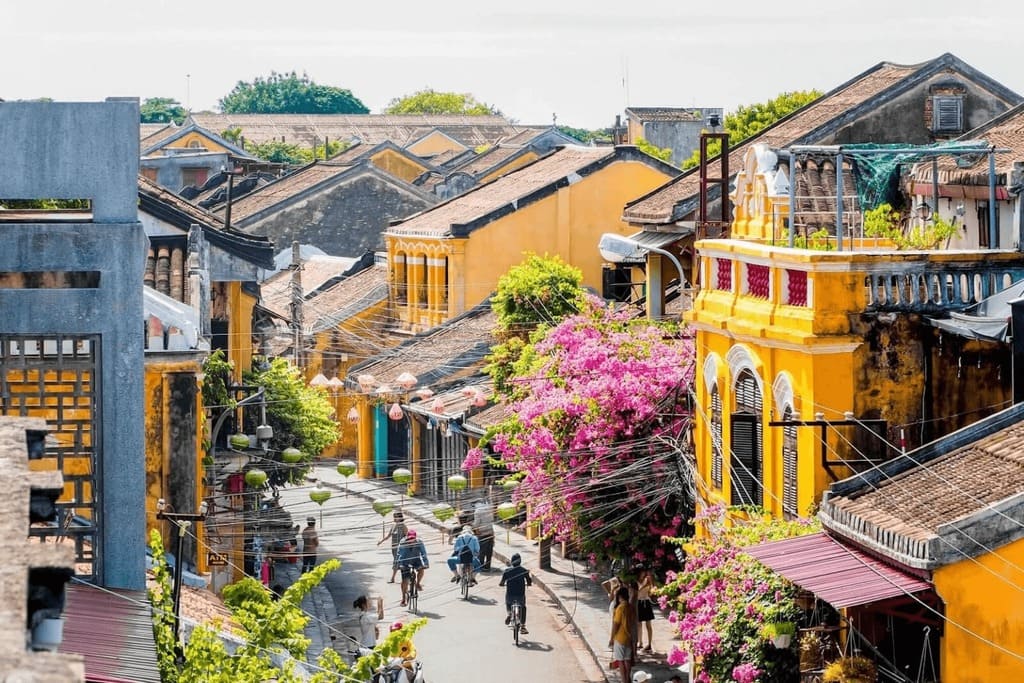
The last morning is free in Hoi An Ancient Town, the port where Japanese, Chinese and European merchants traded from the 16th century and whose yellow-walled shophouses, assembly halls and covered Japanese Bridge earned it World Heritage status. The streets along the Thu Bon River are closed to cars for much of the day, so it is an easy place for a last Vietnamese coffee by the river or some shopping on your own.
Your driver then takes you about 30 km north to Da Nang International Airport, where the tour ends. If you would rather stay longer, we can add nights on the beach at An Bang or in Da Nang when you book.
Hotels
Where you sleep
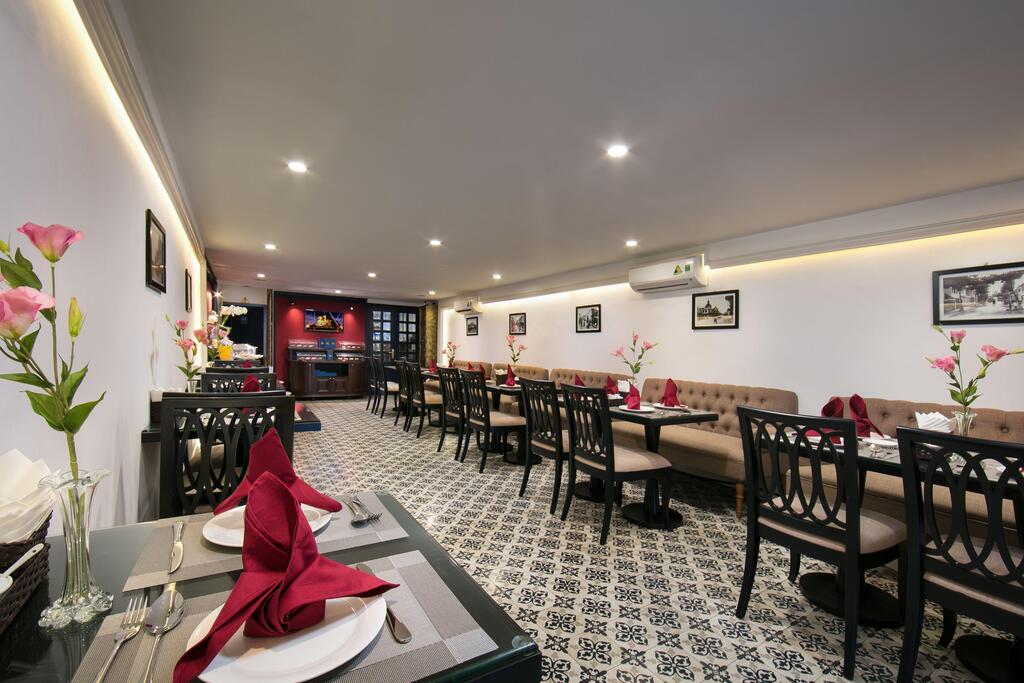
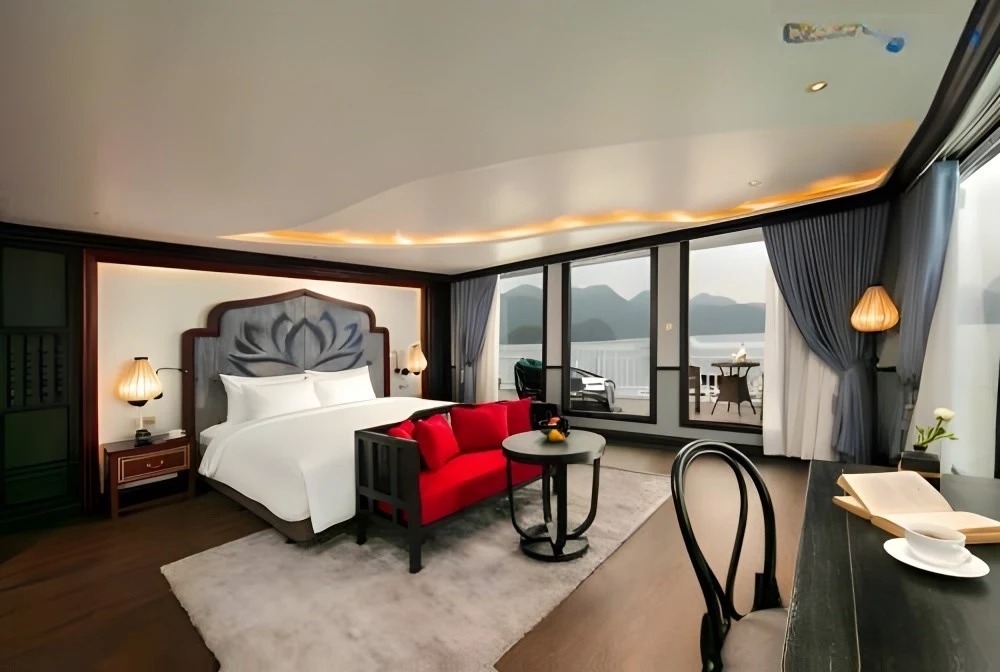
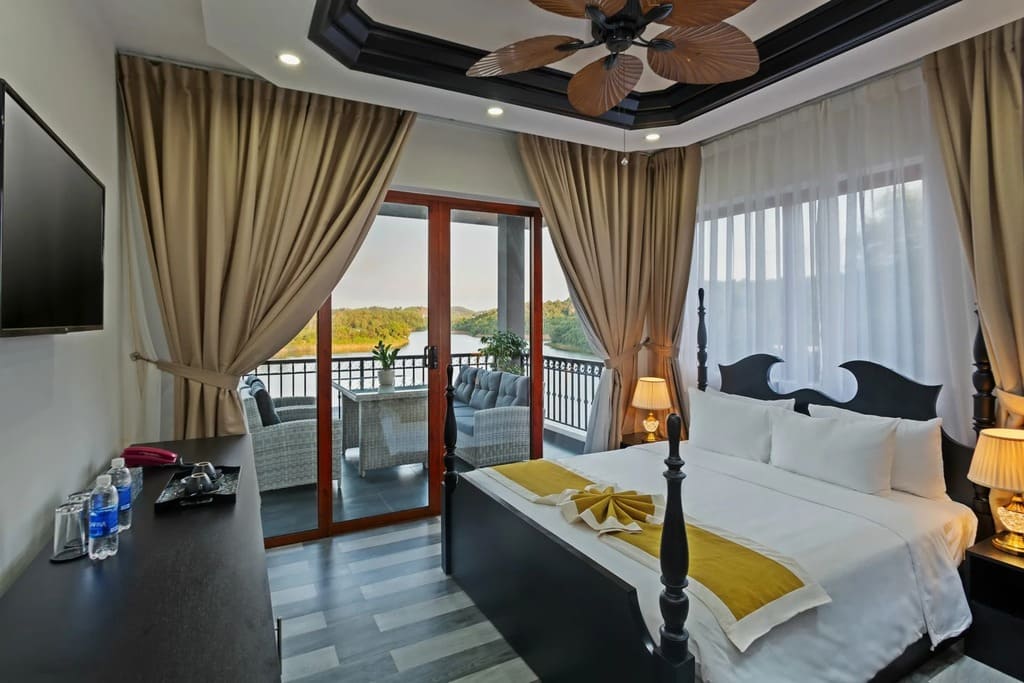
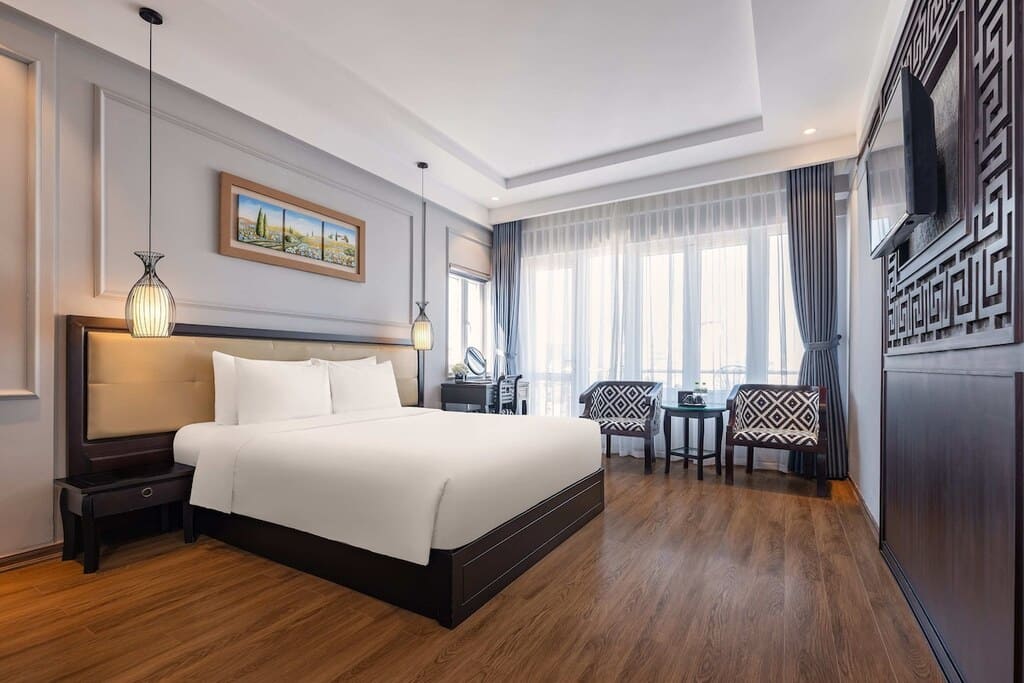
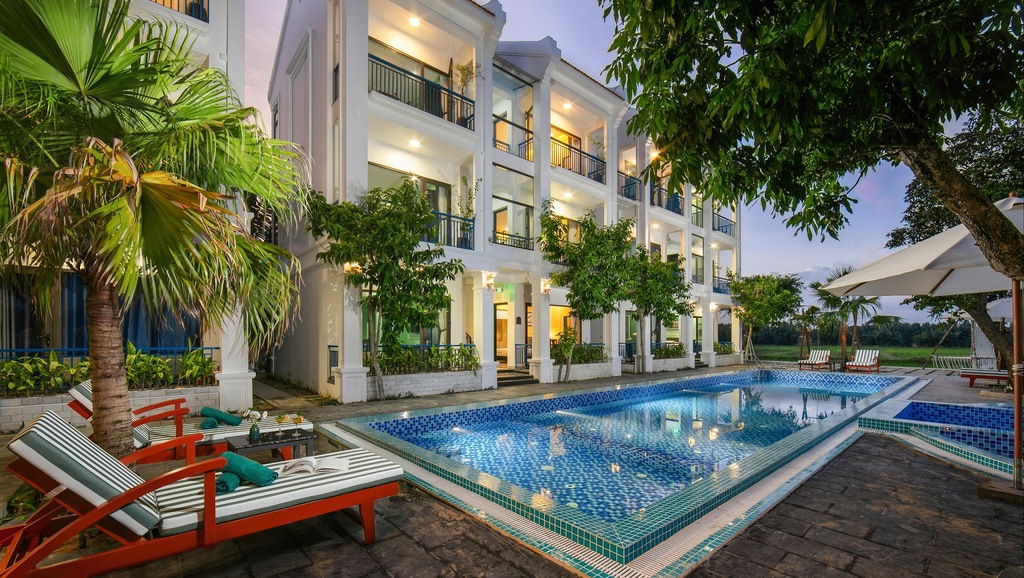
Stays may change to similar ones depending on availability for your dates. We will let you know in advance. You can also upgrade to 4-star or 5-star hotels.
Transport
Transport on this tour

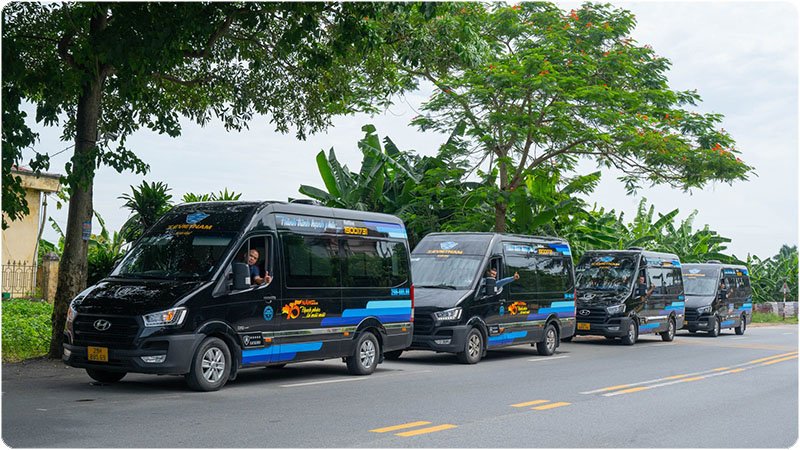
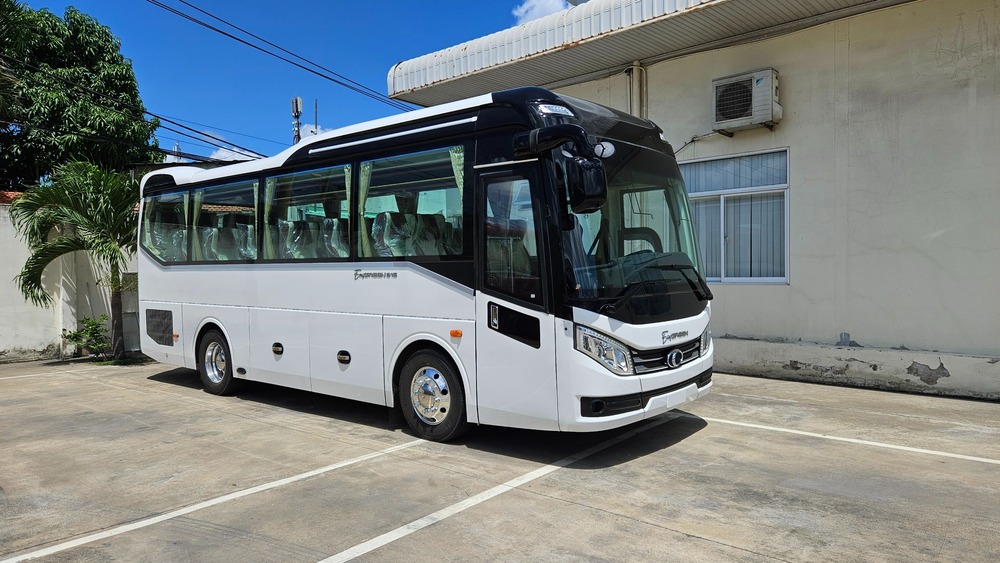
Vehicle type depends on the size of your group.
Inclusions
What is included
- 7 nights in hotels
- 1 night on a Ha Long Bay cruise
- 1 night on the sleeper train
- Meals as listed in the itinerary
- Train ticket, airport transfers and road transport
- English-speaking guide on guided days
- Entrance fees and activities in the itinerary
- International flights
- Vietnam visa or e-visa fees
- Travel insurance
- Meals and drinks not shown in the itinerary
- Optional activities
- Single room supplement
- Tips and personal spending
This tour is also listed on TourRadar. If you would rather book through them, or you want to read what other travellers wrote, the listing is public.
View on TourRadarGood to know
Good to know
Before you go
- The tour starts with a pickup at Noi Bai Airport in Hanoi on day 1 and ends with a transfer from Hoi An to Da Nang International Airport on day 10, so book an international flight into Hanoi and out of Da Nang, or a domestic flight onward from Da Nang.
- There are no domestic flights on this route. The long leg is the night train from Hanoi to Dong Hoi on day 5: pack a small overnight bag so your main case can stay closed, and bring earplugs if you sleep lightly.
- Breakfast is included every morning after a night in a hotel or on the cruise; the other included meals are a local lunch on day 3 and lunch and dinner on the cruise on day 4. Budget for the other meals yourself.
- Wear shoes with grip for the Mua Cave steps, the walkways inside the Phong Nha caves and the Vinh Moc tunnels, which are low and damp in places, and a torch is useful. A hat and water are needed on the Hue tomb and citadel day.
- Knees and shoulders must be covered at the Ho Chi Minh Mausoleum, Thien Mu Pagoda and the Hue tombs, so keep a scarf or light trousers in your day bag.
- Hotels by class. 3-star: Golden Rooster Hotel in Hanoi, Hue Serene Palace in Hue, Serene Nature in Hoi An. 4-star: Golden Legend Palace Hotel in Hanoi, Eldora Hue, Silk River Hotel in Hoi An. 5-star: Apricot Hotel in Hanoi, Silk Path Hue, Palm Garden Hoi An (resort). The cruise is Le Journey Cruise, or Ambassador Cruise in the 5-star class, and Phong Nha has one option, Phong Nha Lake House Resort. The price shown is for the 3-star class; upgrades to 4-star or 5-star are quoted on request.
- Your passport must be valid for at least six months after the tour ends.
Cancellation policy
If you cancel, we refund what you have paid minus a cancellation fee. The fee depends on how long before your arrival date you cancel:
- More than 60 days before: 10%
- 30 to 59 days before: 20%
- 15 to 29 days before: 40%
- 8 to 14 days before: 80%
- 7 days or less before, or no-show: 100%
FAQ
Frequently asked questions
Which World Heritage sites does this Vietnam UNESCO heritage tour visit?
Five World Heritage sites are on the route: the Trang An landscape in Ninh Binh, Ha Long Bay, where you spend a night on a cruise, Phong Nha-Ke Bang National Park, the Complex of Hue Monuments and Hoi An Ancient Town. In Hanoi you also visit the Temple of Literature and the Ho Chi Minh Mausoleum, two of the capital's main historic sites.
Where does the tour start and finish?
It begins with a pickup at Noi Bai Airport in Hanoi on day 1 and ends at Da Nang International Airport on day 10, after the transfer from Hoi An. Book your international flight into Hanoi and out of Da Nang, or fly on from Da Nang to Ho Chi Minh City or Hanoi for your return. We can add nights at either end.
Are there any flights on this itinerary?
No. Every leg is by road, boat or rail. The one long journey is the sleeper train from Hanoi to Dong Hoi on the night of day 5, about ten hours in a four-berth compartment with bedding, which saves a day of driving and puts you at the Phong Nha caves first thing on day 6.
How much walking and climbing is there?
The tour is rated low intensity, but there are three climbs: the Mua Cave stairway in Ninh Binh, the steps up to Tien Son Cave at Phong Nha and the descent into the Vinh Moc tunnels, which are narrow and low. Each takes 20 to 30 minutes at a steady pace, and you can skip any of them and wait with the driver.
Is it suitable for children?
Yes, all ages are welcome and families book it often. Children usually enjoy the bicycle ride and the Trang An rowboat in Ninh Binh, the kayaks on the cruise and the cave boat at Phong Nha. The night train is an adventure for most of them, and the tunnels and the mausoleum are the two places where small children may need a shorter visit.
What is not included in the price?
International flights, your visa, travel insurance, drinks, tips, personal spending and the meals not listed in the itinerary: breakfast after each hotel or cruise night, two lunches and one dinner are included. The cruise, the train berth, the boats, bicycles and all entrance tickets are in the price, while the evening activities on board the cruise are paid separately. A single room costs a supplement, and higher hotel classes are quoted on request.
More tours