Healthcare in Vietnam is safe for foreigners when you choose the right hospital. The country has nine JCI-accredited healthcare facilities, several hospitals with Australian ACHSI certification, and a growing network of private hospitals staffed by doctors trained in the US, Japan, Korea, and France. Medical costs run 50 to 70% lower than in Western countries. The gap in quality is not between Vietnam and the West; it is between the right hospital and the wrong one. This guide explains how to tell the difference.
Is healthcare in Vietnam safe for foreigners?
Yes, particularly at accredited private hospitals. Vietnam's Ministry of Health officially recognised JCI international quality standards in late 2025, and the government's national strategy aims to have at least 15 internationally accredited hospitals by 2030. More than 300,000 foreign patients already seek medical services in Vietnam each year, according to Ministry of Health data cited in 2026, and the country's medical tourism sector is growing at roughly 18% per year.
*Sources: Ministry of Health data reported via Vietnam+ (VietnamPlus) and Vietnam Law Magazine; growth figures also reported by Medical Buyer. Accessed July 2026.
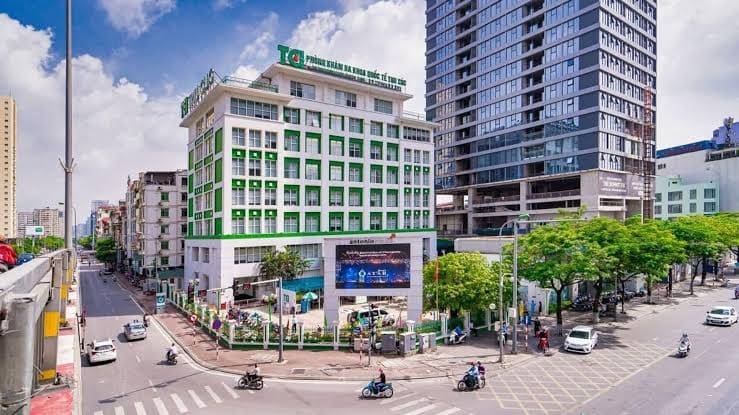
That said, "Vietnam" is not one healthcare system. It is two: a public system that is affordable but overcrowded, underfunded, and almost entirely in Vietnamese; and a private system that operates much closer to Western standards, with modern equipment, English-speaking teams, and structured international patient departments. For most foreigners seeking planned medical care, private hospitals provide a more accessible and internationally oriented patient experience.
International accreditation: what it means and who has it
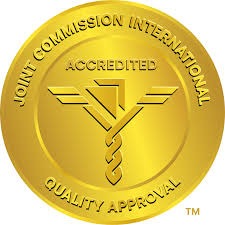
JCI (Joint Commission International) is one of the world's best-known healthcare accreditation organisations in the United States. A JCI-accredited hospital has met more than 1,100 measurement standards covering patient safety, infection control, surgical quality, and governance. As of early 2026, Vietnam has nine JCI-accredited healthcare facilities, including eight hospitals. Five of those have maintained the JCI Gold Seal through multiple survey cycles.
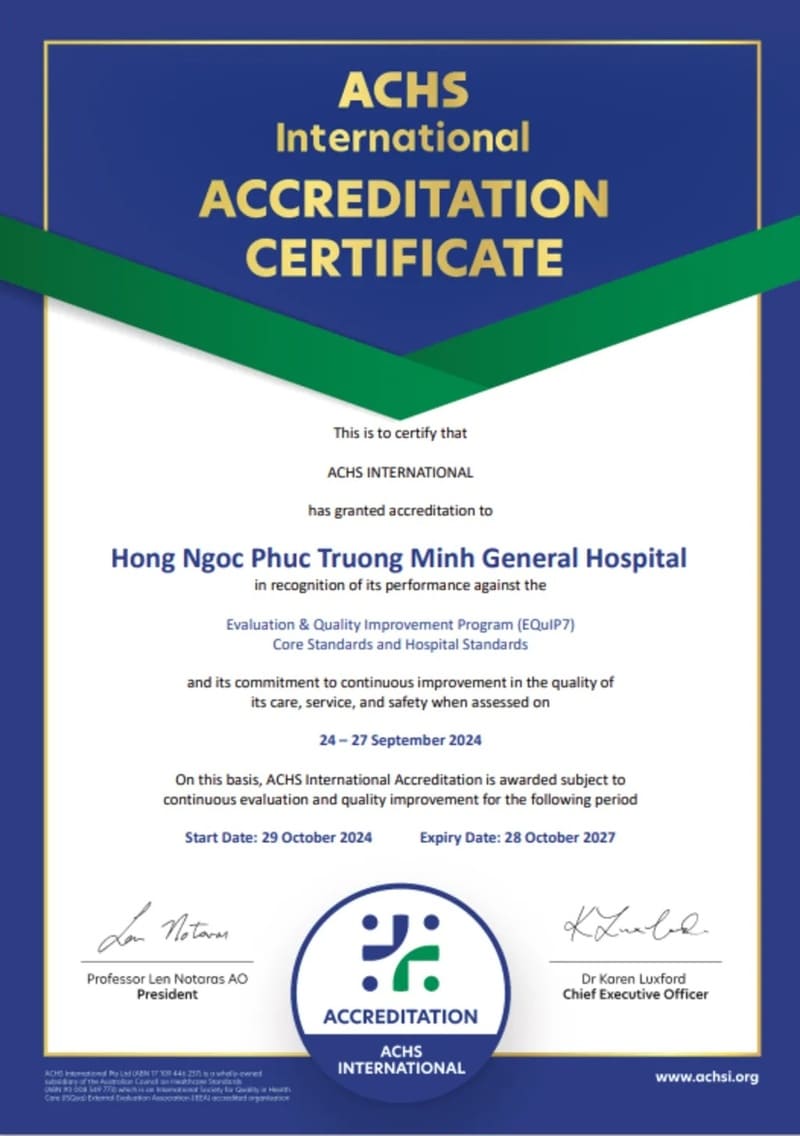
ACHSI (Australian Council on Healthcare Standards International) is the Australian equivalent. Six hospitals in the Hoan My network received ACHSI certification in January 2025, and Hong Ngoc General Hospital in Hanoi holds ACHS International accreditation. ISO 15189 is the international standard for quality and competence in medical laboratories. In Vietnam, laboratories are accredited to TCVN ISO 15189:2025. This standard covers laboratory quality management, technical competence, testing processes, equipment, and quality assurance to help ensure reliable and accurate test results. Several major private laboratories in Vietnam hold this accreditation.
| Accreditation |
What it covers |
VN facilities (as of 2026) |
| JCI (US standard) |
Patient safety, infection control, clinical governance, 1,100+ standards |
9 facilities (8 hospitals) |
| ACHSI (Australian standard) |
Clinical quality, patient-centred care |
6 Hoan My hospitals + Hong Ngoc General Hospital |
| ISO 15189 (lab quality) |
Lab accuracy, blood chemistry, and pathology |
Multiple accredited laboratories |
If a hospital holds one of these, it has been independently audited against international benchmarks. If it does not, that does not mean it is unsafe, but it does mean you have less external verification to rely on. If accreditation is important to you, verify the hospital's current status on the accrediting organisation's website before booking.
Doctor training and English-language support
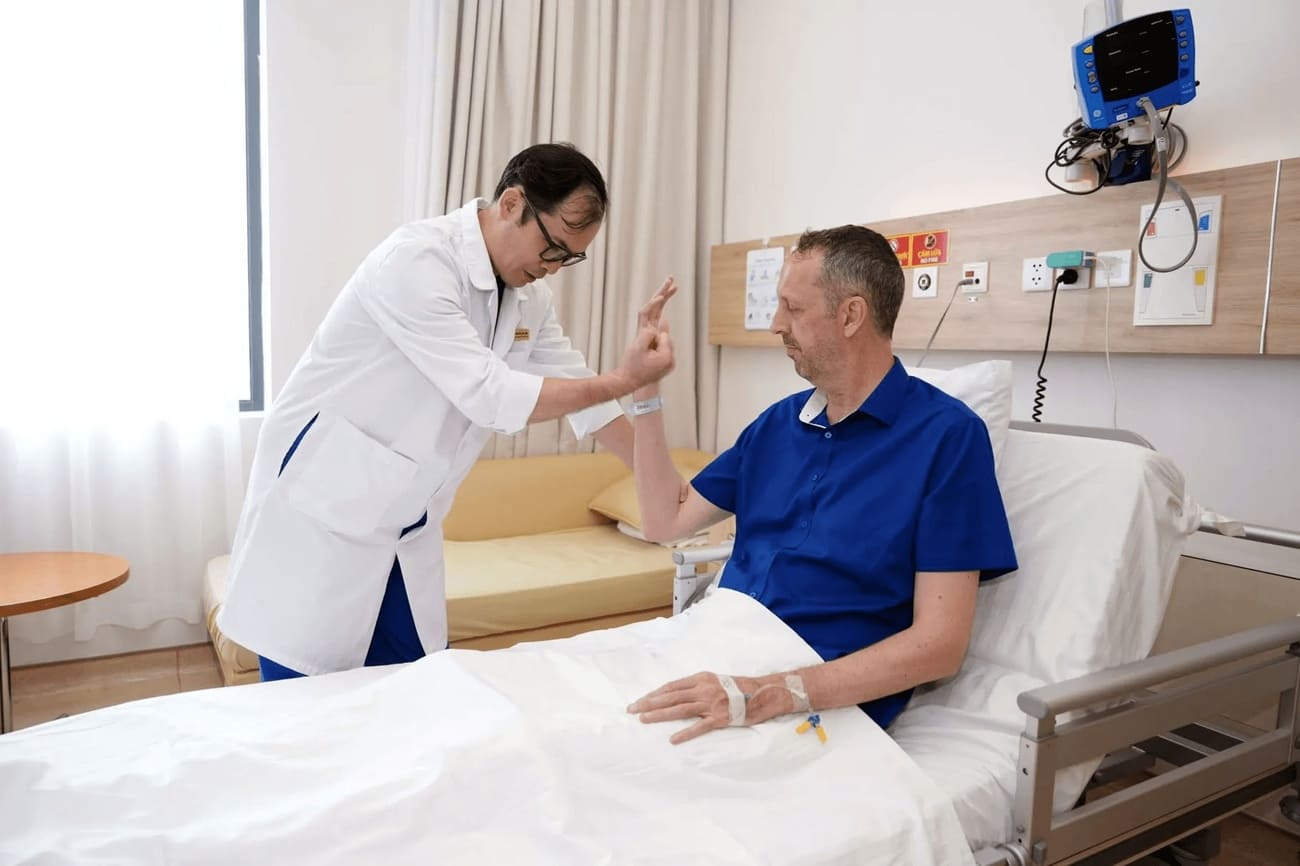
Many physicians at Vietnam's leading private hospitals have received postgraduate training, fellowships, or clinical experience overseas, including in countries such as the United States, France, Japan, and South Korea. FV Hospital in Ho Chi Minh City, for example, was founded by a French physician and staffed from the start with internationally trained specialists. Vinmec is a member of the Cleveland Clinic Connected network, giving its clinicians access to the Cleveland Clinic's clinical expertise, best practices, and education resources. Family Medical Practice has employed international (non-Vietnamese) physicians since its founding.
English-language support is standard at private hospitals in Hanoi, Ho Chi Minh City, and Da Nang, but the depth varies. Some hospitals have dedicated international patient departments with English-speaking coordinators who handle booking, pre-admission paperwork, and results delivery, while others rely on English-speaking clinicians but have limited English support at reception or administrative offices. If communication is important to you, book through the international patient department, not the general reception.
The real risks and hidden costs
For planned medical care, choosing the right hospital is one of the most important factors influencing your experience. Here is what most guides do not tell you.
Dual pricing
Some private hospitals have separate pricing for domestic and international patients. International patient packages may include additional services such as English-language support, care coordination, and administrative assistance, which can affect the overall cost. To avoid unexpected charges, ask for an itemised quotation before treatment and confirm exactly what is included in the package.
Upfront payment
Most Vietnamese hospitals, both public and private, require payment before treatment. If you have international health insurance, confirm whether your hospital offers direct billing to your insurer. Many do not, meaning you pay first and claim reimbursement later.
Follow-up across borders
If a screening or procedure reveals something that needs further investigation, your options are either to stay longer in Vietnam or continue the workup at home. Cross-border follow-up works, but it adds logistical complexity: medical records should be available in English, and laboratory reports should include clearly reported units and reference intervals so that your healthcare provider can interpret the results accurately, and your doctor at home needs to be willing to act on results from an overseas facility. At accredited hospitals, laboratory reports use internationally recognised units and reference intervals, making them easier for healthcare providers overseas to interpret. However, if you plan to continue your care at home, it is worth confirming the report format before you travel.
Public vs private: the gap is wide
Public hospitals in Vietnam are affordable (a consultation can cost as little as 50,000-300,000 VND, roughly $2-$12 USD), but they are crowded, some facilities may have older equipment, and services are primarily designed for local patients, with limited English-language support. If you are seeking planned medical care, private hospitals are more suitable.
What to know:
A consultation at a private hospital typically costs $20-$50 USD. A full health checkup package runs $125-$500. These are real numbers, not marketing. But additional tests, imaging, or specialist referrals triggered during the visit are billed separately, and the total can climb if you are not tracking it. Ask for an itemised quotation and discuss any additional charges before proceeding with further investigations.
How to choose a safe hospital or clinic
Here is a practical checklist you can use before booking any medical service in Vietnam as a foreigner.
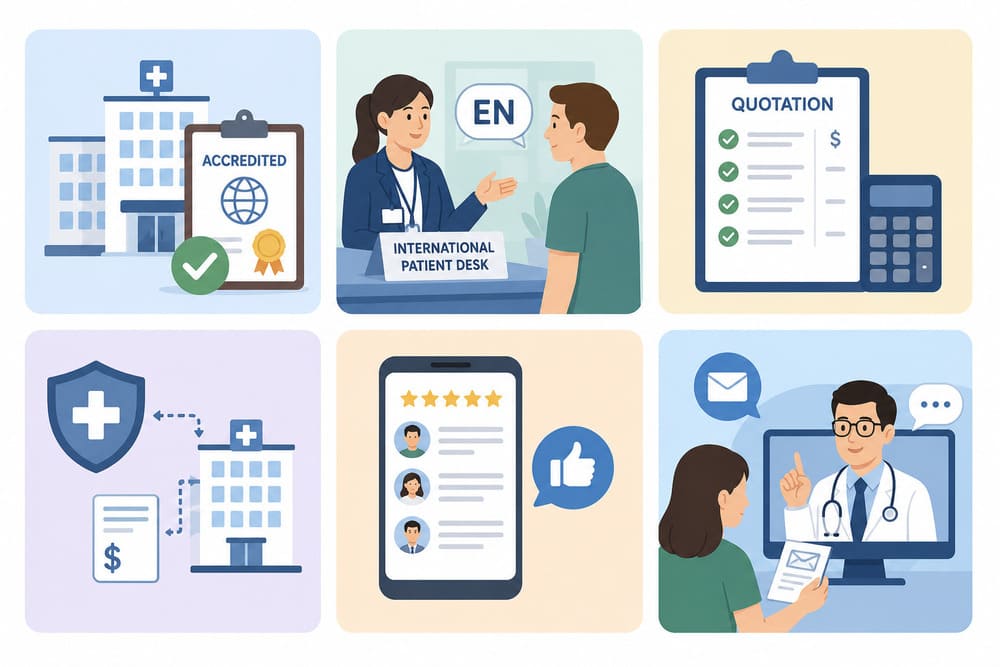
- Check accreditation. JCI, ACHSI, or ISO 15189. If the hospital claims accreditation, verify it on the accrediting body's website. Certificates expire; ask for the current one.
- Confirm English-language support. Not just "some staff speak English" but a dedicated international patient department with English coordinators, English reports, and English post-treatment communication.
- Ask for an itemised quote. Before treatment, get a written breakdown of what is included, what is not, and what additional charges may apply. This protects you from dual pricing surprises.
- Check direct billing. If you have international health insurance, confirm whether the hospital bills your insurer directly or requires upfront cash payment with later reimbursement.
- Read recent reviews from foreigners. Read reviews from multiple independent sources, including Google reviews and social media groups. Look for patterns, not outliers.
- Ask about follow-up. If results flag something, what happens next? Can the hospital email you English-language results? Will the doctor be available for a follow-up call?
What the government is doing
Vietnam's Ministry of Health launched a national medical tourism strategy for 2025-2030, focused on five hubs: Hanoi, Ho Chi Minh City, Da Nang, Quang Ninh, and Khanh Hoa. The target is at least 15 internationally accredited hospitals by 2030 and medical tourism revenue reaching $4 billion by 2033, up from roughly $700 million in 2024. The plan includes flexible visa policies for medical travellers, integrated insurance payment systems, and language support. The strategy aims to strengthen Vietnam's position as a regional destination for medical tourism while improving quality standards and international patient services.
Where Sondax fits in
Sondax is not a hospital. We are a concierge that bridges the gap between international patients and accredited Vietnamese hospitals. Our team in Hanoi handles the parts that are hardest for foreigners to do alone: confirming accreditation, booking with the international patient department in English, arranging private transfer to the hospital, and making sure your results are in English and in your hands before you leave. If you need a Vietnam e-visa or airport fast-track on arrival, we coordinate that too.
For an overview of what a checkup actually involves, see what to expect during a health checkup in Vietnam. For a price-by-price comparison with the US, see health checkup cost: Vietnam vs USA.
FAQ
Is healthcare in Vietnam good enough for surgery?
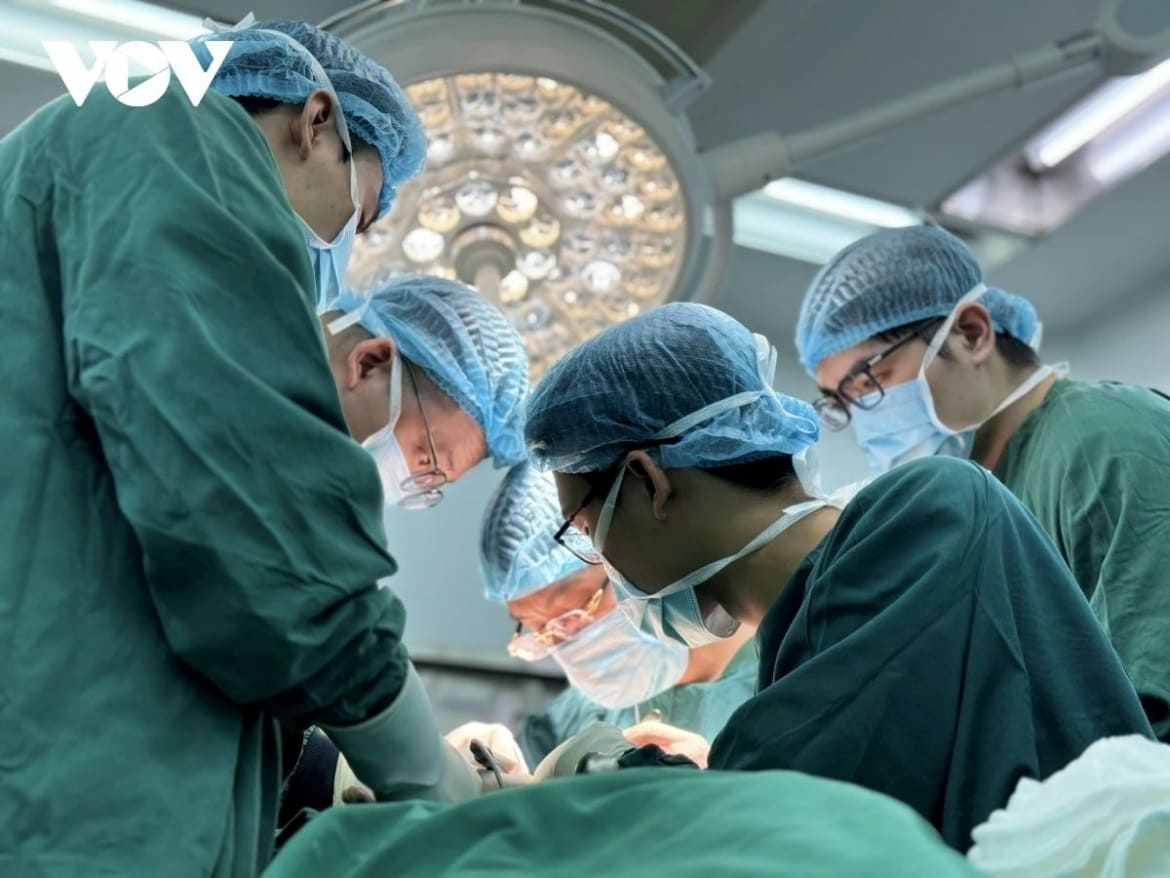
At JCI-accredited hospitals, yes. Facilities like FV Hospital and Vinmec perform complex procedures (cardiac, orthopaedic, oncology) to international standards. For elective procedures, verify that the specific department performing your surgery holds relevant accreditation, not just the hospital overall.
Do Vietnamese doctors speak English?
At private hospitals in Hanoi, HCMC, and Da Nang, many doctors were trained abroad and speak English fluently. At public hospitals and smaller clinics, English ability is limited. If English communication is essential, book through an international patient department or use a medical concierge.
Can I use my US or UK insurance in Vietnam?
Most domestic US and UK insurance plans do not cover routine care abroad. Some international health insurance plans and travel medical policies do. Check whether your plan covers Vietnam specifically and whether the hospital offers direct billing before your visit.
What should I do in a medical emergency in Vietnam?
Call 115 for the national emergency number, but response times vary. If you are in a major city, go directly to the nearest private hospital with an emergency department (FV, Vinmec, Family Medical Practice). If you have international insurance with medical evacuation, activate it. For critical cases, Bangkok and Singapore are the nearest hubs for advanced care.
Is dental work in Vietnam safe for foreigners?
At accredited clinics with English-speaking dentists, yes. Vietnam's dental tourism sector is growing rapidly, particularly among Australian and American patients. For a detailed guide, see dental work in Vietnam.
Need help choosing the right hospital?
Sondax works only with accredited hospitals and stays with you from booking to results. Tell us what you need, and we will confirm the hospital, the price, and the appointment in English. See how it works.