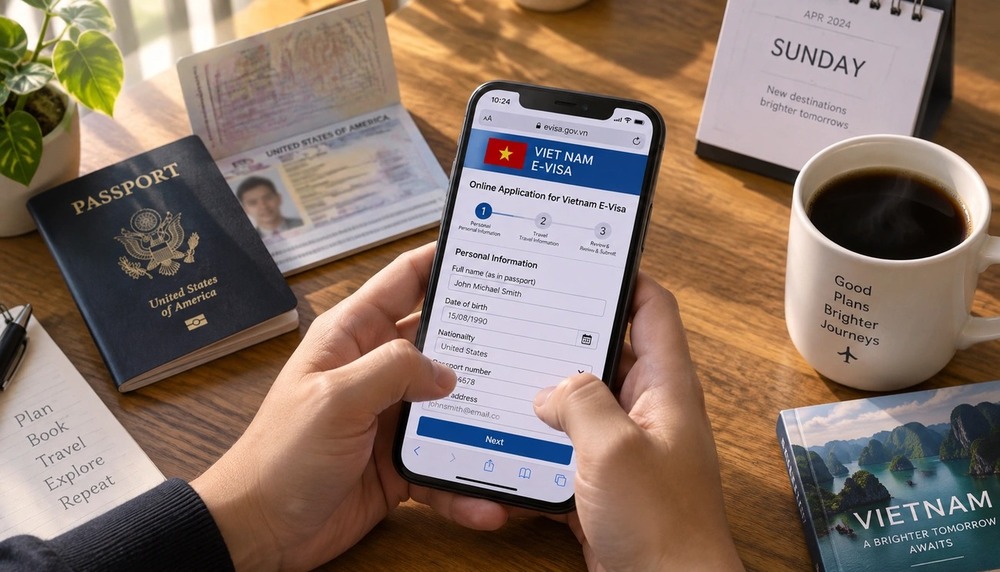

A Vietnam e-visa costs USD 25 to 50 and takes about 3 working days when you apply directly at evisa.gov.vn, now accepted at 83 border gates nationwide.
You apply for a Vietnam e-visa yourself on the government portal at evisa.gov.vn: upload a passport scan and a white-background photo, pay USD 25 for a single entry or USD 50 for multiple entries, and download the PDF about three working days later. It covers stays of up to 90 days and works at 83 airports, land borders and seaports. The process takes about 20 minutes. Most of the delays we hear about come from the typing, not from immigration.
You need a Vietnam e-visa if your passport is not on Vietnam's visa exemption list, or if your trip runs longer than the visa-free stay you get. Citizens of the United States, Australia, Canada, India and New Zealand need a visa for any tourist trip, and the e-visa is the usual choice.
British, German, French and most Western European passports get 45 days visa-free, while Singaporeans and most ASEAN citizens get 30 days or less.
| Passport | Rule for a tourist trip | When you need the e-visa |
|---|---|---|
| United States, Australia, Canada, New Zealand, India | No visa exemption | Every trip |
| United Kingdom, Germany, France, Italy, Spain, Nordic countries, Japan, South Korea | 45 days visa-free | Stays over 45 days, or several re-entries |
| Singapore, Malaysia, Thailand, Indonesia, Laos, Cambodia | 30 days visa-free | Stays over 30 days |
| Philippines | 21 days visa-free | Stays over 21 days |
Sources: Vietnam Immigration Department exemption list, checked 5 November 2026. Rules can change at short notice; confirm before you book.
The official Vietnam e-visa website is evisa.gov.vn, run by the Immigration Department of the Ministry of Public Security; thithucdientu.gov.vn opens the same system. Both addresses went live at 08:00 on 11 November 2024. The older address, evisa.xuatnhapcanh.gov.vn, still works and now shows a notice sending applicants to the new domains, so bookmark the new one.


Look-alike sites are the real trap. Search results for "Vietnam e-visa" are full of agency pages with official-sounding names and flags, some of them paid ads above the government link. Many are legal businesses that file the same form for a service fee, which is fine if you know that is what you are buying. The check takes five seconds: the government portal ends in .gov.vn, shows the Ministry of Public Security emblem in the top left, and asks for exactly USD 25 or USD 50 at payment. A domain ending in .com, .org or .vn without ".gov", or a price above USD 50, means an agency.
The e-visa has been open to every nationality since 15 August 2023. On a two-week holiday with a UK or European passport you do not need it; our Vietnam visa exemption guide covers the 45-day rule and its passport conditions. For everyone else, the rest of this page is the whole process.
To apply for a Vietnam e-visa you need a passport valid for at least six months after arrival with two blank pages, a clear scan of the passport photo page, a recent 4x6 cm photo on a white background, your planned entry date, and a Visa, Mastercard or JCB card for the fee.
Having all five ready before you open the form avoids the session timing out halfway.

You do not need a studio photo. Stand facing a window, with a white wall or a white sheet behind you, and ask someone to take the picture from about 1.5 metres at eye level. Crop it to 4x6 proportions on your phone, and check that both ears and the top of your hair are in the frame before you upload it.
A Vietnam e-visa application has five steps: open evisa.gov.vn, upload your photo and passport scan, check the details the portal reads from your passport, pay USD 25 or USD 50, and save the registration code. The portal then emails the result, which you download as a PDF. Expect the form itself to take 15 to 20 minutes.
Choose English in the language menu, then click "Apply now" under "For foreigners outside Viet Nam applying for an e-Visa personally". Read and accept the conditions. Use a laptop if you can; the upload fields are easier to control than on a phone.
Since the November 2024 upgrade, the portal compares your portrait with the passport photo and fills several fields from the scan. A blurry scan therefore produces wrong data, so check every filled field against the passport.
Pay USD 25 for single entry or USD 50 for multiple entry by card. The fee is not refunded if the visa is refused. If the payment page times out, do not start a new application: go back to the portal, search with your registration code and try the payment again, otherwise you may end up with two applications and two charges.
The registration code shown after payment is your only way back into the application. Take a screenshot and email it to yourself. To check the result, open "Search" on the portal and enter the code, your email and your date of birth. When the status shows approved, download the PDF and check every line against your passport before you print it.

An older e-visa, issued in 2020. E-visas issued since December 2025 no longer name a port of entry.
A Vietnam e-visa costs USD 25 for a single entry and USD 50 for multiple entries within 90 days, paid directly to the government on evisa.gov.vn. These are the standard tourist rates on evisa.gov.vn, confirmed against the portal's own published fee page. Agencies charge the same government fee plus their service charge.
| Where you apply | Single entry | Multiple entry | Processing |
|---|---|---|---|
| Government portal, evisa.gov.vn | USD 25 | USD 50 | 3 working days, no express option |
| Agency, standard | about USD 48 to 55 | about USD 73 to 83 | 3 to 7 working days |
| Agency, 1 working day | about USD 105 | about USD 133 | 1 working day |
| Agency, same day | about USD 122 to 180 | about USD 152 to 215 | 2.5 to 8 hours |
Sources: government fee of USD 25 / USD 50 confirmed against evisa.gov.vn's own fee page; published agency price lists (myvietnamvisa.com, vietnamvisa.com), checked 5 November 2026.
An agency makes sense when you need the visa in under three working days, or want someone to check the form for you. For a trip booked weeks ahead, the extra USD 23 to 30 buys little, because the agency files the same form with the same office. Your bank may add a foreign transaction fee on either route.
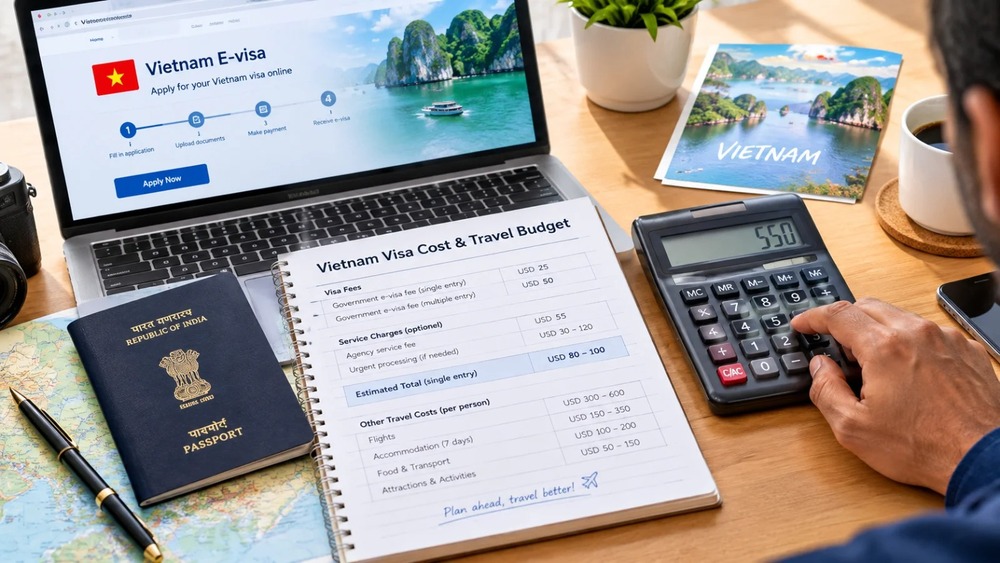
A Vietnam e-visa takes three working days by law, counted Monday to Friday in Vietnam time (UTC+7), excluding public holidays and weekends in Vietnam. In practice, most tourist applications come back within three to five working days, faster than many agencies openly promise.
Apply at least seven working days before your flight, and three weeks ahead if your trip starts near Tet or a long public holiday weekend.

Tet, the Lunar New Year, is the big one. In 2027 it falls on Saturday 6 February, and government offices usually close for about a week around it, so an application sent in late January can sit untouched for ten days or more. Other closures to plan around are 30 April and 1 May (Reunification Day and Labour Day) and 2 September (National Day). A photo that fails the check also costs time: the office asks you to upload a new one and the three-day count starts again. If your flight is already inside that window, the government portal has no express lane; your options are an agency rush service or, for air arrivals only, a Vietnam visa on arrival approval letter, which can be issued within hours.
The Vietnam e-visa is accepted at 83 border gates: international airports including Noi Bai, Tan Son Nhat, Da Nang, Cam Ranh and Phu Quoc, land crossings from Cambodia, Laos and China such as Moc Bai and Lao Bao, and a long list of seaports.
The government added 41 gates on 2 December 2025 (Resolution 389/NQ-CP), doubling a list that had stood at 42.
The change that matters most for travellers is what the e-visa now says. Older e-visas printed one port of entry, and you had to arrive there; the 2020 sample above names Huu Nghi, a land crossing on the Chinese border. E-visas issued since late 2025 no longer carry that field, so you can arrive at any gate on the approved list and leave through any other. If your e-visa was issued earlier and does show a port, enter through that port to be safe. Overland travellers from Laos or Cambodia should check their crossing is on the list, because small local checkpoints are not.
Most refused or delayed Vietnam e-visas come down to five fixable mistakes: a poor photo, a typing error in passport data, a passport with under six months left, a duplicate application, and the wrong entry type. None of them can be edited after payment; the fix is a new application and a new fee.

If the visa is refused, the portal does not explain much and there is no appeal. Fix the likely cause, then apply again with a new fee. Changed travel dates follow the same logic: an approved e-visa cannot be moved, so if your trip shifts outside its dates you apply for a new one. For stays that run longer than your visa, see extending a Vietnam visa before your last valid day, since overstay fines are charged per day at the exit desk.
Once approved, print two copies of the e-visa PDF on A4 paper, keep one with your passport and one in your checked bag, and have it ready at airline check-in as well as at the immigration desk. Black and white is fine. Airlines check the visa before boarding because they pay for passengers who are refused entry.
A phone copy can work at the desk, but it is a risk you do not need: batteries run flat and some officers ask for paper. Our hosts at Noi Bai ask every arriving guest the same first question, "Is your e-visa printed?", because after a 20-hour trip from the US or Australia that PDF is often buried somewhere in an inbox. From 2026, Tan Son Nhat and Noi Bai also ask arrivals to fill in a digital pre-arrival form, so do that before you board as well.
At the airport, e-visa holders go straight to the passport control queues; there is no separate visa counter to visit, unlike visa on arrival. In peak hours at Noi Bai the line can take 45 minutes or more. If you are landing late with children, or have a tight onward connection, an airport fast track host can meet you at the gate at Noi Bai, Tan Son Nhat, Da Nang, Cam Ranh or Phu Quoc and take you to the priority lane. Otherwise, keep the printed e-visa and passport together in your hand, and the stamp takes a couple of minutes.
What is the Vietnam e visa official website?
evisa.gov.vn is the Vietnam e visa official website, run directly by the Immigration Department; thithucdientu.gov.vn opens the same system. Any site that is not on a .gov.vn domain, or that charges more than USD 50, is an agency rather than the government portal.
What is the Vietnam e visa processing time?
The Vietnam e visa processing time is three working days by law, though most tourist applications in practice take three to five working days. Around Tet or other public holidays it can run longer, so apply three weeks ahead if your trip falls in that window.
Can I get an urgent Vietnam e-visa?
If what you actually need is an urgent evisa vietnam travelers search for when a flight is a day or two away, the honest answer is that evisa.gov.vn has no express lane. An agency rush service, or a Vietnam visa on arrival approval letter for air arrivals, is the realistic option instead.
Every other live guide in our Visa & nhập cảnh series, grouped here so you can jump straight to the page for your passport or your situation.






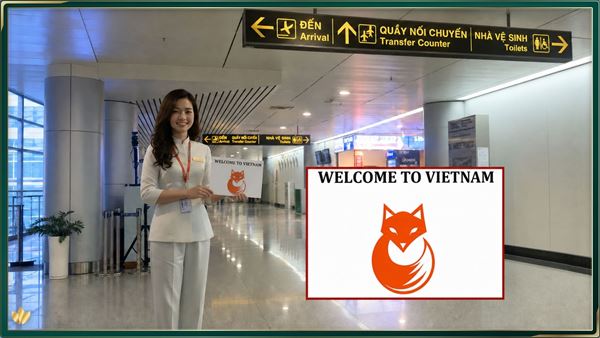
Tan Son Nhat, Ho Chi Minh City
A Sondax host meets your group inside the terminal at Tan Son Nhat and walks you straight to the priority immigration lane.
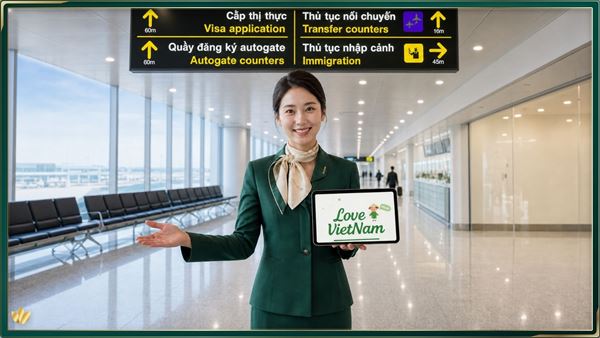
Noi Bai International Airport, Hanoi
A Sondax host meets your group inside Terminal 2 at Noi Bai and walks you past the queue to the priority immigration lane.
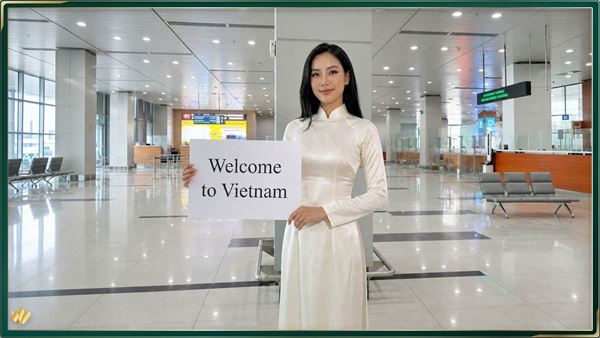
Phu Quoc International Airport, Phu Quoc
A Sondax host meets your group inside Terminal 2 at Phu Quoc and walks you to the priority immigration lane, on arrival or departure.

Da Nang International Airport, Da Nang
A Sondax host meets your group inside the international terminal at Da Nang and walks you to the priority immigration lane.
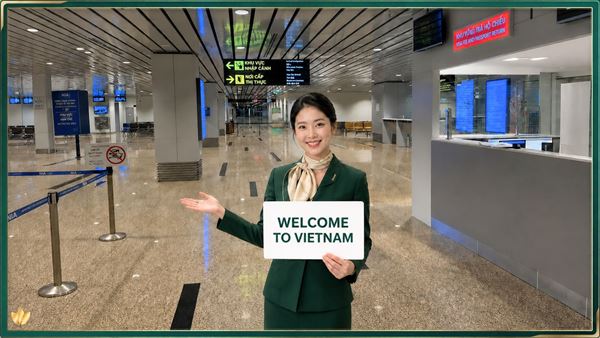
Cam Ranh International Airport, Nha Trang
A Sondax host meets your group inside Terminal 2 at Cam Ranh and takes you to the priority immigration lane, arrival or departure.
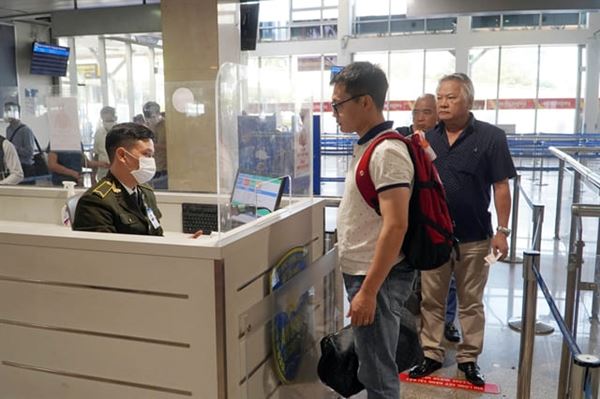
Ho Chi Minh City, Vietnam
Beat the immigration queue at Tan Son Nhat Airport. Our team escorts you through priority lanes, so arrival or departure takes under 30 minutes.
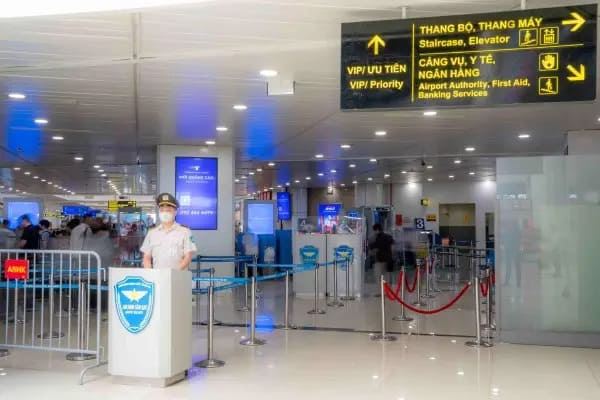
Hanoi, Vietnam
Walk past the immigration queue at Noi Bai Airport. A dedicated Sondax escort guides you through priority lanes — typically done in under 20 minutes.