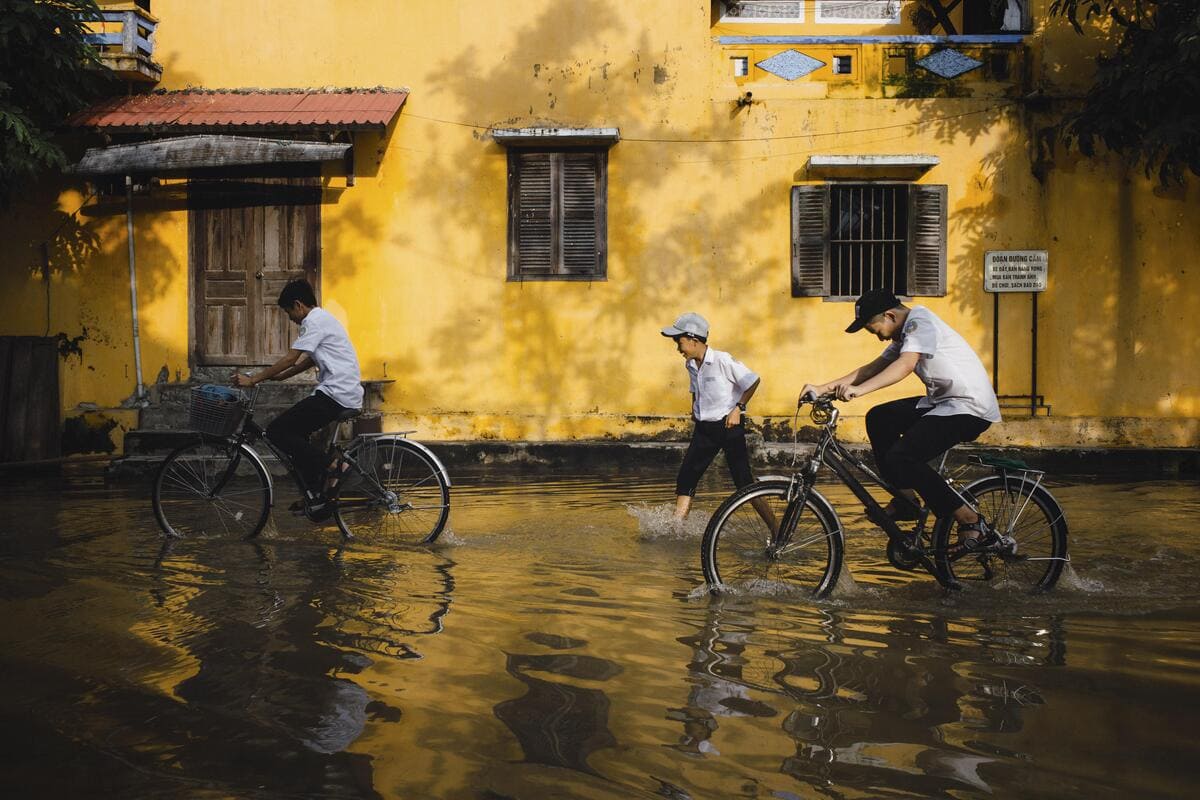

The Vietnam rainy season runs roughly from May to October in the north and south, mostly as short, heavy afternoon storms, and from September to December in central Vietnam, where October and November bring the heaviest rain, floods and most typhoons. Because the regions peak at different times, some part of the country is usually dry.
The short version
The Vietnam rainy season depends on the region. The north and south get most of their rain from May to October, while the central coast is wettest from September to December. The mountains of the Truong Son range split the weather, so Ho Chi Minh City can be dry while Hue floods.
| Region | Rainy months | Wettest | Annual rain |
|---|---|---|---|
| North: Hanoi, Sapa, Halong Bay, Ninh Binh | May to September | July, August | About 1,700 mm (Hanoi) |
| Central: Hue, Da Nang, Hoi An | September to December | October, November | About 2,500 mm (Da Nang) |
| South: Ho Chi Minh City, Mekong Delta, Phu Quoc | May to November | August to October | About 2,000 mm (Ho Chi Minh City) |
Sources: Da Nang City portal, Trip.com climate tables, published monthly climate data for Hanoi and Ho Chi Minh City. Checked October 2026.
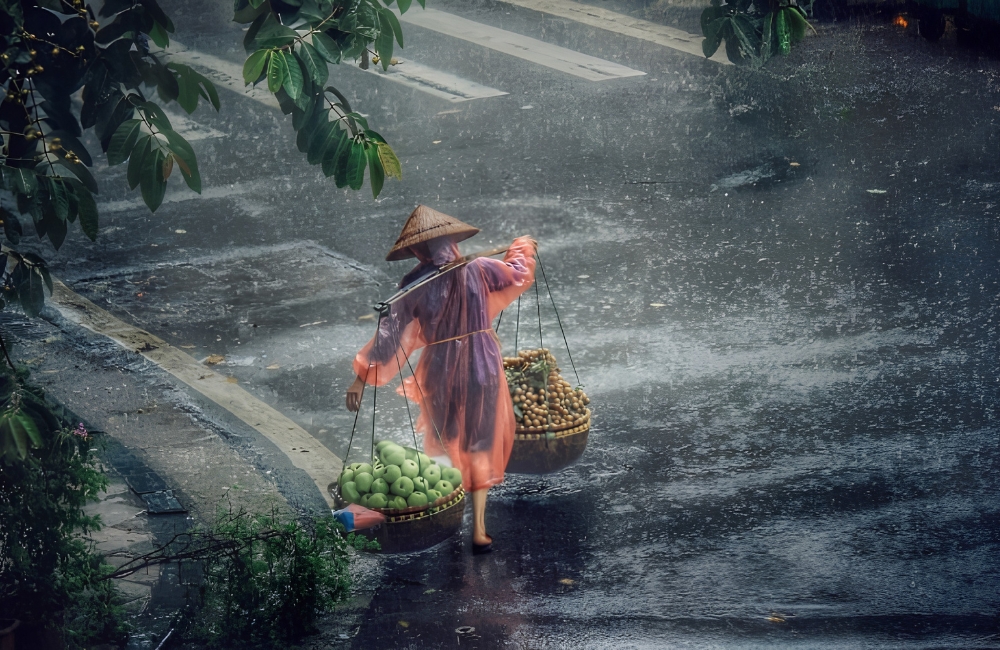
In northern Vietnam the rainy season runs from May to September, with July and August the wettest months at roughly 300 mm each. Rain often comes as evening or overnight storms after hot, humid days near 35°C, and from October to April the north is drier and cooler.
In the mountains, May and June are the "water-pouring" weeks, when farmers in Mu Cang Chai and around Sapa flood the terraces and the hillsides turn into mirrors. By July and August, trekking paths turn to mud and landslides can close mountain roads for hours, so build a spare day into any Sapa trekking and homestay trip. On Halong Bay, storms can lead authorities to suspend cruises at short notice, usually with a refund or a new date. Hanoi itself copes well with rain: museums, cafés and the Old Quarter keep going between showers.
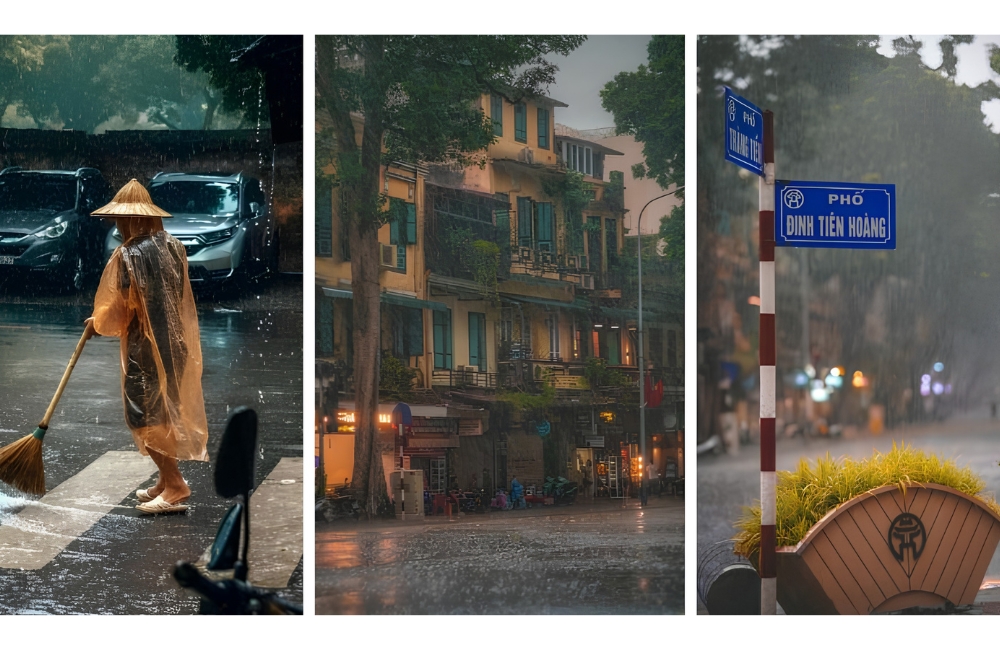
Central Vietnam has the opposite pattern: its rainy season runs from September to December, peaking in October and November. Da Nang averages about 2,505 mm a year, and those two months alone can bring 550 to 1,000 mm each. This is also when floods and most typhoons hit the coast.
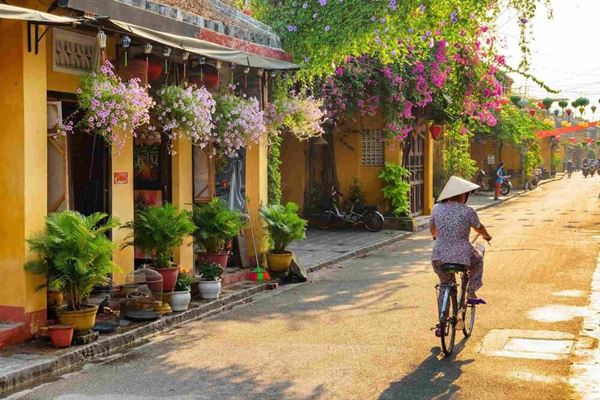
Weather systems from the East Sea stall against the mountains and drop days of rain on Hue, Da Nang and Quang Nam. In late October 2025, Hue recorded 1,085 mm in 24 hours, the highest figure then measured in a Vietnamese city, and floods closed parts of the Imperial Citadel. The same week, the old town of Hoi An was under waist-deep water. If you travel then, book hotels outside the riverside streets, keep plans flexible, and check flights and trains daily. From February to August the central coast is mostly dry and hot, which makes it the best region for a June or July beach trip.
.jpg)
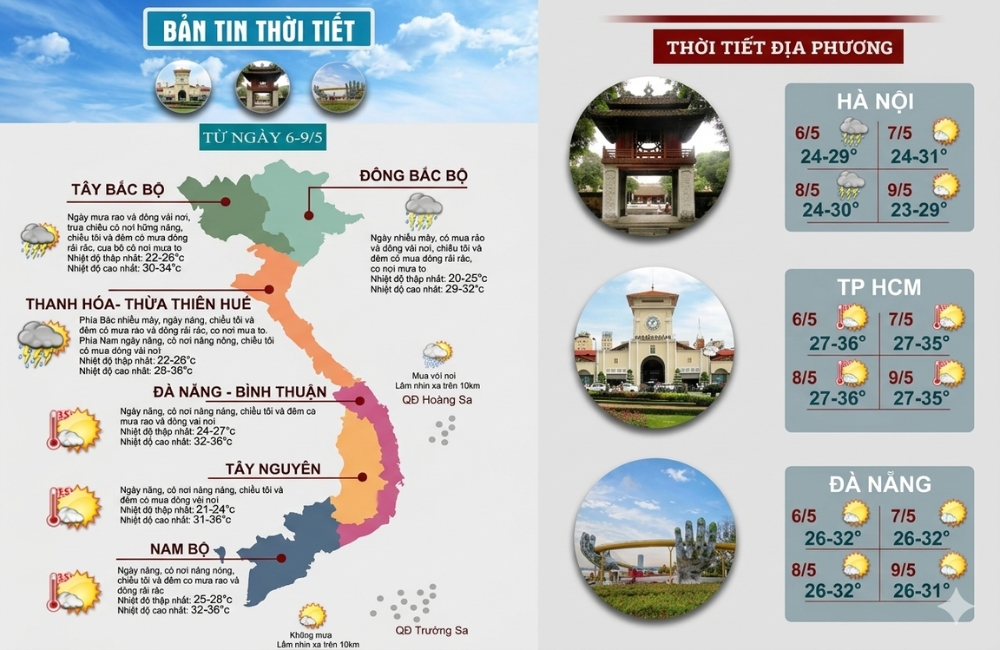
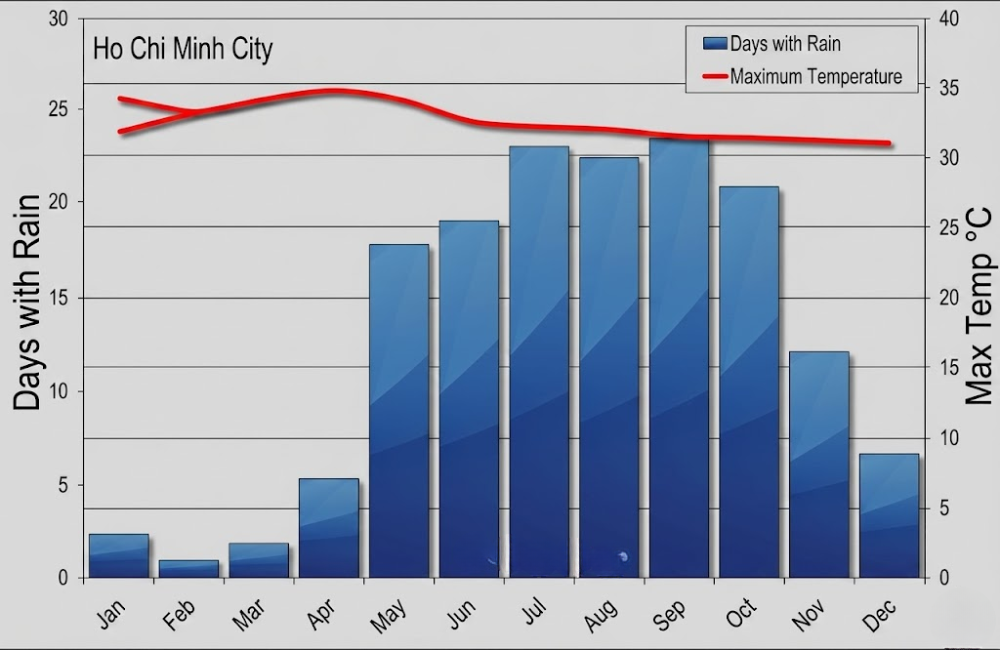
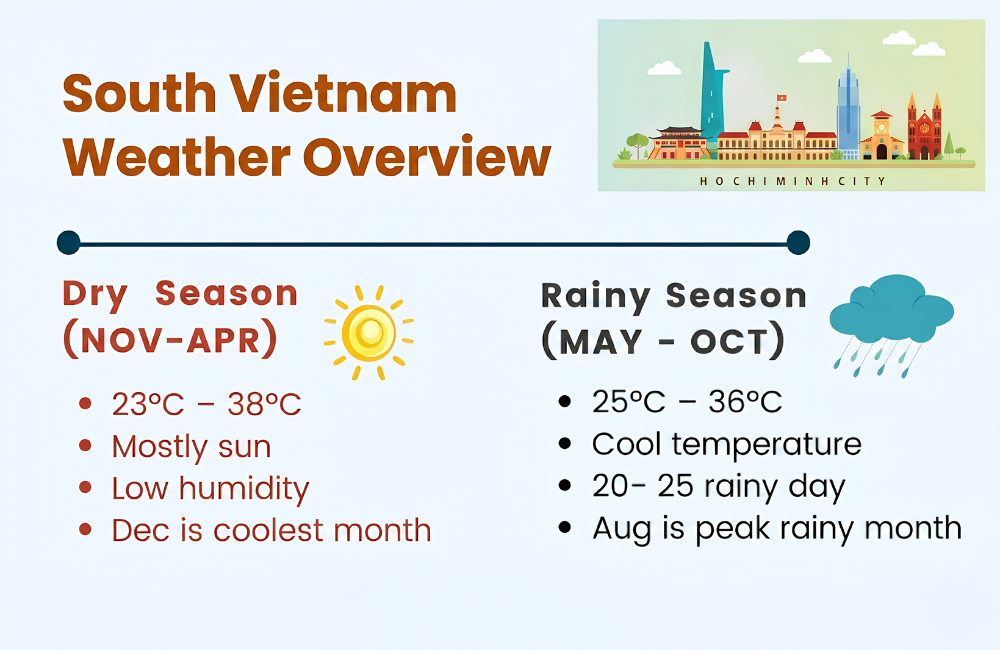
In southern Vietnam the rainy season lasts from May to November. Rain usually arrives as a heavy one- or two-hour storm in the afternoon, then clears. Ho Chi Minh City gets about 2,000 mm a year and around 20 rainy days a month from July to September, with temperatures of 25 to 33°C.
Mornings are the reliable part of the day, so plan walking tours and markets before noon. Low-lying streets in Ho Chi Minh City can flood quickly when a storm meets a high tide, and traffic slows, but the water usually drains within hours. The rain feeds the Mekong Delta's high-water season from about August to November, when canals widen and boat trips reach further into the orchards. On Phu Quoc, the rainy season brings rougher seas on the west coast, while the beaches on the east side are often calmer.
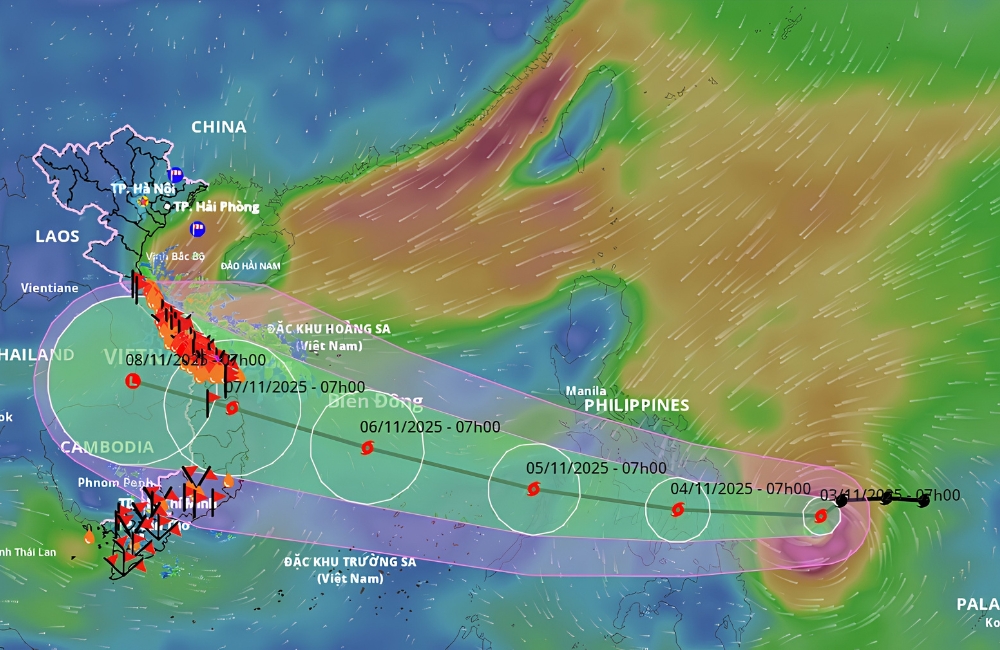
Vietnam is usually affected by around 10 typhoons and tropical storms a year, mostly between August and November, and the central coast takes the most direct hits. 2025 was busier: Typhoon Kalmaegi, which made landfall on 6 November, was the 13th storm of the year.
When a storm approaches, the National Centre for Hydro-Meteorological Forecasting issues warnings several days ahead. Airports may close, trains on the coastal line can be cancelled, ferries to islands stop, and heritage sites may shut until water levels drop. If a warning covers your route, move inland or to another region a day early rather than waiting it out. Keep travel insurance that covers delays and cancellations, and prefer bookings you can change.
Yes, for most of the country. Outside the central coast in October and November, rain rarely lasts all day, the landscape is at its greenest, and sites and hotels are less crowded. The trade-off is heat, humidity, the odd cancelled cruise or trek, and a real flood risk in the centre in autumn.
The simplest rule is to follow the dry region. From June to August, the central coast is the sunniest part of Vietnam, while Hanoi and Saigon get afternoon storms. From September to November, avoid the central coast and pair the north with the south, both of which are drying out by late October. Our guide to the best time to visit Vietnam month by month lays this out for the whole year. We usually tell friends that a wet July in Vietnam beats a crowded December, as long as they keep one spare day.
Plan rainy season trips around mornings, flexible bookings and one spare day. Do outdoor sightseeing early, keep afternoons for museums, cafés and classes, and leave a buffer before international flights. In October and November, route around the central coast or treat it as optional.
If you would rather have someone else reroute the trip when the weather turns, our Vietnam tours planned around the seasons include transport and backup plans.
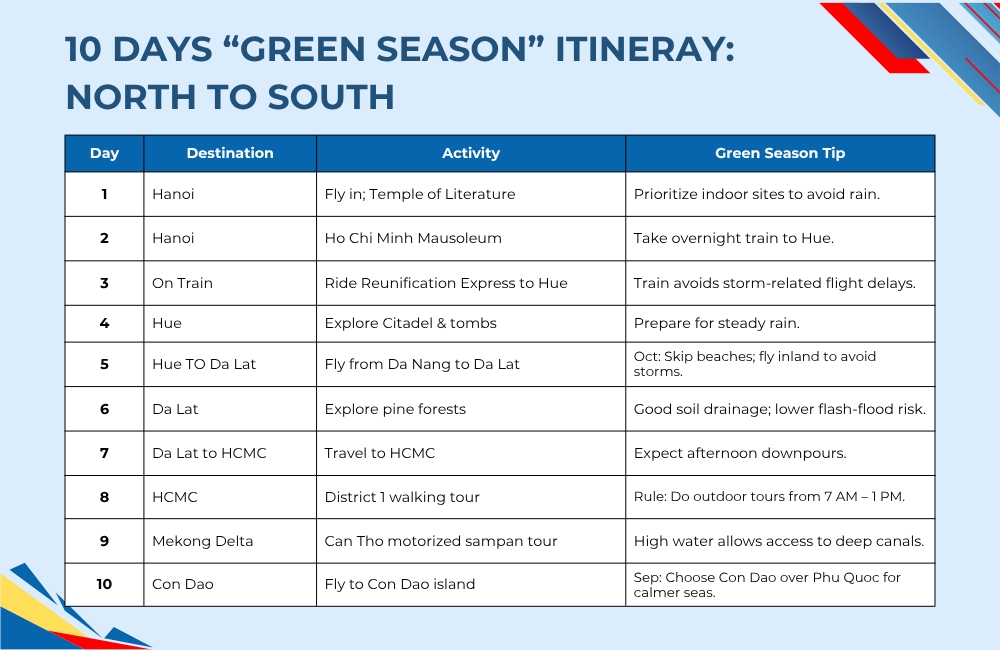
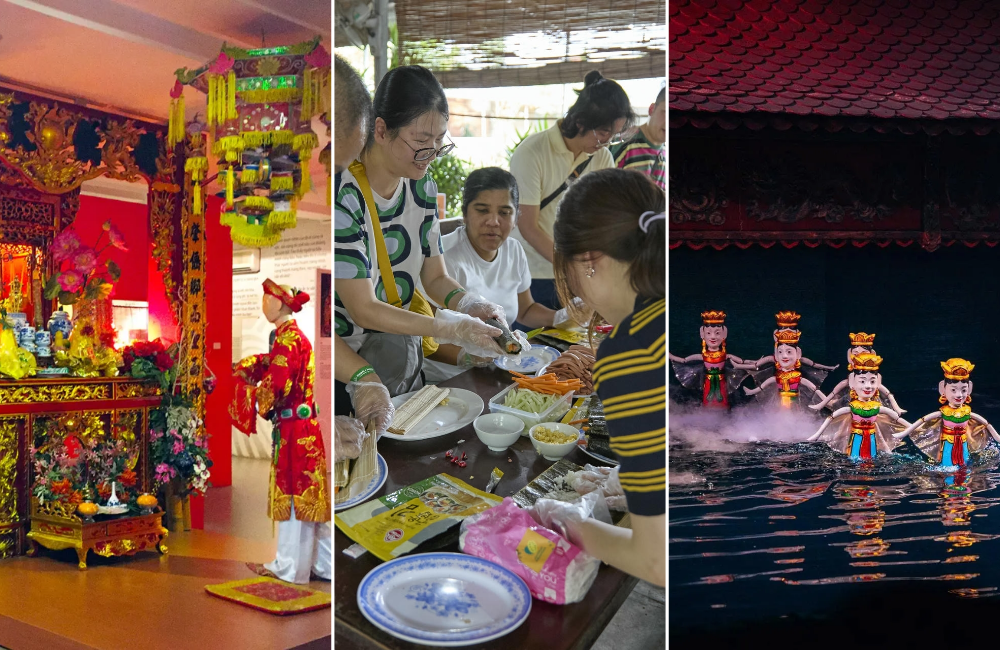
Rainy days are the time for Vietnam's indoor culture: museums, water puppet shows, cooking classes, coffee workshops and lantern-making in Hoi An. Most last two to three hours, which fits neatly inside an afternoon storm, and many can be booked the same morning.
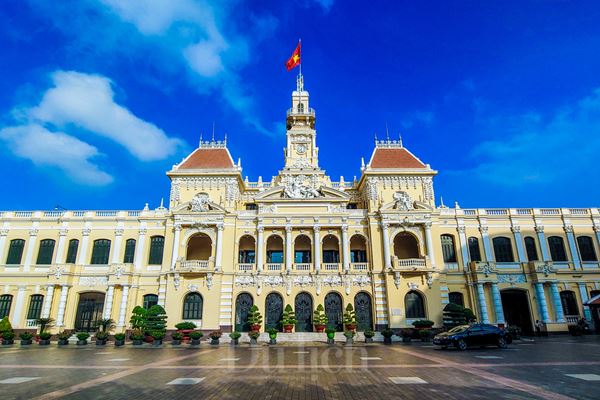
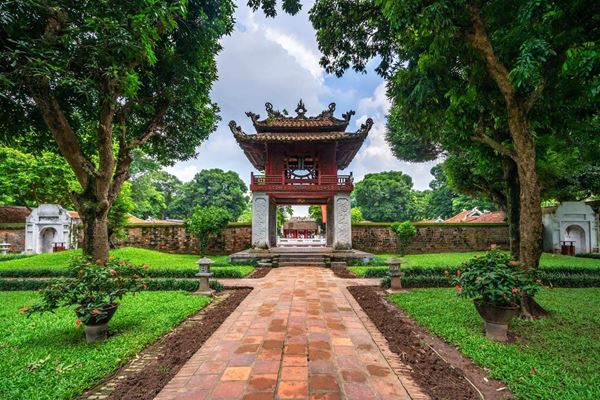
In Hanoi, the Vietnam National Fine Arts Museum, the Temple of Literature and a water puppet show at Thang Long theatre are good wet-weather picks, and a cooking class with a market visit fills a rainy morning and ends with lunch. In Ho Chi Minh City, the War Remnants Museum and Ben Thanh Market are under cover. In Hoi An, lantern-making and tailoring workshops keep going when the streets are wet.
The main health risks in the rainy season are mosquito-borne dengue, stomach bugs from contaminated food or water, and accidents on wet roads and in floods. Use insect repellent, eat freshly cooked food, avoid wading through floodwater, and do not ride a motorbike in heavy rain.
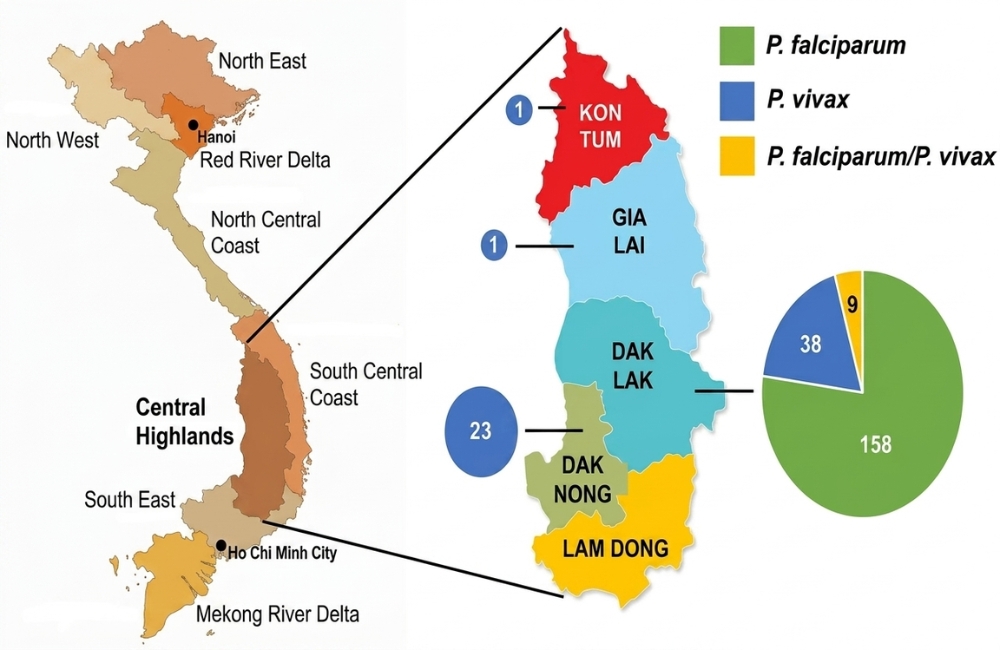
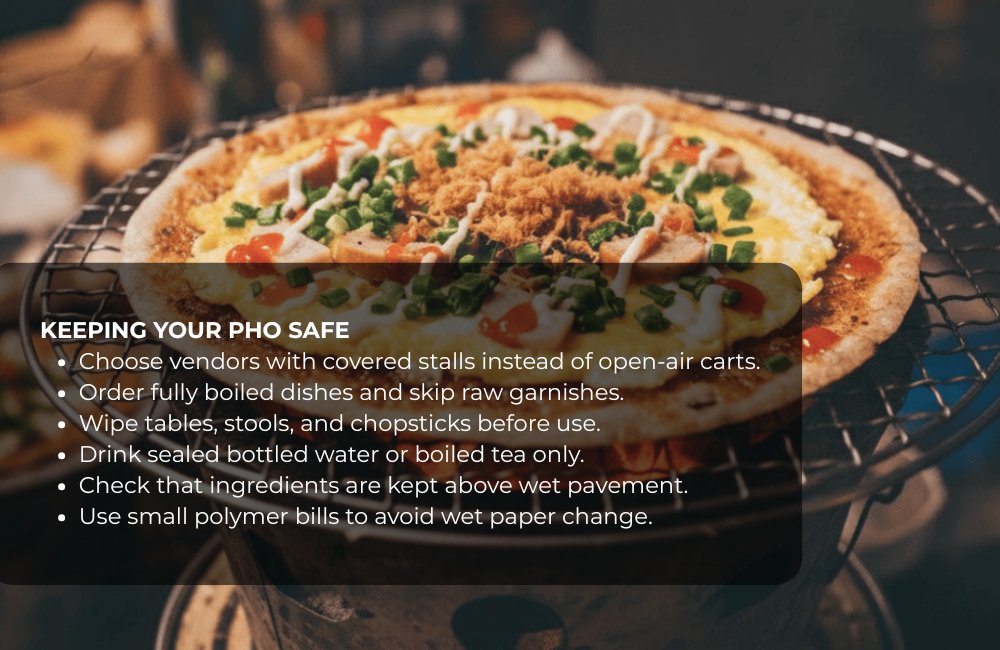
Dengue rises in the wet months in cities as well as the countryside, so use a repellent with DEET or picaridin during the day. Malaria is rare in the main tourist areas and limited to some rural forested regions; check the CDC's Vietnam page before trekking in remote areas. Choose food stalls under a roof, order dishes cooked to order, and drink sealed or boiled water. Ride-hailing cars and motorbikes become slower and more expensive in a downpour, so waiting out a storm in a café is often the easier option.


What is Vietnam weather in October like?
October is the wettest month on the central coast, with flood and typhoon risk in Hue, Da Nang and Hoi An. The north is turning dry and pleasant, at around 20 to 30°C, and the south is near the end of its rainy season, with fewer storms by late October.
Is Halong Bay worth visiting in the rainy season?
Yes, but keep it flexible. Summer brings haze and occasional storms, and cruises can be suspended when a typhoon approaches, usually with a new date or refund. From October to April the bay is drier, though winter mornings can be misty. Our Halong Bay cruise and route guide covers the options.
Does it rain all day in the Vietnam monsoon season?
Rarely in the north and south. The Vietnam monsoon season there usually means a heavy storm of one or two hours in the afternoon or evening, with dry mornings. All-day rain is more common on the central coast in October and November, when several days of steady rain in a row are normal.
What should I pack for the Vietnam wet season?
Bring a light rain jacket or poncho, quick-dry clothes, sandals with grip, a dry bag for your phone and passport, and insect repellent. Umbrellas and ponchos are sold cheaply on almost every street when the rain starts, so there is no need to pack heavy waterproof boots.
Best visited during dry season (November to April) for ideal weather.
Book accommodations in advance during peak travel season.
Carry local currency (Vietnamese Dong) for markets and small vendors.
Respect local customs and dress modestly when visiting temples.