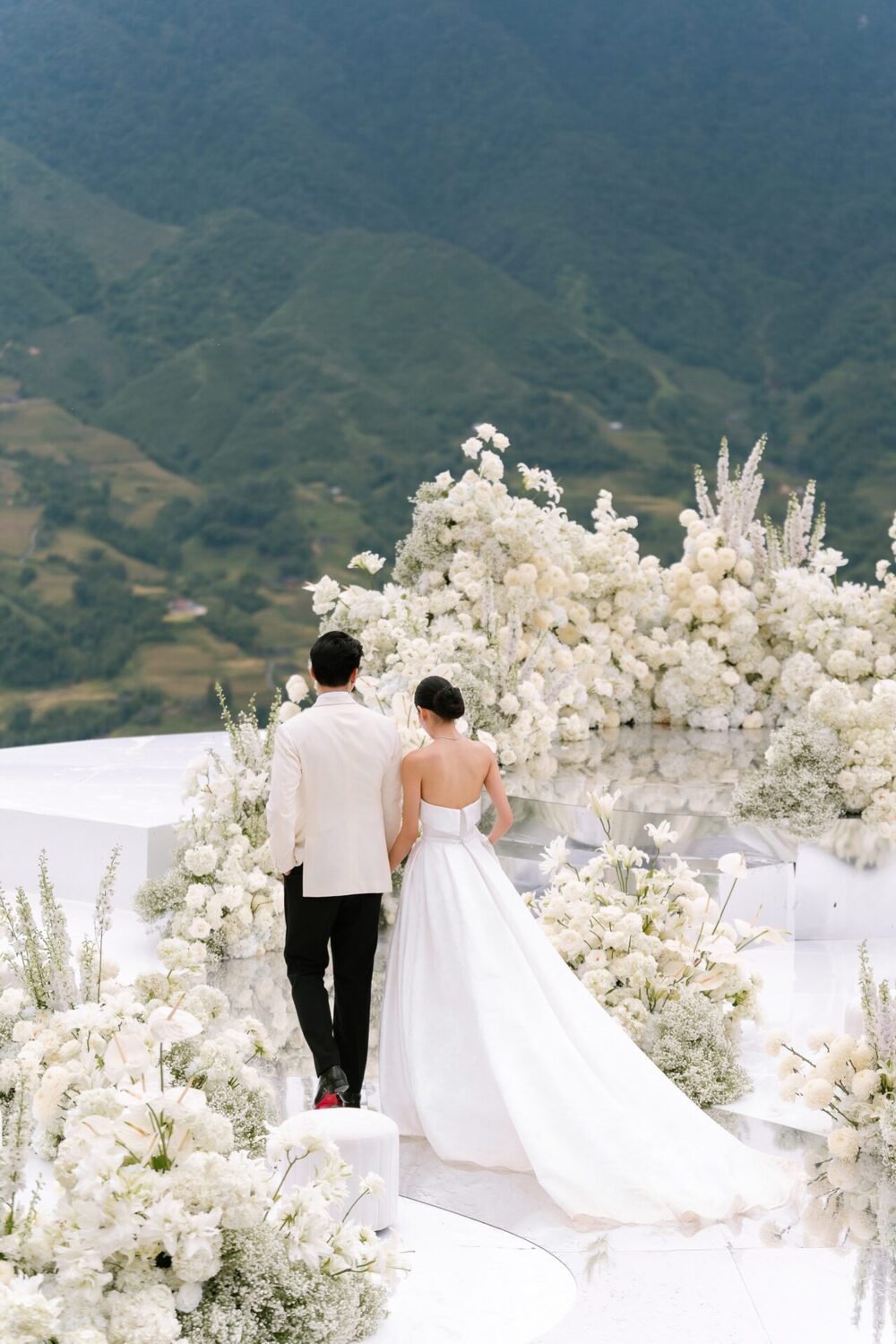

Vietnamese wedding traditions follow three main ceremonies: a family meeting, an engagement ceremony where the groom's family brings gifts of betel and areca nuts, and the wedding day itself, centered on a tea ceremony honoring both families' ancestors and elders. Guests are expected to know a few unwritten rules too, from what color to avoid wearing to how much cash to tuck into the envelope.
A Vietnamese wedding traditionally unfolds in four stages, though modern couples often compress them into three events over a single weekend. Le Dam Ngo, the family meeting, comes first: the groom's family visits the bride's home to formally state their intentions, something that today often just confirms a decision the couple already made.
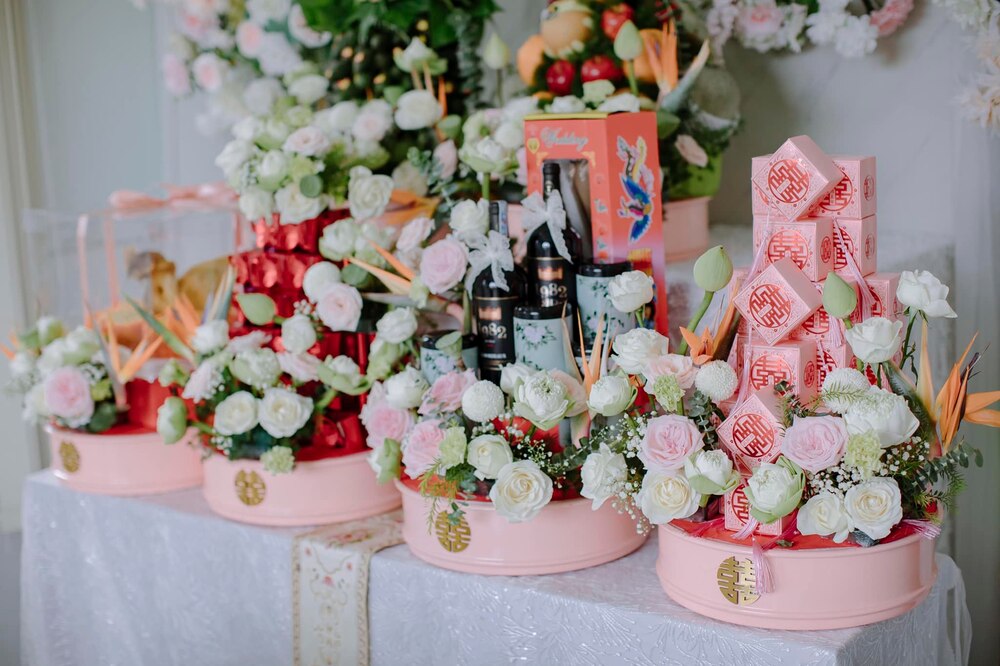
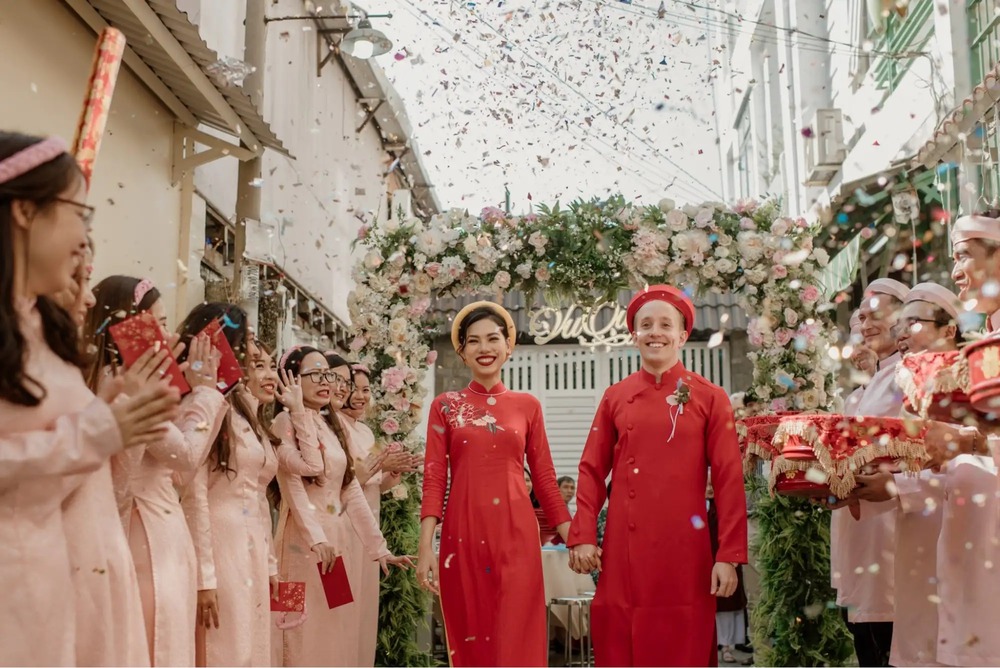
Next comes the Vietnamese engagement ceremony, Le An Hoi, held at the bride's house. The groom's family arrives with gifts carried in red lacquered boxes, betel and areca nuts, tea, wine, sticky rice, roast pig, and jewelry, and formally asks for her hand. Rings are exchanged, the wedding date is set, and elders from both families give their blessing, a step some families hold as a separate occasion called Le Dinh Hon. The wedding day, Le Thanh Hon, follows at the groom's home: the bride's procession arrives, the couple worships at the family altar, and the tea ceremony takes place before the reception, Le Cuoi, where guests are fed and the couple visits every table. A few days later, the couple pays a return visit to the bride's family, Le Ve Nha, closing the cycle. Betel and areca nuts run through every stage: the phrase "matters of betel and areca" is still used in Vietnamese as a stand-in for marriage itself.
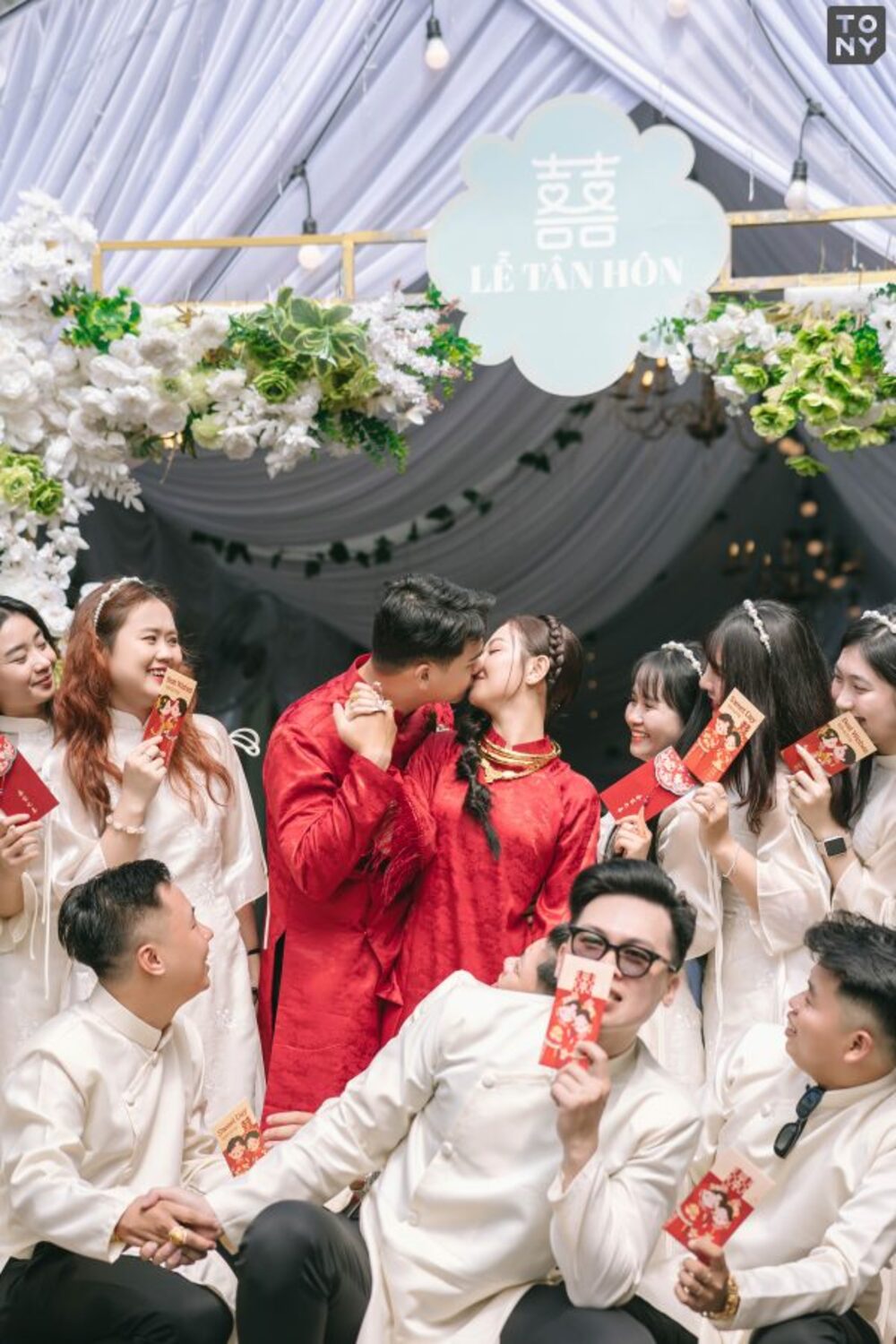
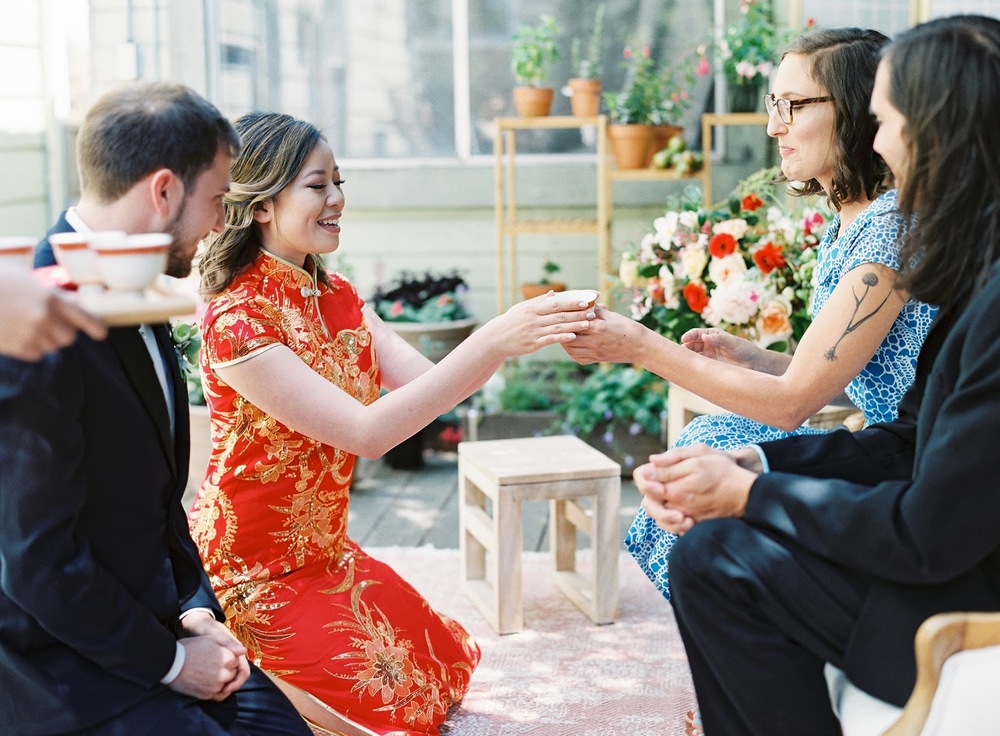
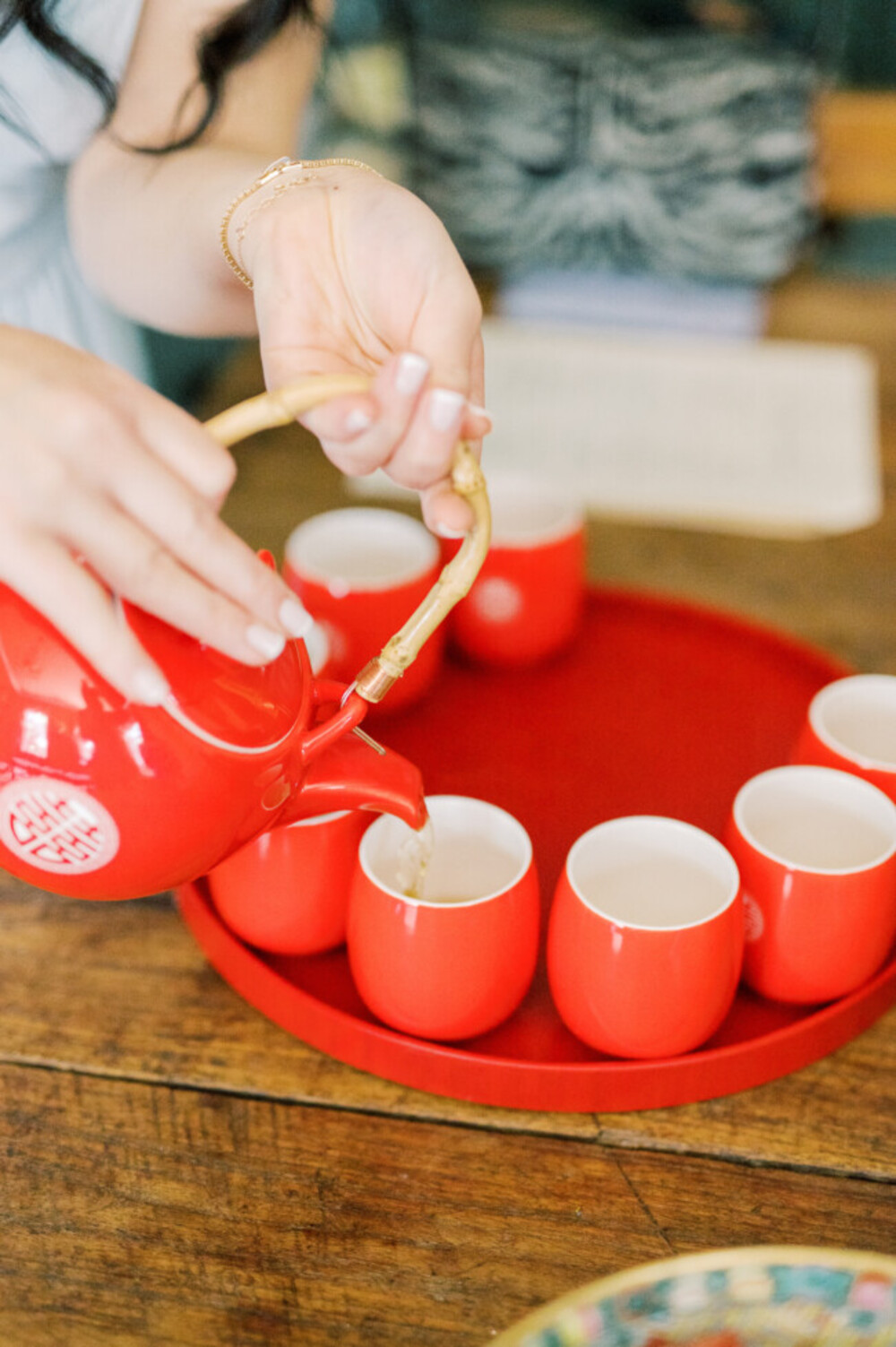
The tea ceremony is the emotional center of the wedding day, when the couple formally thanks both families in front of the ancestor altar. They light incense and candles, bow to the ancestors, then kneel before each set of parents and elders in turn, offering tea in exchange for blessings.
Our team's honest take when friends ask what to expect: it runs longer than it looks on video, often 30 to 45 minutes once every relative has had a turn and often a piece of jewelry has changed hands, so don't plan a tight schedule around it if you're invited to watch. Guests usually aren't part of the tea ceremony itself, which is reserved for close family, but may be invited to observe quietly before the reception begins. Our guide to everyday tea rituals in Vietnam is useful background if this is your first real exposure to the custom.
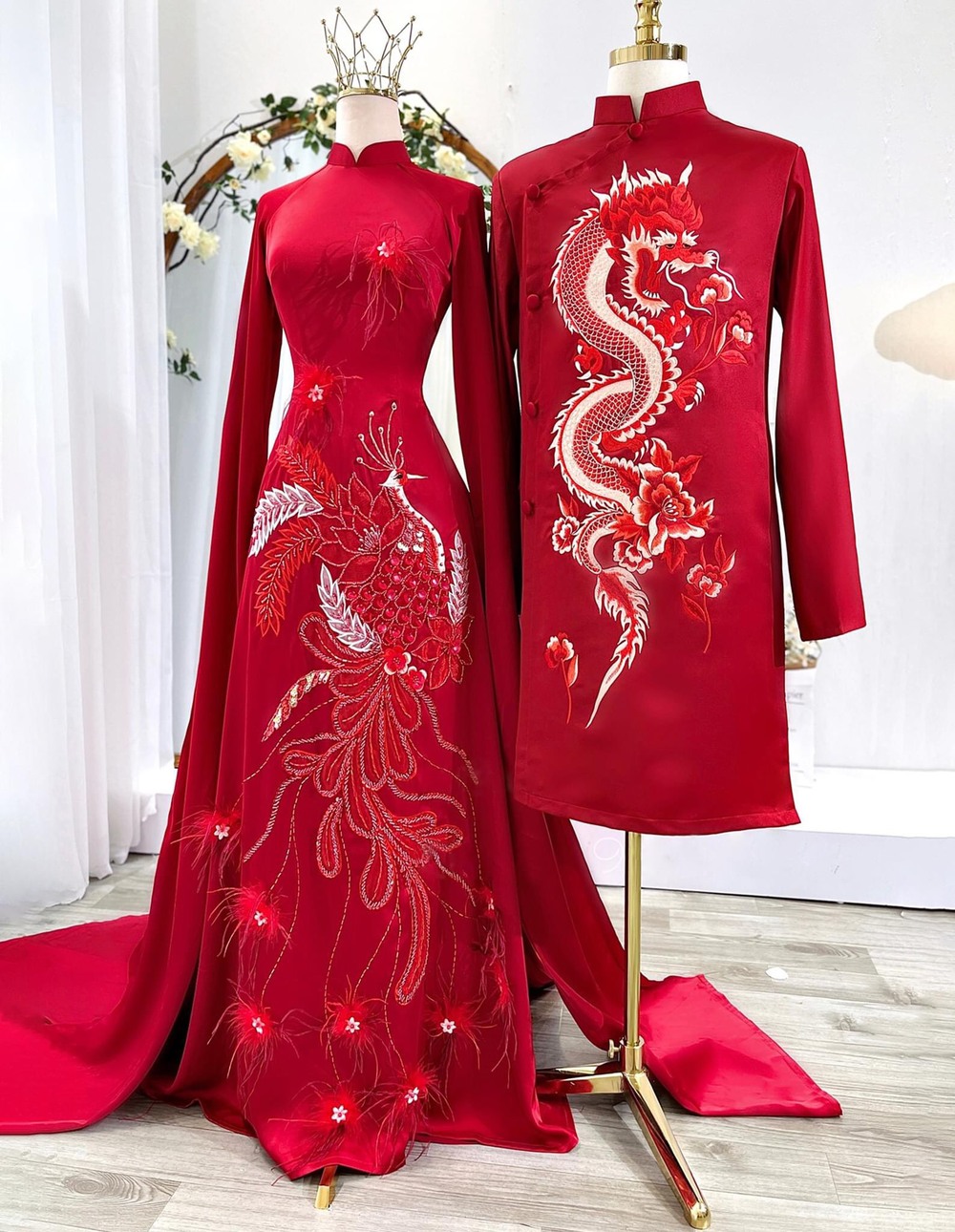
Skip solid white, since it's reserved for the bride, and avoid black, charcoal, or deep purple, which read as mourning colors at a Vietnamese celebration. Cheerful shades such as red, pink, gold, and soft pastels are the safer choice for both the ceremony and the reception.
A traditional ao dai, the long tunic worn over flowing pants, is always a respectful option for women, with a shorter modern cut suiting younger guests; men can wear a male ao dai for the tea ceremony or stick with a smart suit in navy, gray, or beige. Western guests are just as welcome in a knee-length dress or tailored trousers and a blazer, as long as the outfit isn't casual, bridal-looking, or more attention-grabbing than the bride's. Jeans, shorts, and T-shirts are the one clear no, whatever the venue. The same color logic applies well beyond weddings, so our Vietnam travel etiquette guide is worth a read before a pagoda visit or a family dinner too.
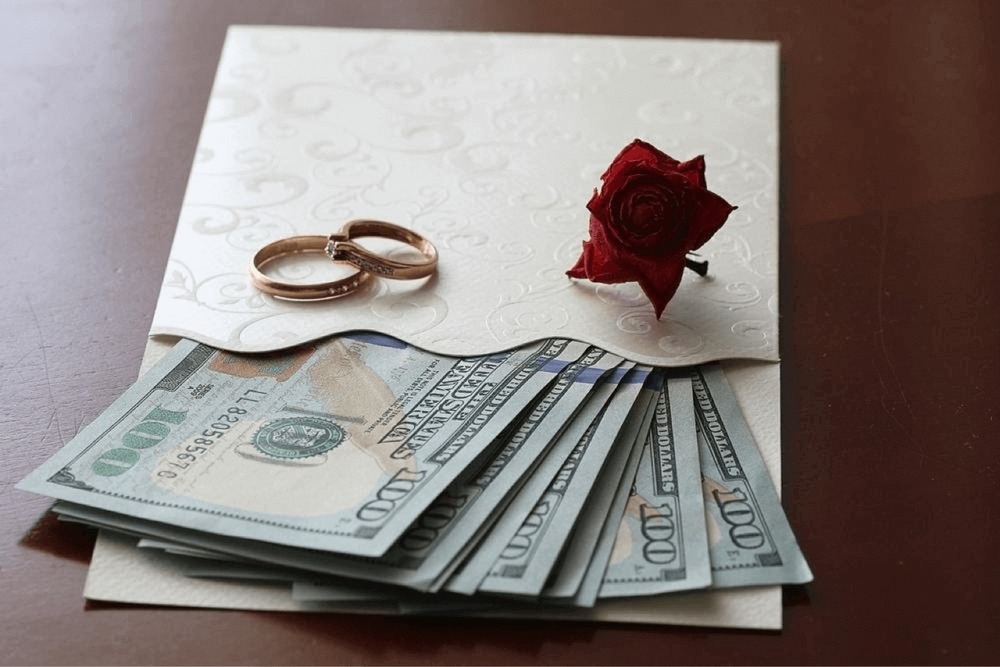
Cash in an envelope has mostly replaced physical Vietnamese wedding gifts. Colleagues and acquaintances typically give 500,000 to 1,000,000 VND (about 19 to 38 USD), close friends give 1,000,000 to 2,000,000 VND (about 38 to 77 USD), and close family gives more, 2,000,000 to 5,000,000 VND (about 77 to 192 USD).
The amount isn't just symbolic. A wedding banquet table in Hanoi runs roughly 5,000,000 to 7,000,000 VND (about 192 to 269 USD) for 8 to 10 guests, so the gift is partly expected to help cover what the couple is spending to host you. Envelopes are usually handed over at a reception table near the entrance rather than opened and read aloud, and guests who'd rather skip the math can ask a local friend what's typical for the specific city and crowd. Weddings run on cash more than cards, so it helps to sort out cash, cards, and ATMs before the reception rather than hunting for one on the day.
Wedding season in Vietnam runs heaviest from October through December and again around the Lunar New Year window, when cooler, drier weather suits an outdoor reception. Couples also consult a fortune teller or lunar calendar for an auspicious day, a practice still common even among otherwise modern families.
One month almost everyone avoids is Thang Co Hon, the Lunar Ghost Month, widely considered unlucky for weddings, store openings, and other major life events. It falls in the seventh lunar month, which lands on 2 August to 31 August 2027 on the Gregorian calendar, so a couple planning that far ahead should expect venues to book up fast on either side of it. If ceremony and tradition are part of why you're timing a Vietnam trip, our Hoi An Lantern Festival guide covers another date worth planning a visit around.
What is the Vietnamese engagement ceremony called?
Le An Hoi, held at the bride's family home, where the groom's family brings gift boxes of betel nut, tea, and other items and formally asks for her hand before the wedding date is set.
Do guests take part in the tea ceremony?
Usually not directly. The tea ceremony is for the couple and their immediate family and elders, though guests arriving early are sometimes welcome to watch from a respectful distance.
How much money to give at a Vietnamese wedding?
500,000 to 1,000,000 VND for a colleague or acquaintance, 1,000,000 to 2,000,000 VND for a close friend, and more for close family, handed over in an envelope rather than given as a physical gift.
Can foreigners attend or take part in these ceremonies?
Yes, foreign guests are welcome at the reception and sometimes the tea ceremony if invited directly by the family, and dressing respectfully in cheerful colors goes a long way with the hosts.
Is there a best time of year to attend a Vietnamese wedding?
Most weddings cluster from October to December and around Lunar New Year, while the Lunar Ghost Month is avoided almost entirely, so expect fewer invitations during that stretch.
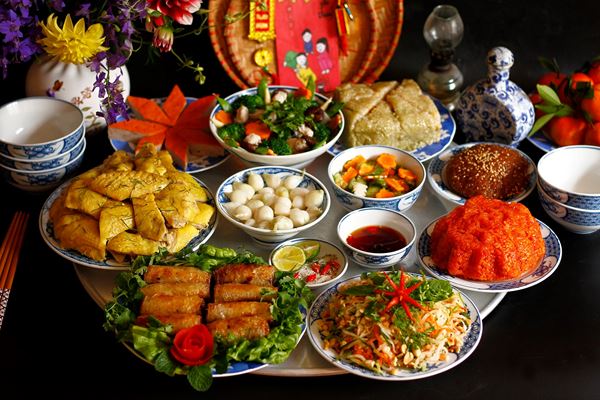
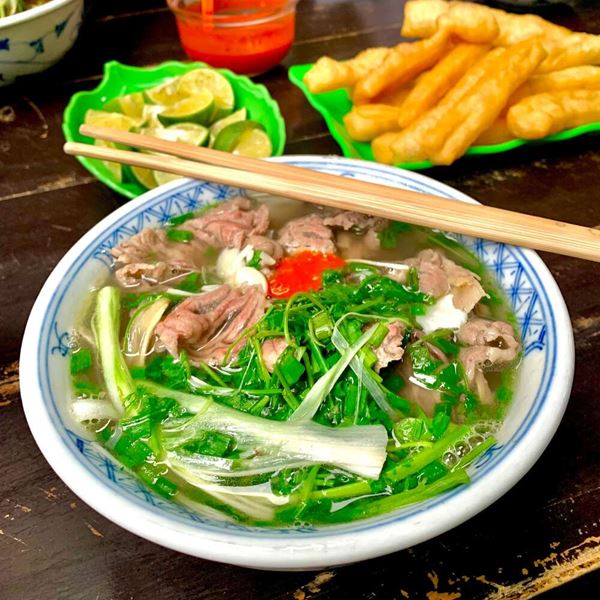
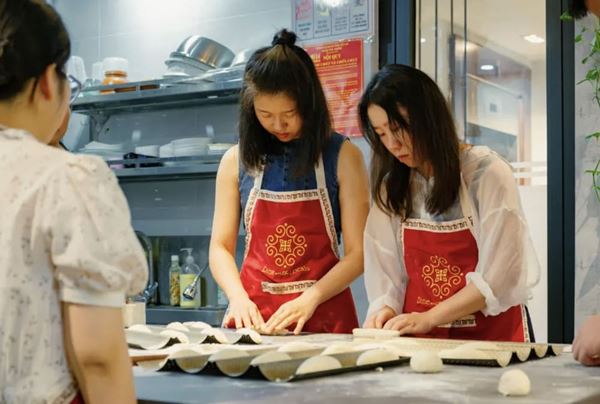
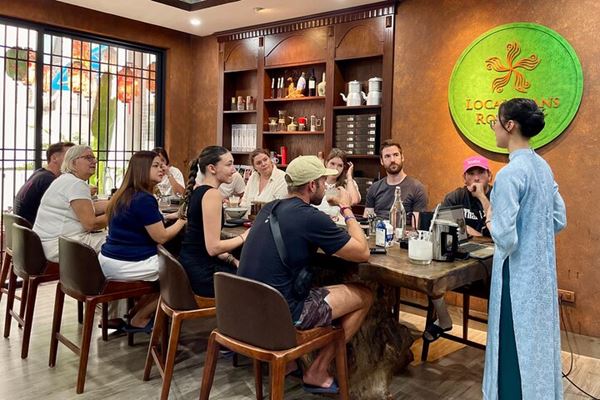
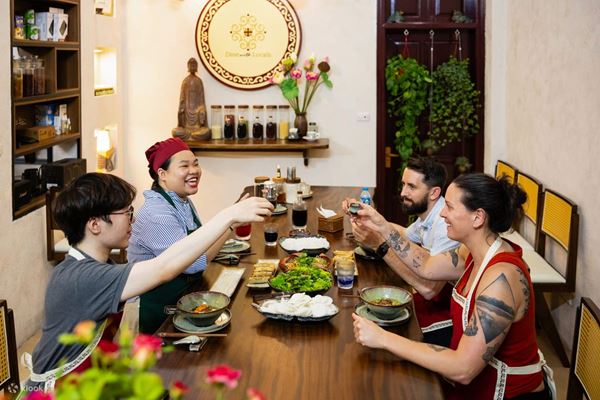
Sondax runs hands-on cultural classes in Hanoi, including a cooking session built around the same dishes served at a wedding reception, a good way to understand the food beyond watching from the guest table.