
Best Vietnamese food means pho, banh mi, and bun cha, but prices and spice levels shift by region. Here is what to try, what it costs, and where to get it.
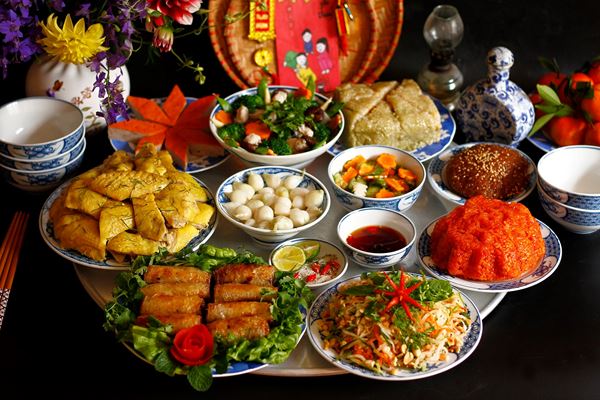
Ask ten people what the best Vietnamese food is and you will get pho, banh mi, and bun cha in some order, but the honest answer depends on which part of the country you are eating in, since the flavor can shift from one region to the next. The north keeps its broths mild, the center turns up the chili, and the south leans sweet, so this guide covers the dishes worth planning a meal around, what they cost, and where to actually find them.
Vietnamese cooking is built around a balance of five flavors, sour, sweet, salty, bitter, and spicy, plus a sixth that doesn't fit neatly into that list: the savory depth of nuoc mam, fish sauce, which shows up in the dipping sauce on a plate of noodles and the glaze on a clay pot of braised fish.
Rice and rice noodles carry most meals rather than wheat, and fresh herbs, mint, Thai basil, cilantro, perilla, are treated as a vegetable in their own right rather than a garnish, piled onto the plate rather than sprinkled on top. That mix of fresh herbs against a savory, fish-sauce-based broth or dip is what most people are actually responding to when they say Vietnamese food tastes lighter than its neighbors.
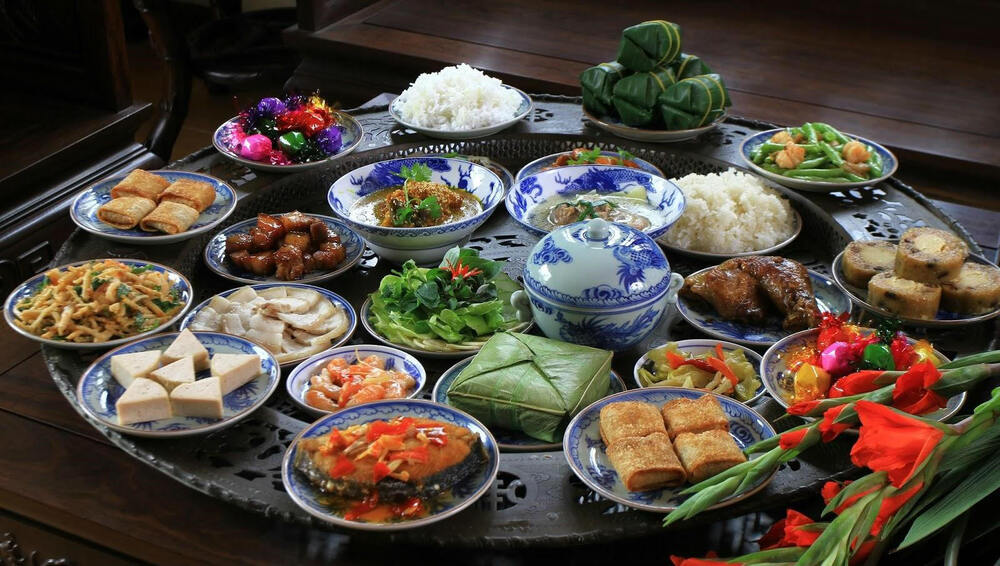
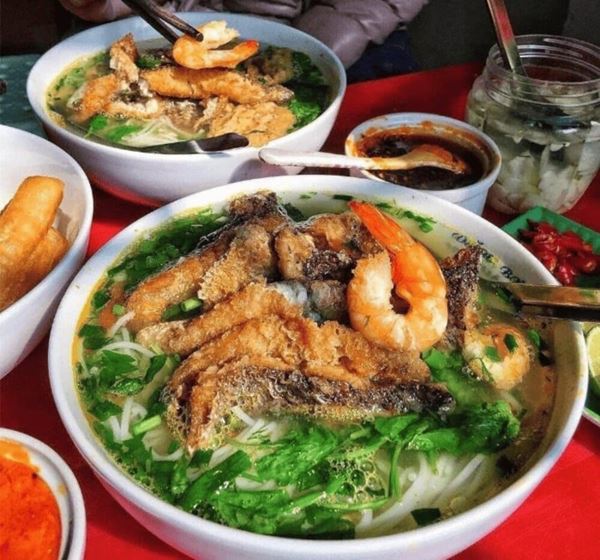
Seven dishes cover most of what shows up on every list of the most popular Vietnamese dishes, and the table below gives the Vietnamese food names, a street-food price for each, and where it comes from, since that changes how it tastes.
| Dish | Price | Region | What it is |
|---|---|---|---|
| Pho (pho bo/pho ga) | 40,000 to 55,000 VND (~1.50 to 2 USD) | North | Rice noodle soup, beef or chicken, traditionally a breakfast dish |
| Banh mi | 20,000 to 50,000 VND (~0.80 to 2 USD) | Nationwide | Baguette sandwich, pate and pickles, French-Vietnamese |
| Bun cha | 45,000 to 65,000 VND (~1.70 to 2.50 USD) | Hanoi | Grilled pork patties over noodles, Obama and Bourdain's 2016 meal |
| Bun bo Hue | 45,000 to 60,000 VND (~1.70 to 2.30 USD) | Central (Hue) | Spicy beef and pork noodle soup, lemongrass and shrimp paste |
| Com tam | 30,000 to 45,000 VND (~1.15 to 1.70 USD) | South (Saigon) | Broken rice with grilled pork chop and egg |
| Banh xeo | 35,000 to 60,000 VND (~1.35 to 2.30 USD) | South and Central | Crispy turmeric crepe, pork, shrimp, bean sprouts |
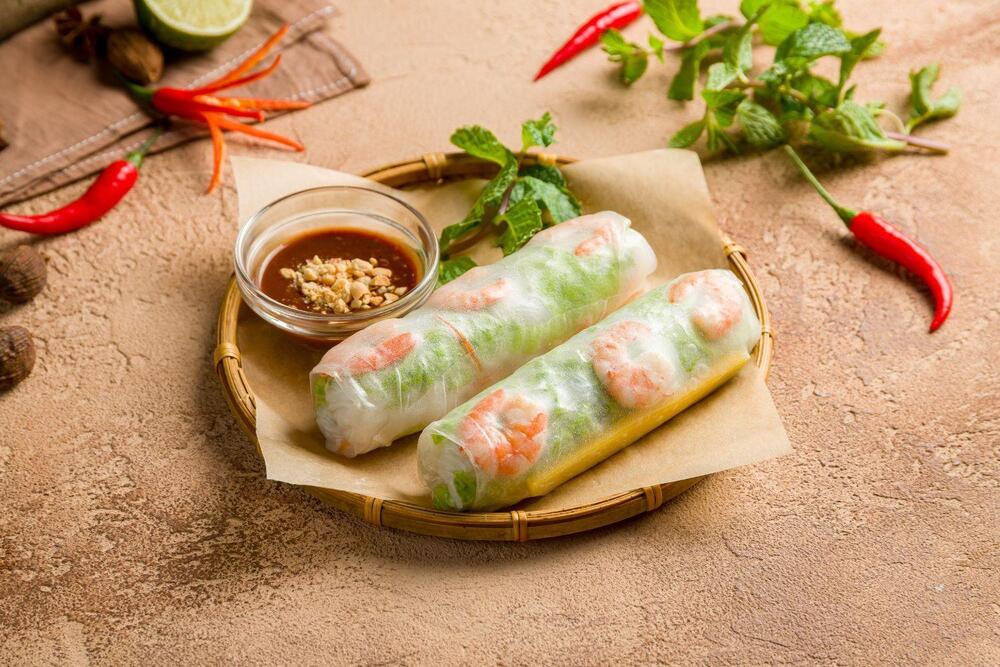
| Goi cuon | 10,000 to 15,000 VND each (~0.40 to 0.60 USD) | South | Fresh spring roll, rice paper, herbs, often shrimp |
Sources: street-food price surveys for Hanoi (checked October 2026); regional attribution from hungryhuy.com and vietnamtourism.com.
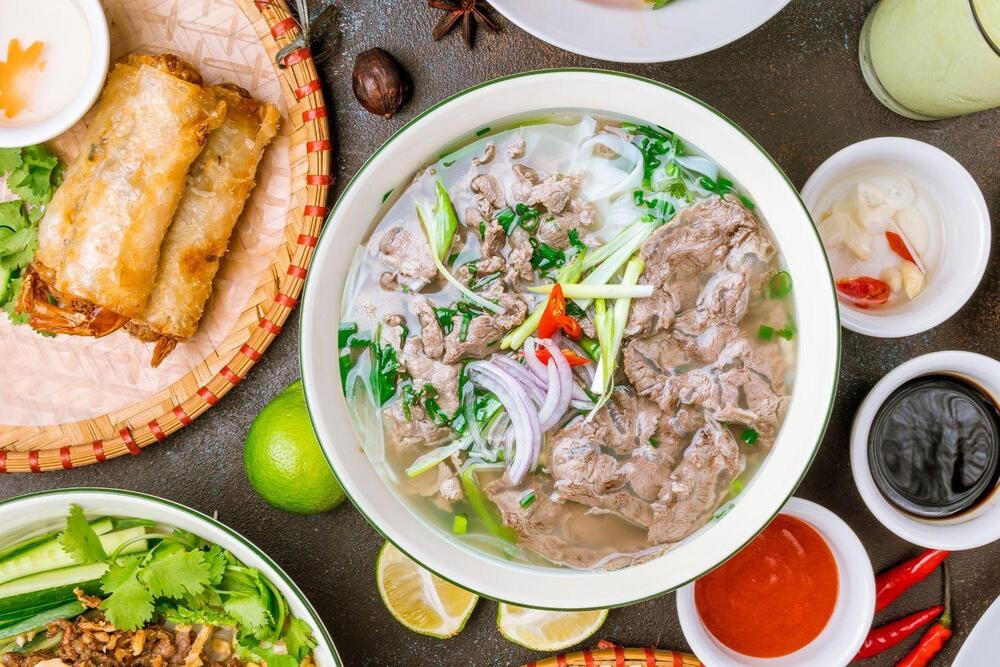
Pho in Hanoi and com tam in Saigon are both called Vietnamese food, but they barely taste related. The north favors a clear, restrained broth with black pepper rather than chili and little sugar, which is why a bowl of Hanoi pho tastes mild even to people who don't usually like soup for breakfast.
Head south along the coast and the center turns up the heat: bun bo Hue leans on chili oil, shrimp paste, and lemongrass for a broth with real punch, a legacy of the old imperial court's kitchen. Keep going south and the sweetness climbs again, sugar shows up in savory dishes and coconut milk thickens curries and desserts, so a plate of com tam or a bowl of hu tieu in Saigon tastes noticeably richer than its northern cousin. If Hanoi is the city you are building a trip around, our Hanoi travel guide covers how many days it takes to eat your way through the Old Quarter properly, and the same logic applies in reverse if you are starting in the south, where where Saigon locals actually eat includes the com tam and hu tieu stalls worth the queue.
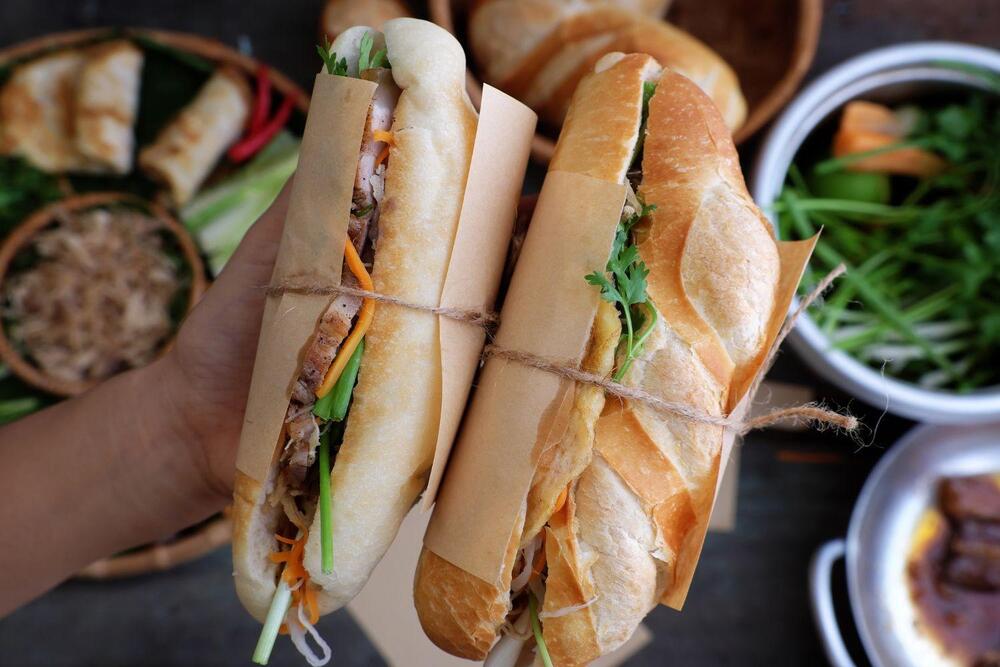
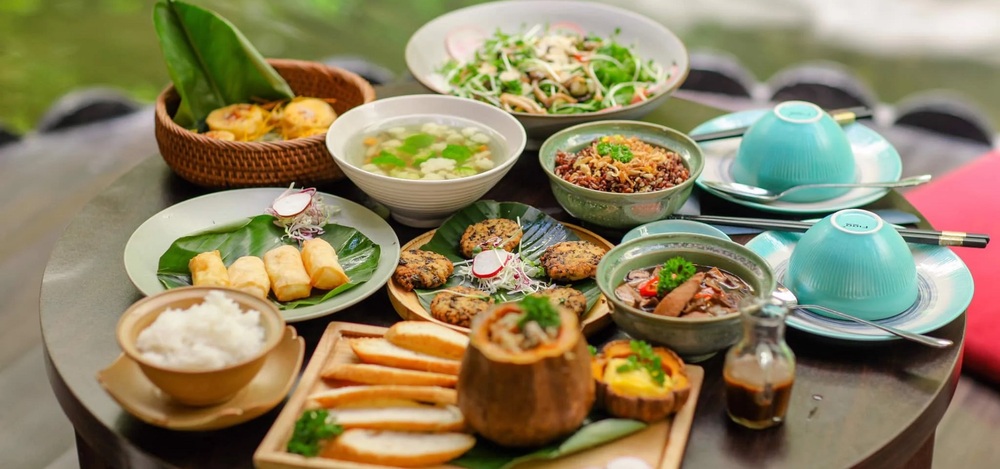
Vegetarian Vietnamese food is easier to find than the meat-heavy reputation suggests, mostly thanks to a Buddhist-influenced tradition called "chay," meat-free cooking on ordinary menus, not just at temples. Many families eat chay on the 1st and 15th of the lunar month regardless of their usual diet, so meat-free pho, banh mi, and spring rolls are easy to find.
Tofu, mushrooms, and jackfruit do the work that pork or beef usually would, and a good vegetarian spot will often mark a dish "chay" directly on the sign or menu rather than making you ask. The harder part is sauces: fish sauce and shrimp paste sneak into dishes that otherwise look plant-based, so it is worth asking directly, "co nuoc mam khong," does it have fish sauce, if you are strict about it.
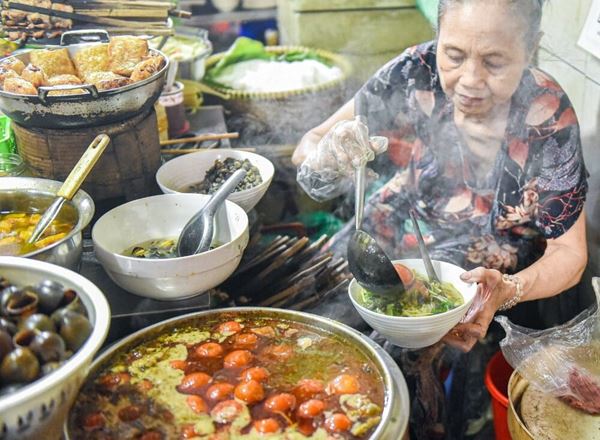
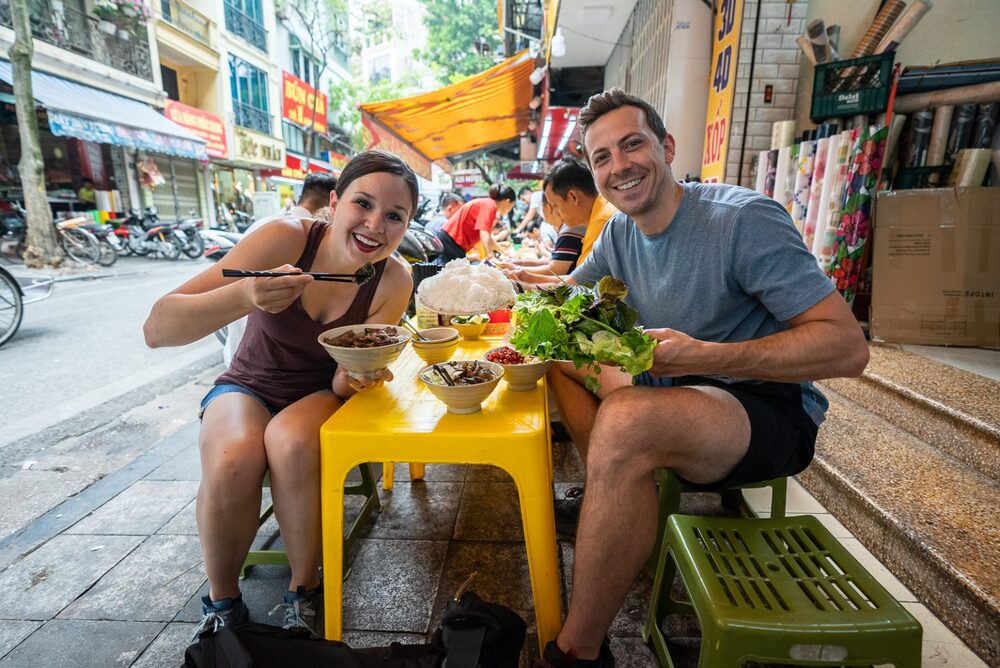
A plastic stool on a busy corner usually beats a tablecloth for the best version of any dish here, since street vendors specialize in one thing and have made it for decades, while a restaurant menu spreads the same budget across fifty dishes. The simplest rule: pick the stall with a queue of locals over the empty one.
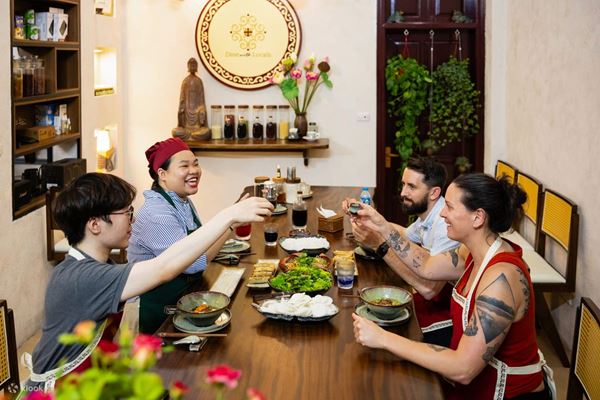
The most common mistake is assuming a higher price tag means better food, when the opposite is often true for a single-dish specialist. The second is being too shy to point at what the table next to you is eating instead of struggling through a menu, which almost every vendor is used to and happy to help with. Our own habit in the Hanoi office: pho for breakfast, bun cha for lunch, and by evening we're just as happy with whatever stall still has steam coming off it. For a different kind of meal entirely, a homestay dinner in somewhere like the Mai Chau valley usually means grilled meats and sticky rice cooked in bamboo, eaten at a long table with the family who runs the house, a useful contrast to a quick bowl eaten standing up in the city.
What is the most popular Vietnamese food?
Pho, by most measures, though banh mi and bun cha are close behind and better known among younger travelers after Anthony Bourdain and Barack Obama shared a meal of bun cha in Hanoi in 2016.
Is Vietnamese food spicy?
Mostly not. Northern dishes like pho are mild, central dishes like bun bo Hue are the spiciest, and southern food leans sweet, so the heat level is easy to control just by picking the region's style of cooking.
Pho vs bun bo Hue: what's the difference?
Both are noodle soups, but pho uses flat rice noodles in a clear, mild beef or chicken broth from the north, while bun bo Hue uses round noodles in a spicier, lemongrass-and-shrimp-paste broth from the central city of Hue.
What are typical Vietnamese street food prices?
A bowl of pho or bun cha runs 40,000 to 65,000 VND (about 1.50 to 2.50 USD), banh mi is cheaper at 20,000 to 50,000 VND, and a fresh spring roll costs as little as 10,000 VND, all checked against Hanoi street prices in October 2026.
Is Vietnamese street food safe to eat?
Street food is a normal part of daily life in Vietnam, and a stall with a steady queue of locals and high turnover is generally a safer bet than one sitting empty, since the ingredients move fast.
Can vegetarians and vegans eat well in Vietnam?
Yes. Buddhist-influenced "chay" cooking means meat-free versions of pho, banh mi, and spring rolls are common, especially around the 1st and 15th of the lunar month, and tofu or mushrooms stand in for meat in most dishes.
How much should I budget per day for Vietnamese food?
Eating only at street stalls and local restaurants, 150,000 to 250,000 VND (about 6 to 10 USD) a day covers three meals comfortably in most cities; sit-down restaurants and hotel dining push that higher.
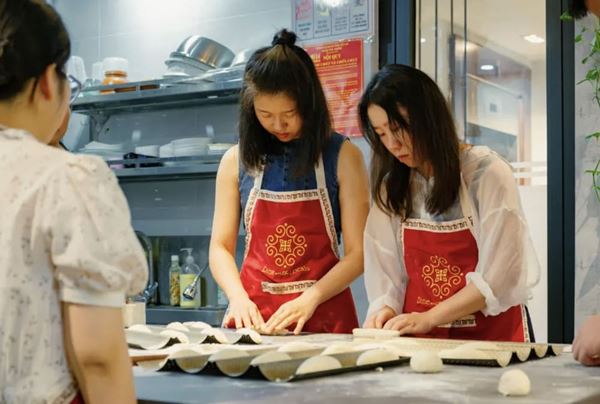
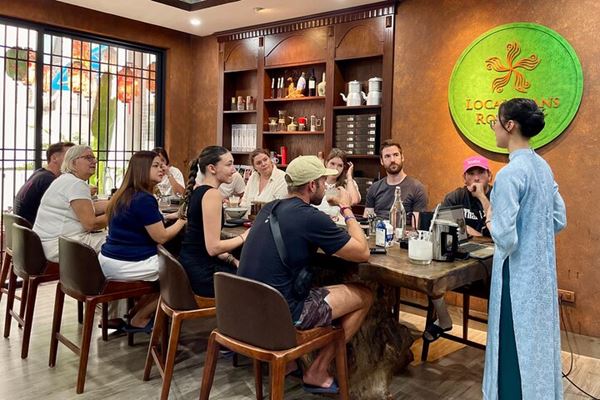
Sondax runs a cooking class with a market visit in Hanoi, starting at the stalls where the ingredients come from before turning them into a few of the dishes on this list.