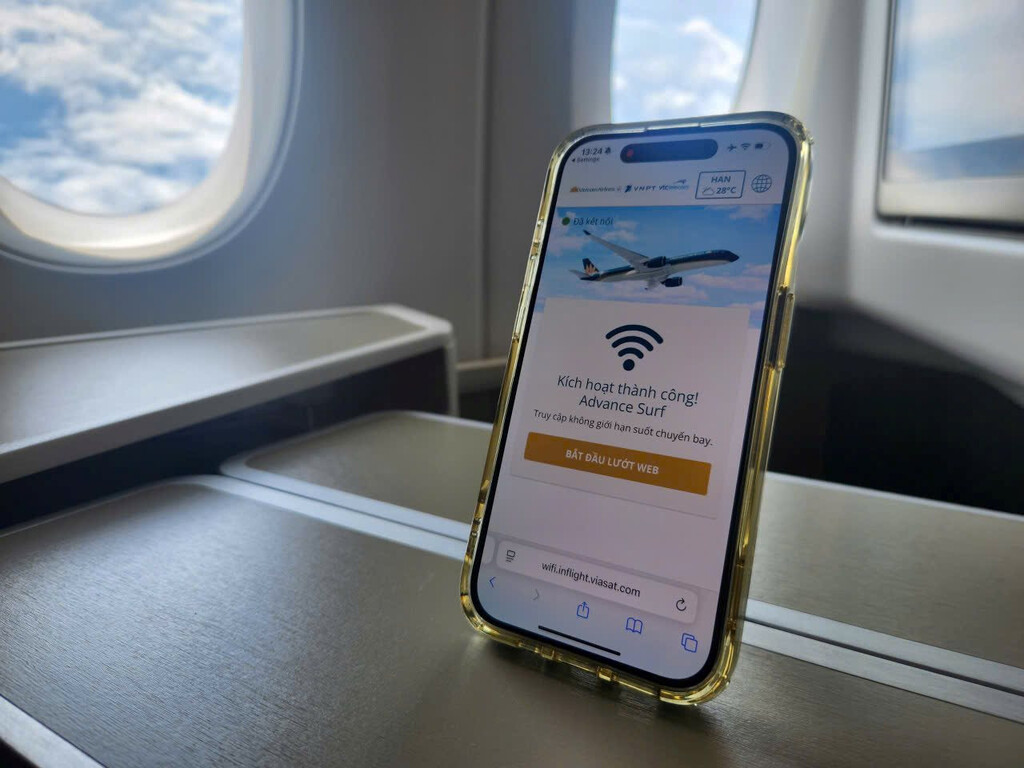

Internet in Vietnam is fast and easy to find: free Wi-Fi is standard in hotels, cafés and restaurants, mobile data averaged over 200 Mbps in July 2026, and 4G reaches 99.7% of the population. Most visitors only notice problems in remote mountains, at sea, or when an undersea cable breaks. A few apps, such as Telegram, are blocked, but the services most travelers use every day work normally.
The short version
Internet in Vietnam is among the fastest in the world. In the Ookla Speedtest Global Index for July 2026, Vietnam ranked 10th for mobile, with a median download speed of 205.58 Mbps, and 7th for fixed broadband, at 307.11 Mbps. Video calls, streaming and large uploads work well in all major cities.
Three mobile networks cover the country: Viettel, VinaPhone and MobiFone. Viettel says its 4G now reaches 99.7% of the population, and it aims to cover 97% with 5G by the end of 2026, using about 50,000 sites. Hotels and cafés usually run on fiber lines, so even a small guesthouse in Hoi An or Ninh Binh tends to have usable Wi-Fi. Vietnam internet speed drops most often for sites and apps hosted abroad, because almost all international traffic travels through a small number of undersea cables.
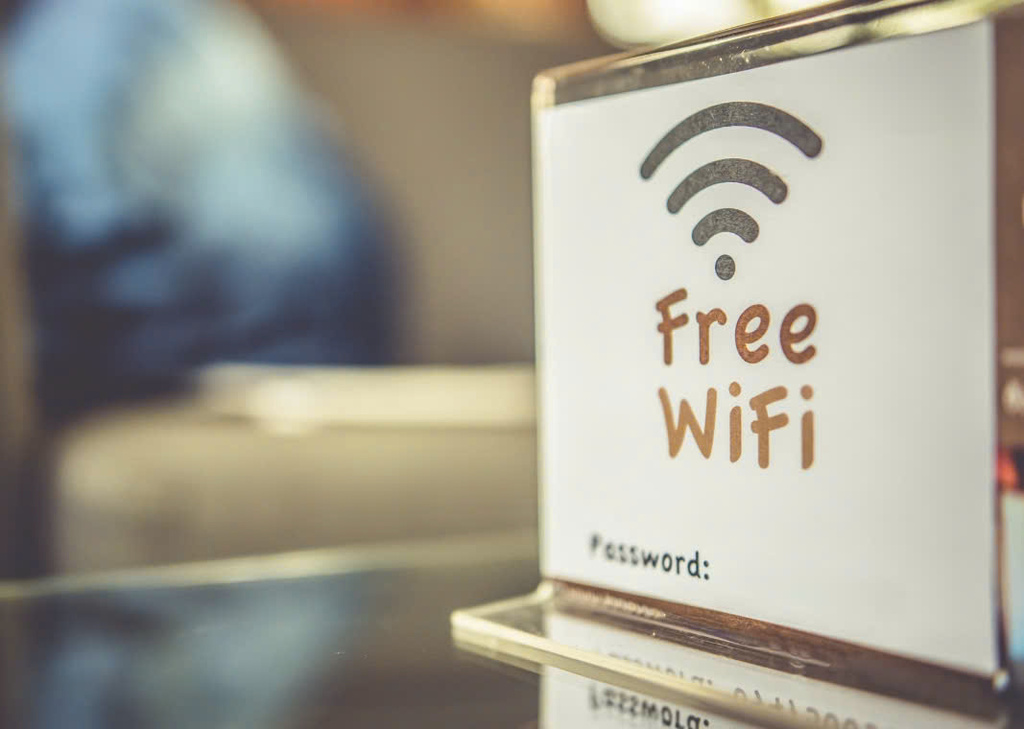
Wi-Fi in Vietnam is free in almost every hotel, homestay, café and restaurant, and you rarely need to buy anything to use it. Ask for the "pass wifi" or look for the password on the wall, the menu or your receipt. Airports, shopping malls and many tourist buses also offer free Wi-Fi.
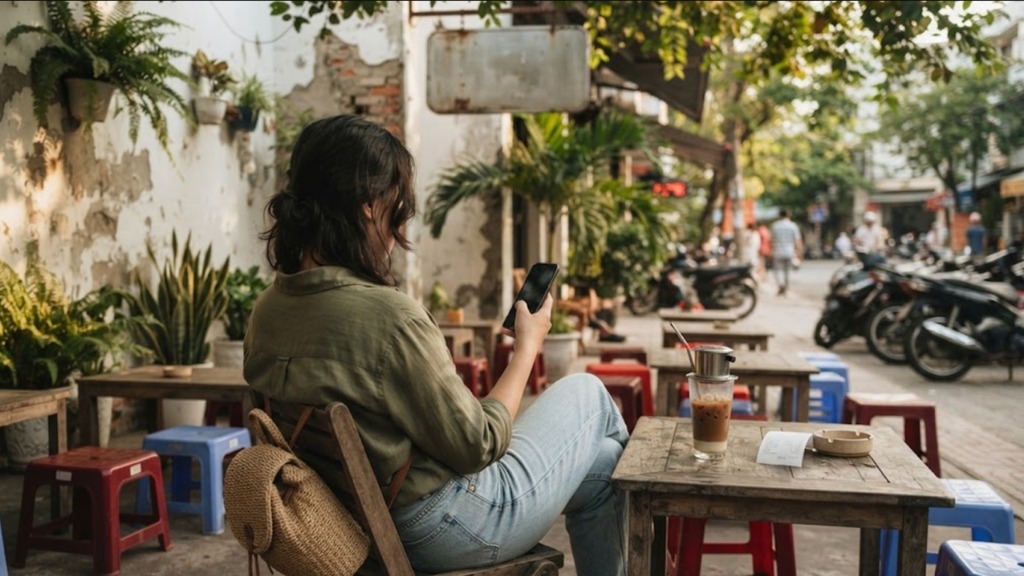
Hotel Wi-Fi is often strong in the lobby and weaker in rooms at the end of long corridors, so ask for a room near the router if you need to work. Coffee shops are the most reliable option for remote work in Hanoi, Da Nang and Ho Chi Minh City, because local cafés compete on Wi-Fi speed and power sockets. Our team in Hanoi often works from cafés when the office is busy, and we have rarely found one without Wi-Fi, even on small side streets. Public Wi-Fi is open, so avoid online banking on it unless you use your own mobile data or a VPN.
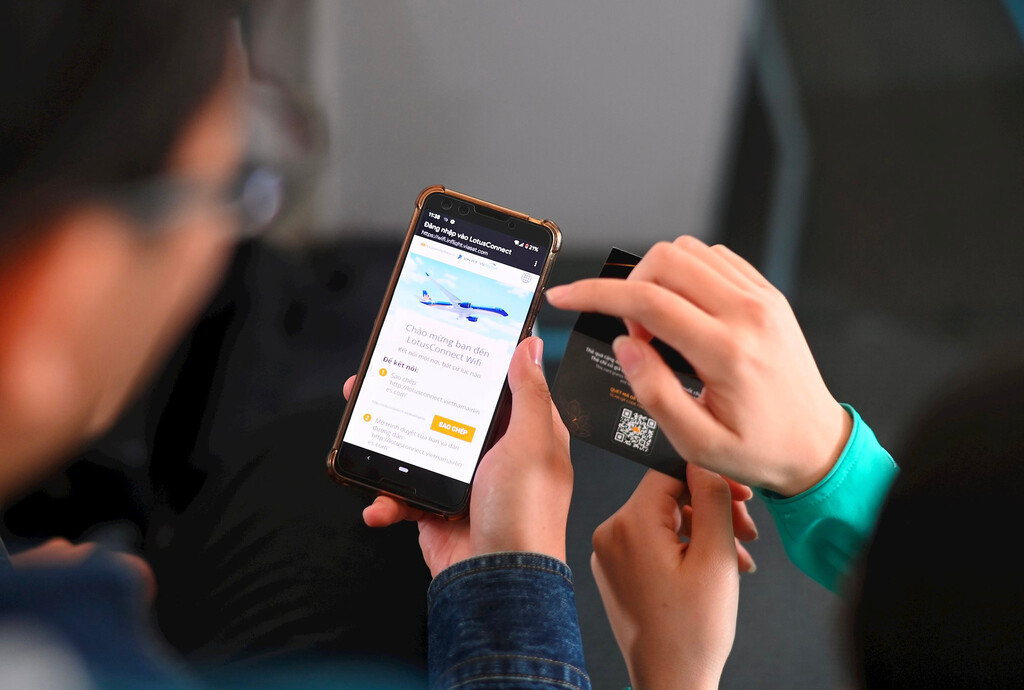
For most visitors, a local SIM or eSIM is the easiest way to stay online outside Wi-Fi, since it gives you Grab, maps and messaging everywhere. You can buy one at the airport arrivals hall, in phone shops in any city, or online before you fly.
Our guide to the Vietnam SIM card compares local SIMs, eSIMs and roaming plans, so this page does not repeat the prices. One change matters if you bring an old phone: Viettel switched off its 2G network across the country on 15 September 2026. Phones that only support 2G will no longer connect on that network, and basic phones need 4G calling (VoLTE) to make normal calls. Any smartphone made in the last few years works without problems.
Coverage is strong in cities and along main roads, but it drops on high mountain passes, deep in caves and valleys, on boats far from shore and on some small islands. Plan to be offline for an hour or two in these places, and download maps before you go.
| Place | Wi-Fi | Mobile data | What to do |
|---|---|---|---|
| Hanoi, Da Nang, Ho Chi Minh City | Free and fast almost everywhere | Strong 4G, 5G in many areas | No preparation needed |
| Sapa and Ha Giang | Good in towns and most homestays | Gaps on passes and in deep valleys | Download offline maps, send messages before a pass |
| Ha Long Bay and Lan Ha Bay cruises | Slow on most boats | Patchy between the islands | Expect weak signal for part of the trip |
| Phong Nha caves, national parks | Only at the visitor center or hotel | None inside caves or deep forest | Tell someone your plan before you go in |
| Trains and long-distance buses | Often on buses, rarely reliable | Drops in tunnels and mountains | Download films and music before you leave |
Based on Viettel coverage data (September 2026) and common traveler reports. Checked October 2026.
On the riding the Ha Giang Loop, the signal usually comes back in each town, but the passes between them can be quiet for 20 to 30 minutes. On a Halong cruise route, the signal is often fine near the harbor and weak among the outer islands, so finish important calls before you board.

Vietnam connects to the world through 8 international undersea cable systems, and when one or two of them fail, sites hosted abroad can slow down for days or weeks. Local services, maps and Vietnamese apps usually keep working normally, because the traffic stays inside the country.
The most recent problem came on 27 August 2026, when faults on the SJC2 cable near Hong Kong and the AAE-1 cable near southern Thailand cut international capacity, and providers moved traffic to the other cables. Cable faults happen several times a year, and repairs can take weeks because ships must reach the break at sea. During a fault, video calls to home and large downloads from foreign servers are the first things to suffer. Download maps, boarding passes and booking confirmations to your phone before the trip, so a slow day does not leave you without them.

Most international apps work in Vietnam, including WhatsApp, Google, Gmail, Facebook, Instagram, YouTube and Netflix. The main exception for travelers is Telegram, which Vietnamese networks have blocked since May 2025 after the government said the platform did not cooperate on criminal cases.
If you need Telegram, a VPN app usually restores access, and VPNs are widely used by people living in Vietnam. Install your VPN before you arrive, since app stores and VPN websites can be slower to reach once you are here . Some banking and payment apps refuse to work while a VPN is on, so switch it off when you pay. For everyday chat with local guides, drivers and hotels, Zalo is the most common app in Vietnam, and many businesses also use WhatsApp with foreign guests.
Sondax tip: Before you fly, download offline maps for every city on your route, save your hotel addresses in Vietnamese, and install Grab. If the airport Wi-Fi is busy when you land, you can still show the driver where you are going.

A little preparation keeps you online from the moment you land: check that your phone is unlocked and supports eSIM or 4G calling, pack a power bank, and bring the right plug adapter. Vietnam uses 220 V sockets, so most phone and laptop chargers work without a converter.
Check the sockets and adapters you need in our guide to plug types and voltage, since many hotels use a mix of flat and round pins. Keep a power bank with you on long travel days, because buses and older trains rarely have working sockets. For the rest of your first-day list, from cash to tipping, see our first-timer checklist for Vietnam.
Is Wi-Fi free in Vietnam?
Yes. Almost every hotel, homestay, café and restaurant offers free Wi-Fi, and the password is usually on the wall, the menu or the receipt. Airports and malls have free networks too. You only pay for internet when you want mobile data away from Wi-Fi.
Do I need a VPN in Vietnam?
Most visitors do not. Google, WhatsApp, Facebook, Instagram and streaming apps all work without one. A VPN helps if you use Telegram, which has been blocked since May 2025, or if you want extra security on public Wi-Fi. Turn it off for banking apps.
Does WhatsApp work in Vietnam?
Yes. WhatsApp works normally for messages and calls on Wi-Fi and mobile data, and many hotels and tour companies use it with foreign guests. Local people mostly use Zalo, so a driver or a small shop may ask you to contact them there instead.
Is Telegram blocked in Vietnam?
Yes. Vietnamese networks have blocked Telegram since May 2025, and we have not seen any official notice that the block has ended. Most people who still use it connect through a VPN app, so install one before you arrive if you rely on Telegram for work or family chats.
Why is the internet in Vietnam slow sometimes?
Usually because of a Vietnam undersea cable fault, which slows sites hosted abroad while local services stay fast. The last one hit on 27 August 2026. Weak signal in mountains or at sea is the other common reason, and it returns once you reach the next town.
Download your maps, check your phone supports 4G calling, and decide on a SIM or eSIM before you fly, and you will stay connected for almost the whole trip.
No data yet when you land?
Book a fixed-price private airport transfer, and a driver will wait in the arrivals hall, so you don't need an app or a signal to reach your hotel.
Best visited during dry season (November to April) for ideal weather.
Book accommodations in advance during peak travel season.
Carry local currency (Vietnamese Dong) for markets and small vendors.
Respect local customs and dress modestly when visiting temples.




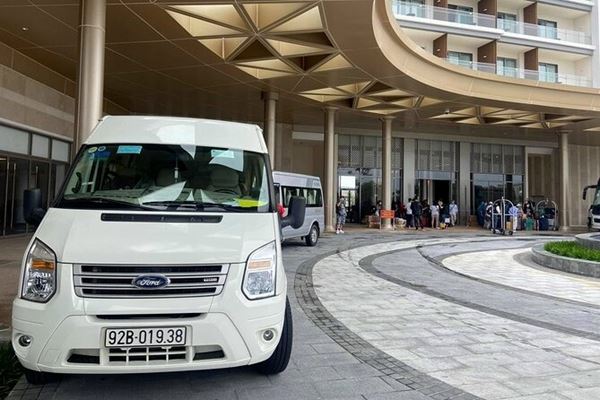


Phu Quoc International Airport, Phu Quoc
A Sondax host meets your group inside Terminal 2 at Phu Quoc and walks you to the priority immigration lane, on arrival or departure.

Cam Ranh International Airport, Nha Trang
A Sondax host meets your group inside Terminal 2 at Cam Ranh and takes you to the priority immigration lane, arrival or departure.
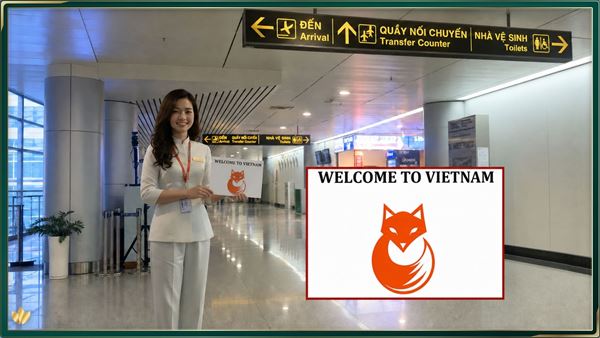
Tan Son Nhat, Ho Chi Minh City
A Sondax host meets your group inside the terminal at Tan Son Nhat and walks you straight to the priority immigration lane.
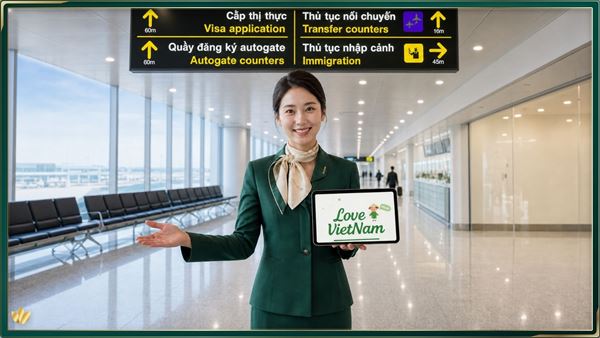
Noi Bai International Airport, Hanoi
A Sondax host meets your group inside Terminal 2 at Noi Bai and walks you past the queue to the priority immigration lane.

Da Nang International Airport, Da Nang
A Sondax host meets your group inside the international terminal at Da Nang and walks you to the priority immigration lane.