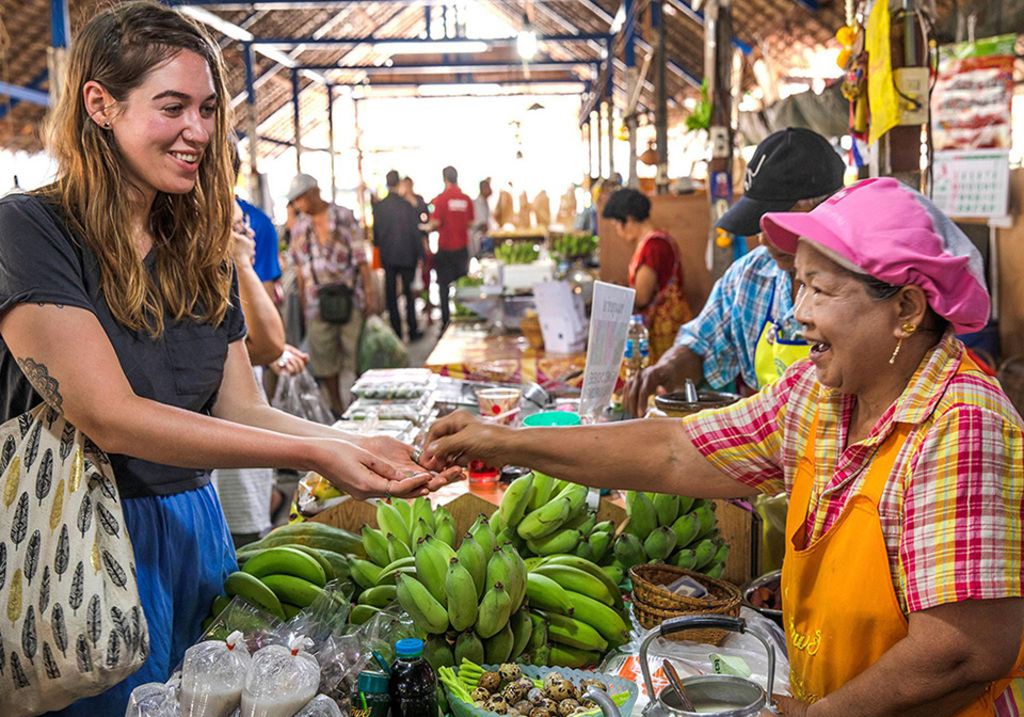

Bargaining in Vietnam explained: where haggling is normal, where prices are fixed, and why offering about 50% and settling near 70% works at most markets.
Bargaining in Vietnam is normal at markets, street stalls, souvenir shops without price tags and with cyclo or motorbike taxi drivers, but not in supermarkets, malls, restaurants with printed menus or ride-hailing apps. A fair approach is to offer about half the first price and settle at around 65 to 75%. Our Hanoi team tells friends to treat it as a friendly chat rather than a contest, because a smile gets a better price than a hard face.
The short version
You should bargain where no price is written down and where the seller sets the price for each customer, such as market stalls, street vendors and small souvenir shops. Where a price is printed on a tag, a menu or an app, it is fixed, and asking for a discount there will only confuse the seller.
| Place | Bargain? | What to do |
|---|---|---|
| Market stalls without price tags | Yes | Open at about 50% and meet in the middle |
| Souvenir shops in tourist streets | Yes, unless items have tags | Compare 2 or 3 shops first |
| Tailors in Hoi An | Yes, on the total order | Agree fabric, fittings and finish date in writing |
| Cyclos and motorbike taxis | Yes, before you get on | Agree the price, the route and the time |
| Fruit and street food stalls | Rarely | Prices are low; ask the price first |
| Restaurants with menus, cafés | No | Pay the menu price |
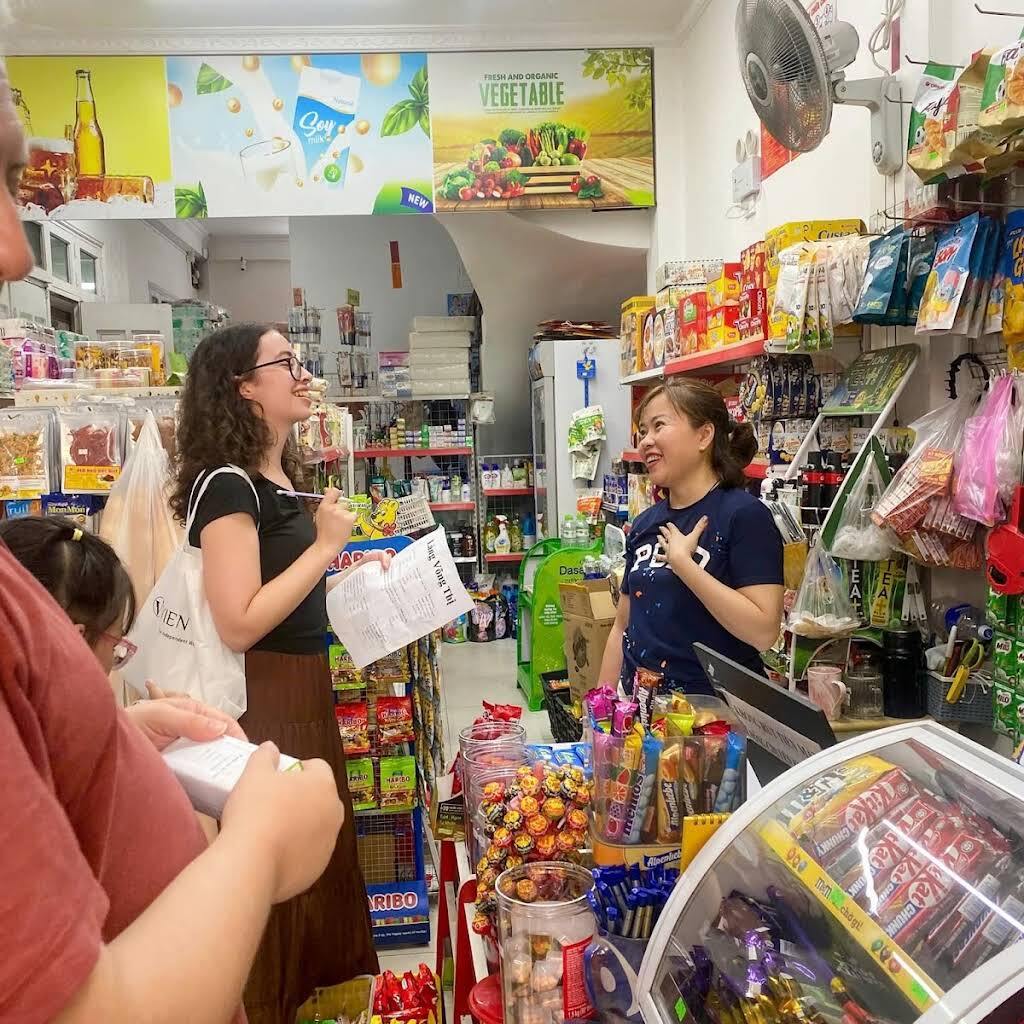
| Supermarkets, malls, convenience stores | No | Prices are fixed |
| Grab and metered taxis | No | The app or meter sets the fare |
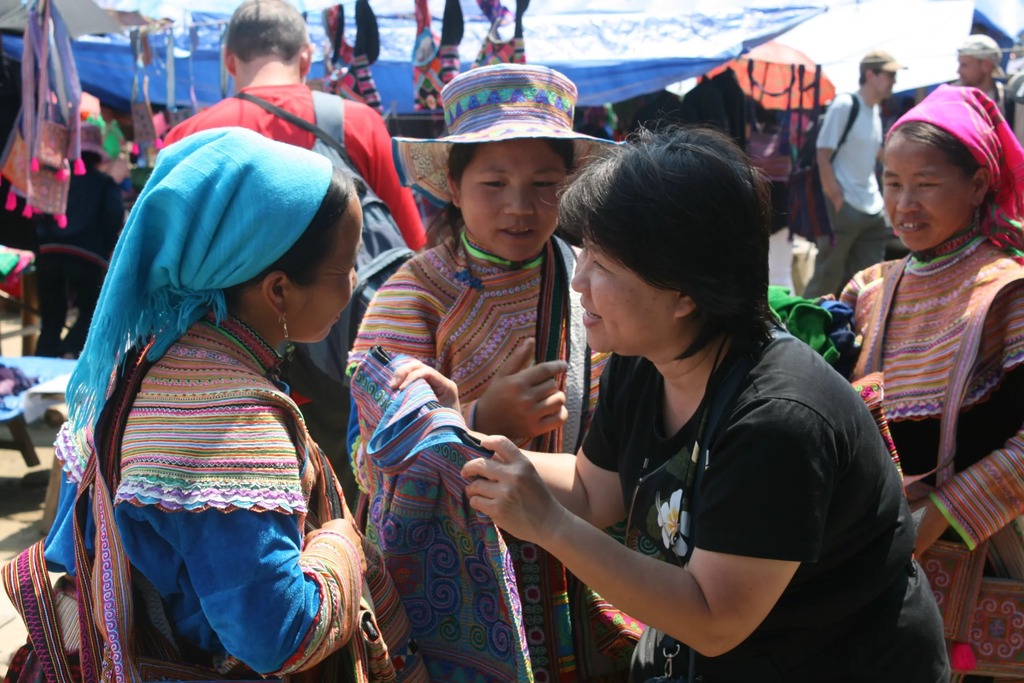
Haggling in Vietnam is also common for bigger purchases in small family shops, such as lacquerware, silk scarves or ceramics, where the owner often gives a better price if you buy several items together. Hotels and tour companies sometimes offer a lower rate for longer stays or groups, but this is a polite request rather than market-style bargaining, so ask once and accept the answer.
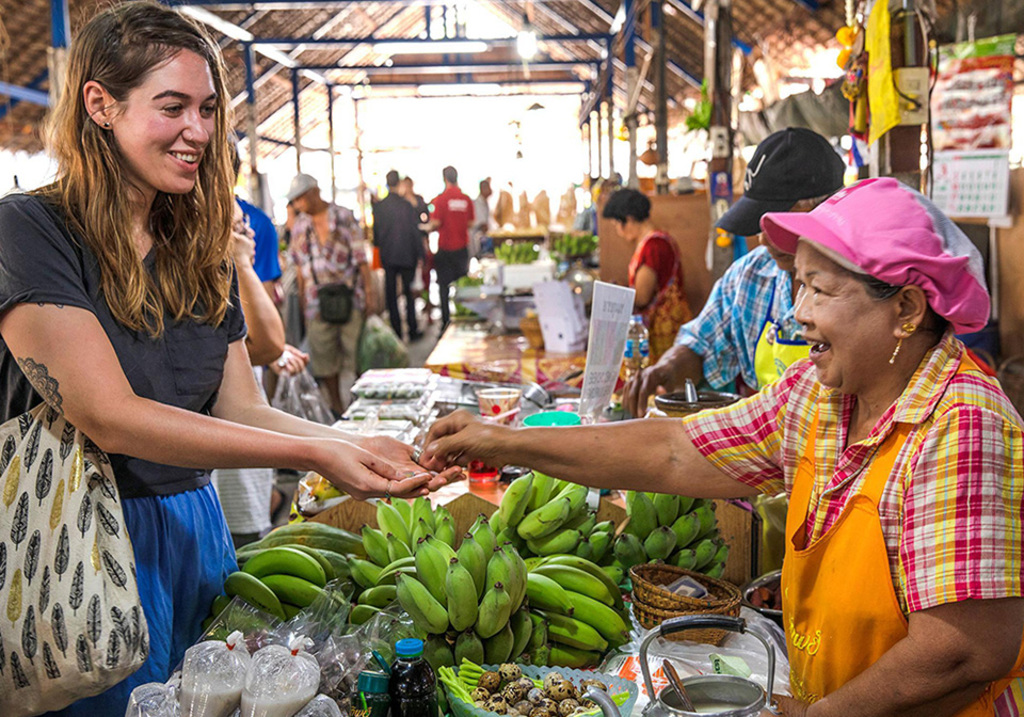
The simplest method is to ask the price, offer about half, and move up slowly until you meet somewhere around 65 to 75% of the first price. Keep it light and friendly, and only start bargaining if you really want the item at the price you have in mind.
Pay in Vietnamese dong with small notes, since many stalls cannot change a 500,000 VND note, and US dollars usually get a worse rate. Our guide to cash, cards and ATMs in Vietnam explains which notes to carry. Be careful with the 10,000 and 100,000 VND notes, and the 20,000 and 500,000 VND notes, because their colors are similar and mistakes are common at busy stalls.

A few Vietnamese words make bargaining easier and friendlier, because sellers often give a better price to visitors who try. You only need the five short phrases below, and a calculator or phone screen solves the rest of the number problem.
| Vietnamese | Meaning | When to use it |
|---|---|---|
| Xin chào | Hello | When you arrive at the stall |
| Bao nhiêu tiền? | How much is it? | To ask the first price |
| Đắt quá! | Too expensive! | After the first price, with a smile |
| Giảm giá được không? | Can you give me a discount? | Before your counter offer |
| Không, cảm ơn | No, thank you | When you walk away |
Vietnamese law requires sellers to post clear prices and to sell at the posted price. Under Decree 87/2024, a seller who does not post prices can be fined 500,000 to 1 million VND, and one who charges more than the posted price can be fined 5 to 10 million VND.
Markets also punish stalls that overcharge visitors. In August 2023, Ben Thanh Market in Ho Chi Minh City closed a clothing stall for 7 days after it asked a Japanese visitor 700,000 VND for three pairs of socks. In July 2025, the same market suspended a food stall for 3 days after it charged 1 million VND for four bowls of duck noodle soup, and the seller had to refund the difference. If a seller asks for more than the posted price, show the price tag, and if that does not work, talk to the market management office. Ben Thanh is still worth a visit on two days in Ho Chi Minh City, but compare prices with nearby shops before you buy.
For transport, agree the full price before you start, because arguing at the end of the ride rarely goes your way. Ride-hailing apps and metered taxis remove the problem, while cyclos, motorbike taxis and small boats need a clear deal on price, route and time first.
With a cyclo in Hanoi's Old Quarter, ask whether the price is per person or per vehicle and how long the ride lasts, then write the number on your phone and show it to the driver. In Hoi An, the official Hoai River boat fares, set in 2022 and still the latest published, are 150,000 VND per boat for 1 to 3 guests and 200,000 VND for 4 to 5 guests, for a ride of about 15 to 20 minutes. If you visit Hoi An's old town and lantern streets, check the fare board at the boarding point before you step in. For airport arrivals, avoid drivers who approach you inside the terminal, and use the official taxi line, Grab, or a fixed-price private car booked before you land.
Book a fixed-price airport car

Good bargaining in Vietnam is polite, quick and fair. Smile, keep your voice calm, and remember that the difference is often less than 1 USD for you but a real part of the day's income for the seller. Most sellers enjoy friendly bargaining, but they lose patience with long arguments over very small sums.
Many sellers believe the first sale of the day, called "mở hàng", brings luck for the rest of the day, so they may give the first customer a good price and dislike it when an early buyer haggles hard and leaves. Don't tell a seller that the stall next door is cheaper, because this is seen as rude and usually ends the conversation. Don't start bargaining if you have no plan to buy, and don't touch or try on many items just to pass time.
Sondax tip: Decide your top price before you ask, and stop once you reach it. Paying 10,000 VND (about 0.40 USD) more than a local would is not a loss, and it keeps the experience fun for both sides.
Is bargaining rude in Vietnam?
No. Bargaining is normal at markets and street stalls, and sellers expect it when there is no price tag. It only becomes rude when you argue for a long time over very small amounts, criticize the goods, or back out after you have agreed on a price.
Can you bargain at Ben Thanh Market?
Yes, at stalls without price tags, and the first price for visitors is often high. Offer about half and expect to settle at around 65 to 75%. If an item has a posted price, the seller must sell at that price, and the market management office handles complaints.
How much should I offer when bargaining?
Start at about 50% of the first price and move up in small steps. In most markets you will agree at around 65 to 75% of the first price. Check the same item at 2 or 3 stalls first, so you know roughly what it should cost.
Do you bargain in restaurants in Vietnam?
No. Restaurants and cafés with printed menus have fixed prices. At small street food stalls without a menu, ask the price before you order, and pay what they say. Tipping is not expected, though many visitors leave small change, as our guide to how much to tip guides and drivers explains.
Carry small notes, check prices at a few stalls, offer about half and settle with a smile. For the rest of your first-day questions, see our first-timer checklist for Vietnam.
Best visited during dry season (November to April) for ideal weather.
Book accommodations in advance during peak travel season.
Carry local currency (Vietnamese Dong) for markets and small vendors.
Respect local customs and dress modestly when visiting temples.





Phu Quoc International Airport, Phu Quoc
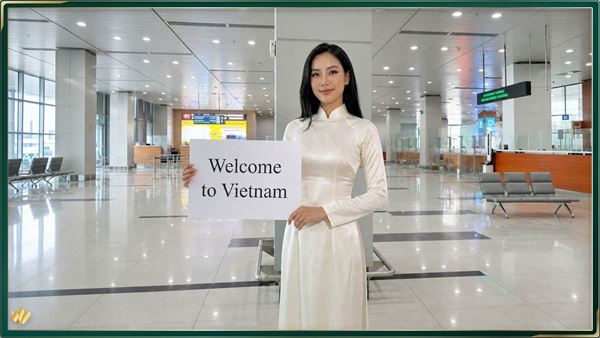
A Sondax host meets your group inside Terminal 2 at Phu Quoc and walks you to the priority immigration lane, on arrival or departure.
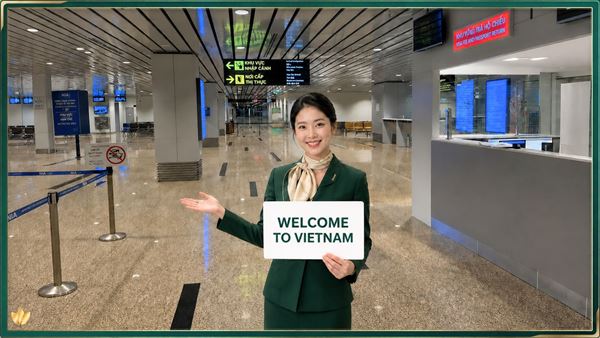
Cam Ranh International Airport, Nha Trang
A Sondax host meets your group inside Terminal 2 at Cam Ranh and takes you to the priority immigration lane, arrival or departure.
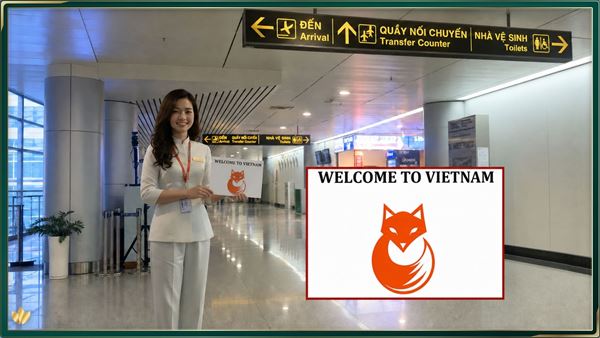
Tan Son Nhat, Ho Chi Minh City
A Sondax host meets your group inside the terminal at Tan Son Nhat and walks you straight to the priority immigration lane.
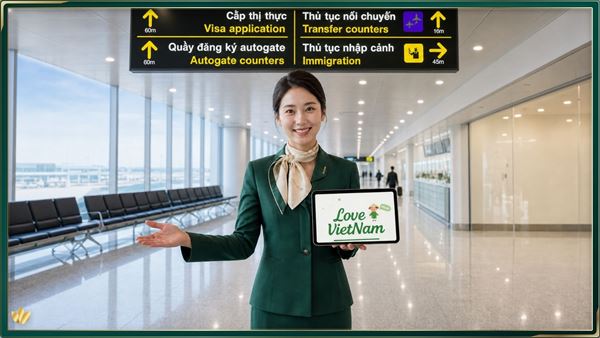
Noi Bai International Airport, Hanoi
A Sondax host meets your group inside Terminal 2 at Noi Bai and walks you past the queue to the priority immigration lane.

Da Nang International Airport, Da Nang
A Sondax host meets your group inside the international terminal at Da Nang and walks you to the priority immigration lane.