




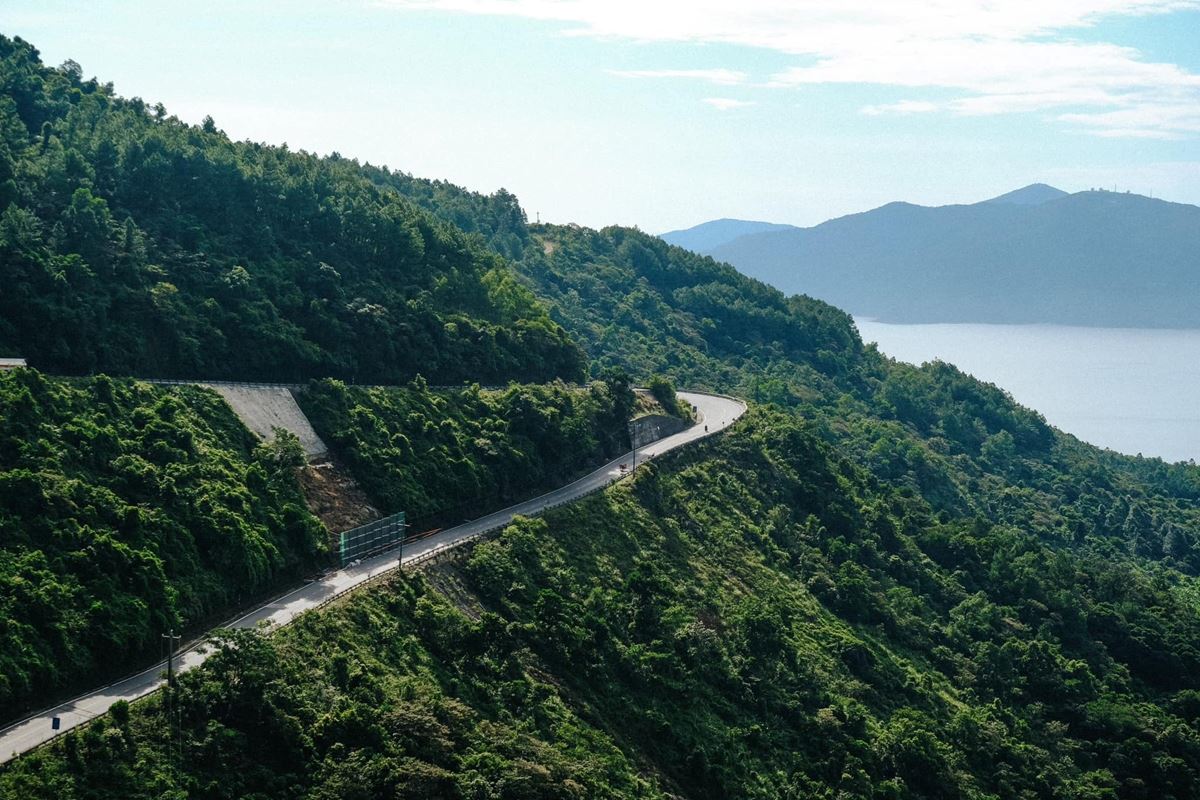

Is the Hai Van Pass worth doing?
Yes. The Hai Van Pass is worth the effort for anyone travelling between Da Nang and Hue with half a day to spare. The 21-kilometre road climbs to about 496 metres over the Bach Ma spur of the Truong Son range, with the East Sea on one side and forested slopes on the other.

The alternative is the Hai Van Tunnel underneath, which takes about 10 minutes against roughly 30 over the top. That speed is why most buses and trucks go underground, and why the mountain road is quieter than any other stretch of the old Highway 1. You give up 20 minutes and get open views over Da Nang Bay, the Hai Van Gate at the summit and the long sweep of Lang Co lagoon on the way down.
The road itself is in good condition, with banked corners and places to pull over. It suits a 125cc scooter as well as a touring motorcycle, but it is still a mountain road: tight bends, long descents and, on many mornings, cloud sitting on the summit.
Where does the Hai Van Pass start and end?
The Hai Van Pass starts about 20 kilometres north of central Da Nang, where Nguyen Van Cu Street leaves the coast and climbs as the old National Route 1A. It ends at sea level near the fishing town of Lang Co, in Hue City (Thua Thien Hue Province until 2025). The summit marks the boundary.
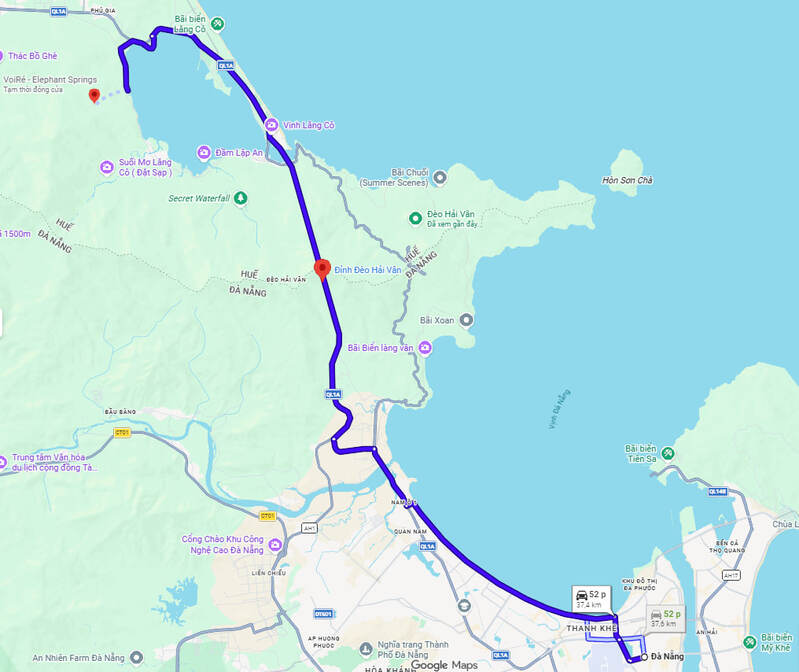
From central Da Nang, it is about 30 to 40 kilometres to the summit, depending on your route, so most people start from the city or from Hoi An, an hour further south. If you are planning the Da Nang end of the trip, our Da Nang beaches and food guide covers where to stay and eat before you set off.
The mountain was a frontier long before it was a road trip. For centuries it marked the line between the Champa kingdom to the south and Dai Viet to the north. Today it is a weather line: the ridge often stops winter rain clouds from the north, so you can leave a grey, drizzly Hue in the morning and ride down into sunshine on the Da Nang side.
What is the Hai Van Pass known for?
The Hai Van Pass is known for its coastal views, its hairpin bends and the Hai Van Gate at the top. Its name means "Ocean Cloud Pass", after the cloud that often rolls in from the sea and settles on the summit. It became world-famous after the 2008 Top Gear Vietnam special, when Jeremy Clarkson called it "a deserted ribbon of perfection".
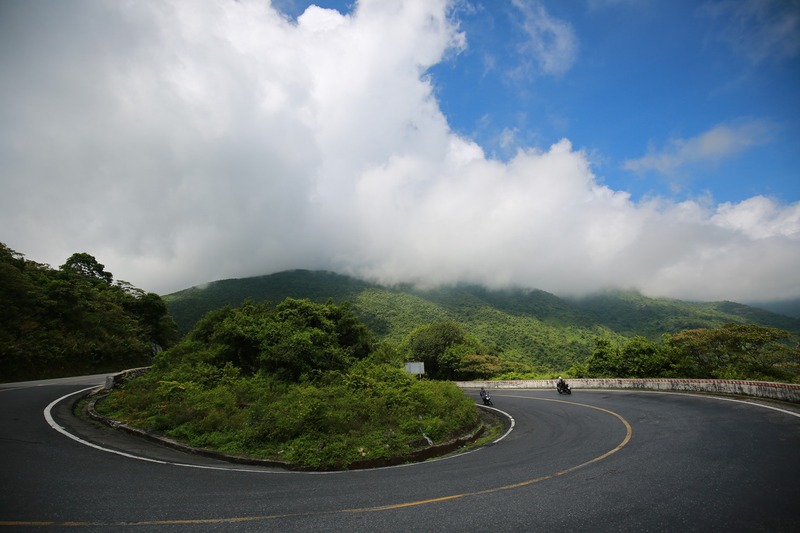
At the summit, the Hai Van Gate (Hai Van Quan) was built in 1826 under Emperor Minh Mang to guard the road, and it was recognised as a national historic site in 2017. After two years of restoration, it reopened to visitors on 1 August 2024, and entry was free at reopening while the two cities worked out ticket prices. The French and American bunkers around it are still there, and the walls give a view over both bays.
Cloud is part of the experience. Fog can roll off the sea and drop visibility on the upper bends to a few metres within minutes, then clear just as fast. If you are riding, slow down, switch your lights on and wait at the gate rather than pushing on into it.
Hai Van Pass or Hai Van Tunnel?
Take the pass for the views; take the tunnel if you only need to get from Da Nang to Hue. The 6.28-kilometre Hai Van Tunnel opened in 2005 and takes about 10 minutes, against roughly 30 minutes over the pass. Motorbikes, bicycles and pedestrians are not allowed in the tunnel, so riders always go over the top.
Cars pay a toll of 110,000 VND (~4 USD) for vehicles under 12 seats, and drivers usually take the tunnel unless you ask otherwise. If you book a car or a transfer, write "over the Hai Van Pass, with stops" in the booking so the driver plans for it. A shuttle also carries motorbikes and their riders through the tunnel, which helps if the weather on the pass turns bad.
How safe is the Hai Van Pass?
For a competent rider in dry weather, riding the Hai Van Pass by motorbike is safe: the surface is good and most heavy traffic uses the tunnel. The risks are bends, long descents, fog and fuel tankers, which are banned from the tunnel and still use the pass.

Sound your horn before blind corners, never overtake on the inside of a bend and keep well left on the way down. On the descent, use engine braking: on an automatic scooter that means slowing early and braking in short pulses, because holding the brakes all the way down can overheat them. A semi-automatic such as a Honda Blade lets you drop a gear instead.
Do not count on Grab to rescue you on the mountain. Ride-hailing drivers often decline trips that end at the summit or in Lang Co, and if a rented bike gets a flat tyre halfway up, the nearest repair shops are at the bottom on either side. Carry the rental shop's phone number. Go over the top early if you can, before the midday heat and the tour coaches that stop at the summit.
When is the best time to ride the Hai Van Pass?
The best time to ride the Hai Van Pass is from February to August, when the central coast is mostly dry. From September to December, the rainy season brings heavy rain, low cloud, more fog on the summit and the occasional typhoon. Early morning is the best time of day in any month.
Aim to be at the summit before 08:30. You get softer light over Lang Co, cooler air and the Hai Van Gate before the tour coaches arrive. In June and July, midday temperatures on the coast reach the mid-30s Celsius, so a late start means riding the long climb in full sun. If your trip falls in autumn, read up on planning around the rain in central Vietnam and keep a day spare in case the pass is closed or unsafe.
Can you do the Hai Van Pass from Hoi An to Hue?
Yes, riding from Hoi An to Hue over the Hai Van Pass is the most popular way to do it. The trip is about 130 kilometres and takes 5 to 7 hours with stops. The first 1.5 hours, through Da Nang, are flat coastal road; the climb starts north of the city.
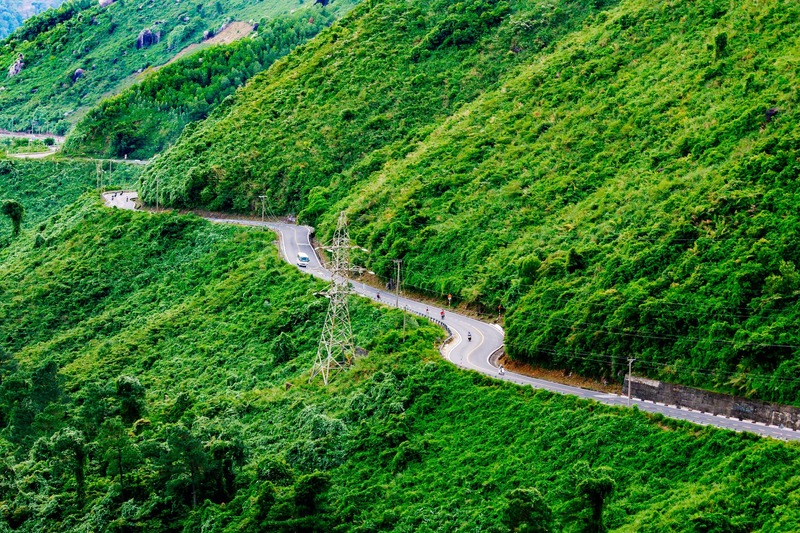
From Hoi An, the usual route runs north along the beach road past An Bang, through Da Nang, and up Nguyen Van Cu Street to the pass. After Lang Co, the last 65 kilometres to Hue are on the flat, busier Highway 1. Plan to arrive in Hue by late afternoon, in time to see the Imperial City and the tombs the next morning. The ride also works in the other direction, ending at the yellow-walled streets of Hoi An's ancient town.
The hard part is not the riding but the luggage. A 15-kilogram suitcase or a 65-litre backpack on a scooter shifts your centre of gravity on every bend and makes braking on the descent harder. Solve that before you book anything.
How to get your luggage over the pass
The easiest way to get your luggage over the Hai Van Pass is not to carry it. One-way motorbike rentals between Hoi An and Hue often include one piece of luggage per bike, sent ahead by car; Easy Rider tours carry it on the bike or by car; and a private car or the train takes it with you.
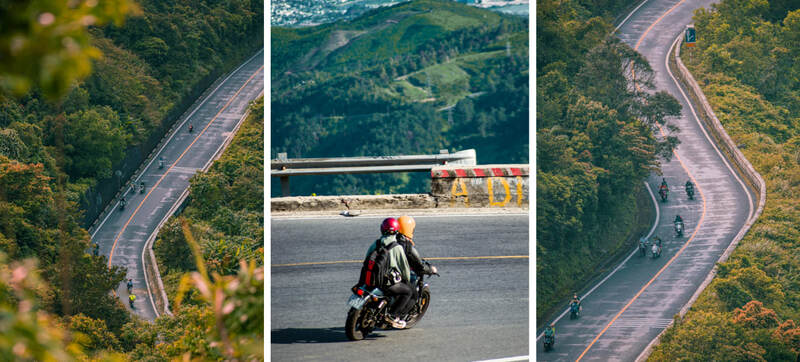
Self-ride with a one-way rental
Several rental shops in Hoi An and Hue rent bikes one way and include transfer of one bag per bike to their shop at the other end. You drop the bag in the morning, ride the pass with a day pack, and collect it in Hue. Ask what is included before you pay: number of bags, fuel, helmet quality and what happens if the bike breaks down on the mountain.
Easy Rider tours
If you do not ride, or do not have a licence that is valid in Vietnam, an Easy Rider tour puts you on the back of a local driver's motorbike for the day. One-way trips between Hoi An or Da Nang and Hue cost roughly 40 to 70 USD per person, usually with luggage carried on the bike or sent by car, and with stops at the summit, Lang Co and often a waterfall.
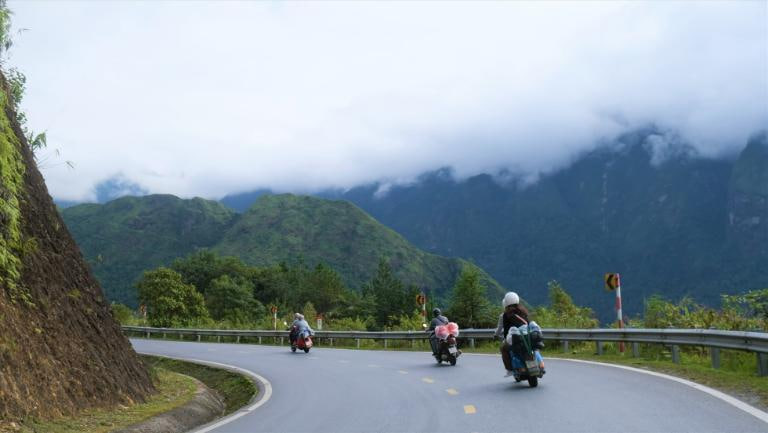
Private car or train
Families and anyone with hard-shell suitcases are better off in a car: a private car between Hoi An or Da Nang and Hue costs about 1.7 to 2.2 million VND (~65 to 85 USD) for the vehicle, and you can ask for the pass with stops at the gate and at Lang Co. You can book a private car between Da Nang and Hue with us, or with any local transfer company. The train is the cheapest option and follows the coast below the pass.
| Option | Cost | Time (Hoi An or Da Nang to Hue) | Best for | Watch out for |
|---|---|---|---|---|
| Self-ride, one-way rental | 150,000 to 250,000 VND (~6 to 10 USD) per day, plus fuel | 5 to 7 hours with stops | Experienced riders with a valid licence | Fog, trucks on the bends, brake fade on automatics |
| Easy Rider tour | About 40 to 70 USD per person | 6 to 8 hours with stops | Non-riders who want the open-air ride | A long day on the back of a bike |
| Private car via the pass | About 1.7 to 2.2 million VND (~65 to 85 USD) per car | 3 to 4 hours with stops | Families, suitcases, rainy days | Ask for the pass, or the driver takes the tunnel |
| Standard train | About 80,000 to 90,000 VND (~3 to 4 USD) | About 2.5 to 3 hours, Da Nang to Hue | Budget travellers | You see the coast, not the summit |
| Heritage train | 180,000 VND weekdays, 210,000 VND weekends (~7 to 8 USD) | About 3 hours, with a 10-minute stop at Lang Co | A slow, scenic day without driving | Two departures a day each way |
Source: VTV (heritage train fares and Lang Co stop).
📌 Sondax tip:
On the train from Hue to Da Nang, sit on the left side of the carriage: the line runs along the base of the mountain, right above the sea. From Da Nang to Hue, take the right side.
Hai Van Pass itineraries with timed stops
A good Hai Van Pass day starts early and stops at four places: Nam O on the Da Nang side, the Hai Van Gate at the summit, the Lang Co viewpoint on the descent and the Lap An lagoon at the bottom. The order depends on your direction; the timings below assume a 125cc scooter and a start before 08:00.
Da Nang to Hue
- 08:00 Leave Da Nang along the coast road around Da Nang Bay, before the morning traffic builds.
- 08:20 Stop at Nam O Beach to see the round basket boats, and try goi ca Nam O, the local raw fish salad. Between February and April, the shoreline rocks are covered in green moss.
- 09:00 Climb to the Hai Van Gate. Park, walk through the restored gate and up to the bunkers for views over both bays (about 45 minutes).
- 10:00 Stop at the viewpoints on the northern descent for the long view over Lang Co beach and the bridge across the lagoon.
- 10:30 Ride around the Lap An lagoon, then continue on Highway 1 to Hue, or detour to Bach Ma National Park.



Hue to Da Nang
Riding south, you reach the Lap An lagoon first, early in the morning, when oyster farmers are out in the shallow water. The climb out of Lang Co faces east, so the morning sun lights the forest on the slope above you. After the gate, the descent drops you into Da Nang, with the hotel towers along the beach growing bigger at every bend. Leave Hue by 07:00 to reach the summit before the coaches.

Half-day loop from Da Nang or Hoi An
If you are staying in Da Nang and not moving on to Hue, ride up to the summit and back down the same road, then cross the city to the Son Tra Peninsula. Together the two climbs make a loop of about 80 kilometres. Son Tra has steep, narrow roads and monkeys by the roadside; ride it in daylight only.


Frequently asked questions
How long does it take to drive the Hai Van Pass?
The pass itself takes about 30 minutes by car and 45 to 60 minutes by motorbike without stops. With time at the Hai Van Gate and the Lang Co viewpoint, plan 2 to 3 hours for the mountain section. Hoi An to Hue over the pass is a full day, usually 5 to 7 hours.
How much does it cost to rent a motorbike for the Hai Van Pass?
A scooter costs about 150,000 to 250,000 VND (~6 to 10 USD) a day in Da Nang, Hoi An or Hue, plus fuel. One-way rentals between Hoi An and Hue cost more but often include one bag sent by car. Fill the tank before the climb rather than counting on finding fuel on the mountain.
Do I need a licence to ride the Hai Van Pass?
Yes. You need a motorbike licence that is valid in Vietnam: a Vietnamese licence, or an International Driving Permit issued under the 1968 Vienna Convention together with your home licence. Many visitors ride without one, but police checks happen, and travel insurance rarely covers an accident on an unlicensed bike.
Can you cycle the Hai Van Pass?
Yes, and many cyclists do, usually from Da Nang. The climb is about 10 kilometres from the bottom of the Da Nang side to the gate, steady rather than brutal, but hot by mid-morning. Bicycles are banned from the tunnel, so start early, carry plenty of water and watch for trucks on the bends.
Cross the pass as part of a planned trip
On day 4 of our 5-day Da Nang, Hoi An and Hue tour, the car takes the old coast road over the Hai Van Pass instead of the tunnel, then stops at Lap An Lagoon on the way down to Hue.







Comments