




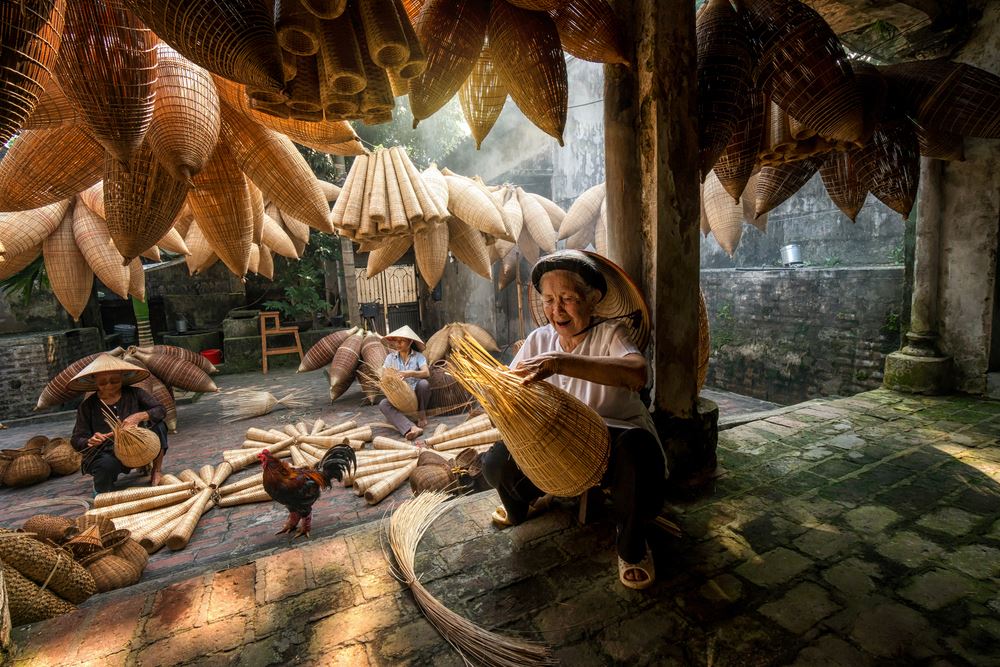

Vietnamese craft villages near Hanoi turn a single traditional skill, pottery, silk weaving or conical hat making, into an entire village's livelihood, usually sitting just 10 to 35 km outside the city and reachable from central Hanoi in well under two hours each way. This guide covers the four most rewarding stops, what each one costs, how to get there, and how to see two of them in a single day without rushing either one.
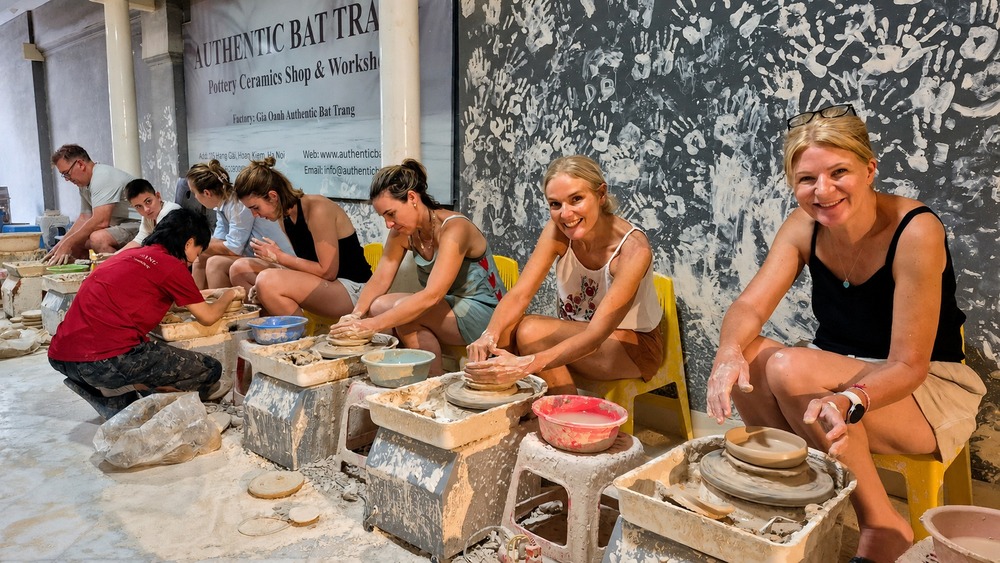
- Bat Trang pottery village sits 13 km from Hanoi's Old Quarter, with a 60 to 90 minute pottery wheel class running 100,000 to 200,000 VND (4 to 8 USD).
- Van Phuc silk village is the closest at about 10 km, and Chuong conical hat village the farthest of the four at roughly 30 km.
- Bus 47 to Bat Trang costs just 8,000 VND (0.30 USD); a Grab each way runs 150,000 to 250,000 VND (6 to 10 USD).
Vietnamese craft villages: what counts, and who this guide is for
A craft village (lang nghe) is a village where most households have practiced the same traditional craft for generations, often centuries, rather than a single workshop set up for tourists; the village itself, its houses and its market, is part of what you come to see.
These craft villages near Hanoi suit travelers who want to watch Vietnamese traditional crafts being made rather than just buy the finished product, and who have a half day or more free on either side of a Hanoi stay. Travelers short on time can still fit in one village as a half-day trip rather than skipping the idea altogether.

Bat Trang pottery village: what to do and what it costs
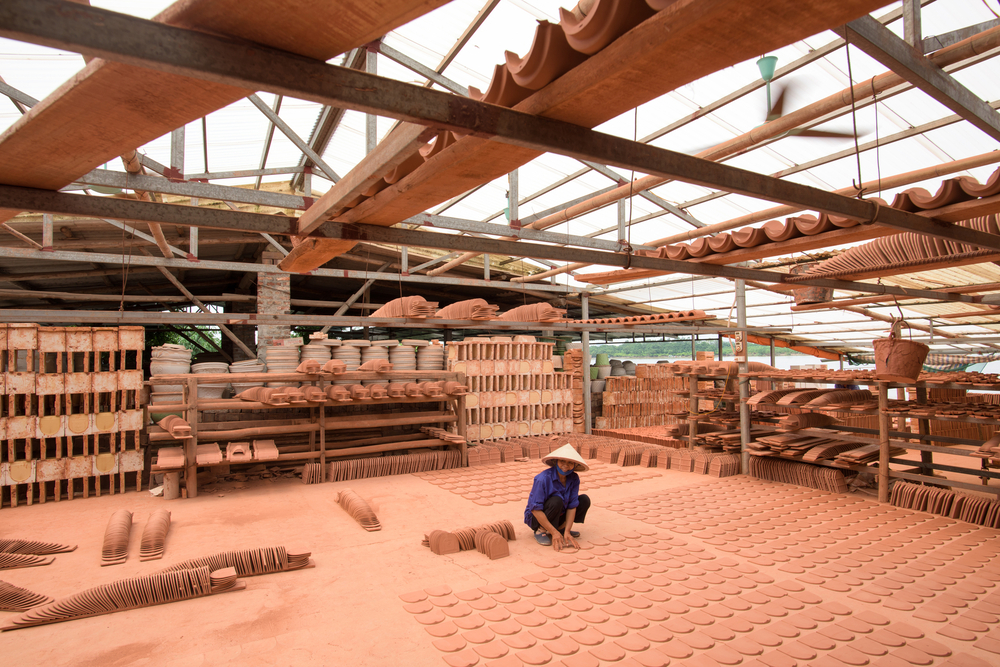
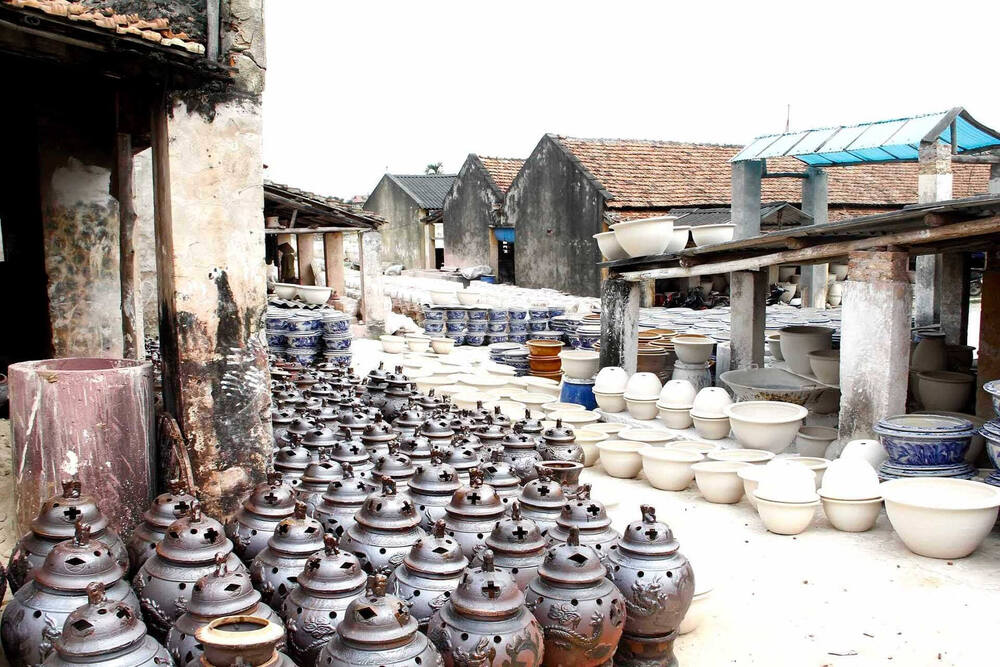
Bat Trang pottery village has produced ceramics for over 700 years, with potters said to have settled here in the 14th century during the Tran Dynasty after flooding pushed them out of their earlier home, and the kilns have run more or less continuously since.
| Item | Price | Notes |
|---|---|---|
| Bus 47 from Long Bien station | 8,000 VND (0.30 USD) | About 45 minutes, get off at the marked Bat Trang stop |
| Grab, each way | 150,000 to 250,000 VND (6 to 10 USD) | 30 to 45 minutes depending on traffic |
| Pottery wheel class | 100,000 to 200,000 VND (4 to 8 USD) | 60 to 90 minutes, materials and firing included |
| Ceramic museum entry | 20,000 VND (0.80 USD) | Village itself has no entrance fee |
Sources: vietnamtourism.com Bat Trang guide, checked November 2026.
Weekday mornings are the best window: workshops are fully staffed and kilns are active, while weekends bring tour buses from Hanoi that crowd the main shopping lanes near the entrance. The craft itself passes down through the same families generation after generation, which is as much a part of everyday Vietnamese culture here as the pottery on the shelves.
Van Phuc silk village: Hanoi's oldest weaving tradition
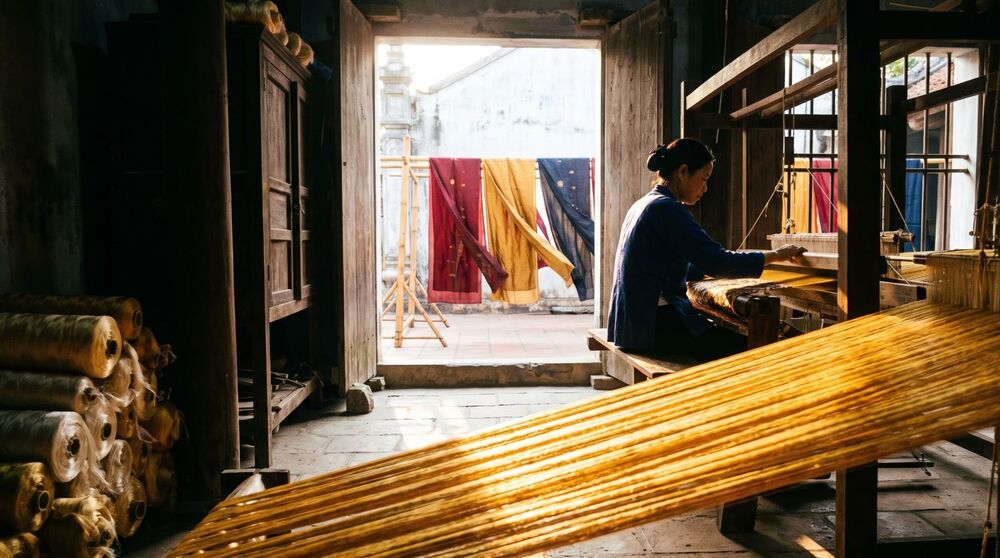
Van Phuc silk village sits only about 10 km from central Hanoi, the closest of the four villages here, and is often called the oldest silk-weaving village in Vietnam, with looms still running inside family homes along its main lanes.
Visitors can watch the weaving process up close in several open workshops before browsing the shops along the central street for scarves, ties and lengths of raw silk, with prices that run noticeably lower than the same items sold in Hanoi's Old Quarter tourist shops. Our Hanoi-based team still sends first-time visitors to the workshops furthest from the main gate, since that is usually where the actual weavers work rather than just the retail staff. A few general customs for visitors apply here too: ask before photographing someone mid-weave, and expect less aggressive bargaining than in central Hanoi's tourist shops.
Chuong conical hat village and Quang Phu Cau: hats and incense
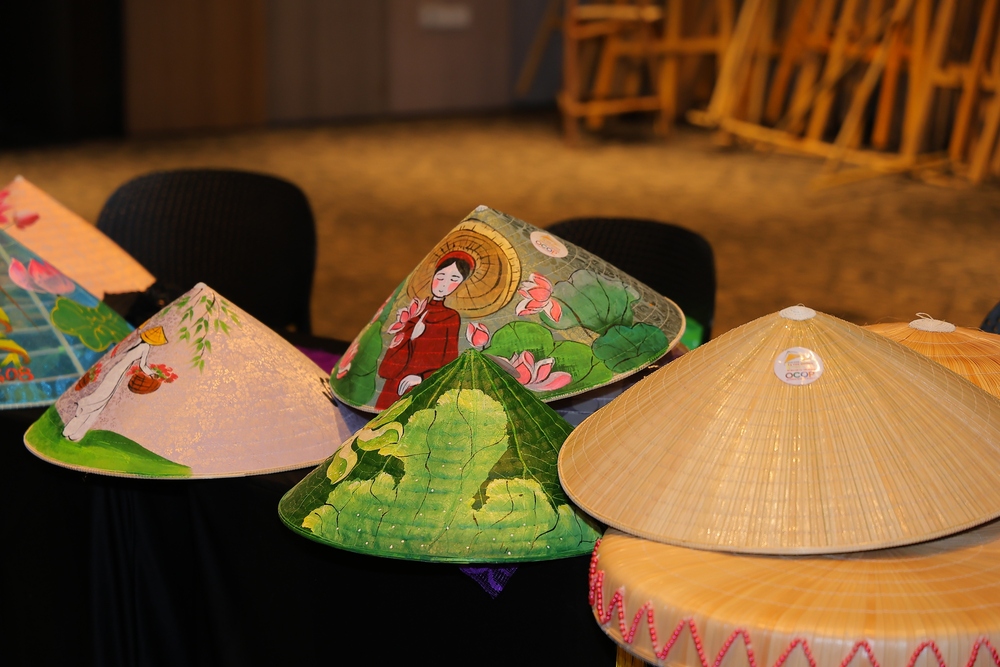
Chuong conical hat village, about 30 km south of Hanoi, is worth timing around its village market, held only on the 4th, 10th, 14th, 20th, 24th and 30th day of the lunar month in the garden of Chuong Pagoda, where finished non la hats sell for 30,000 to 150,000 VND (1.20 to 6 USD) depending on decoration.
Quang Phu Cau incense village, roughly 35 km out, shows the full process from raw bamboo to the finished stick, and is best known for the fields of incense sticks fanned out to dry in the sun, a strong visual draw even for visitors who have no interest in buying any. The two villages sit close enough together that a guided half-day trip often covers both in one outing. Travelers heading further north can find a different kind of craft entirely in the highland weaving villages around Mai Chau, where ethnic minority communities produce brocade textiles rather than the Red River Delta's pottery and silk.
How many villages can you fit into one day
Bat Trang and Van Phuc pair well in a single day, since both sit within 15 km of central Hanoi and a pottery class plus a browse through the silk shops takes about half a day each, leaving time to be back in the city by early evening.
Chuong and Quang Phu Cau sit further out and closer to each other than to the first two, so they work better as their own half-day trip, ideally timed around a Chuong market day rather than visited on a random morning when the pagoda garden is empty. Trying to combine all four villages in one day is possible with a private car and driver, but it turns into a long day of driving rather than time actually spent in any one village. Travelers with a spare day on a longer Hanoi stop sometimes add the 300-year-old houses of Duong Lam's old village as a fifth stop, since it sits roughly on the way out toward Chuong.
DIY by bus versus a guided tour
Bat Trang and Van Phuc are the two easiest craft villages near Hanoi to visit independently, reachable by public bus or Grab without a guide, since both have a clear main street and enough English signage at the main workshops to get by.
Chuong and Quang Phu Cau are harder to do alone: there is no direct public bus route commonly used by visitors, and a private car with a driver who can wait on site works better than a taxi for the return trip. A guided half-day or full-day village tour costs more than the DIY bus and Grab combination but removes the planning, and is the more practical option for travelers short on time or uncomfortable navigating on their own. Pairing a village visit with a hands-on cooking class back in Hanoi, or with other things to do in Hanoi, is a common way to turn one craft experience into a full day.
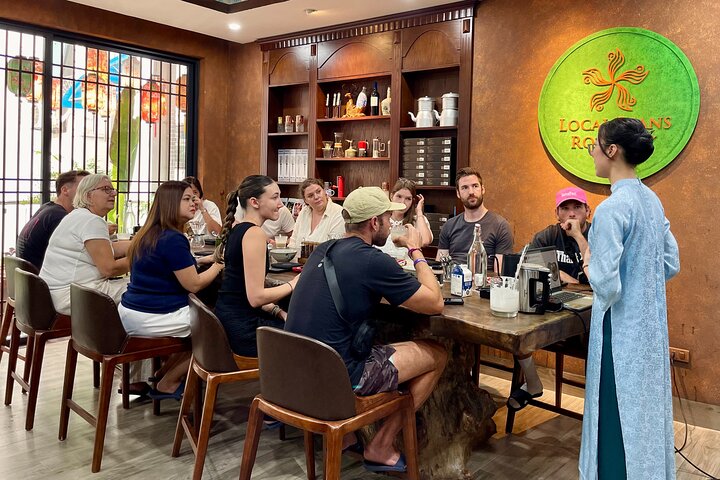
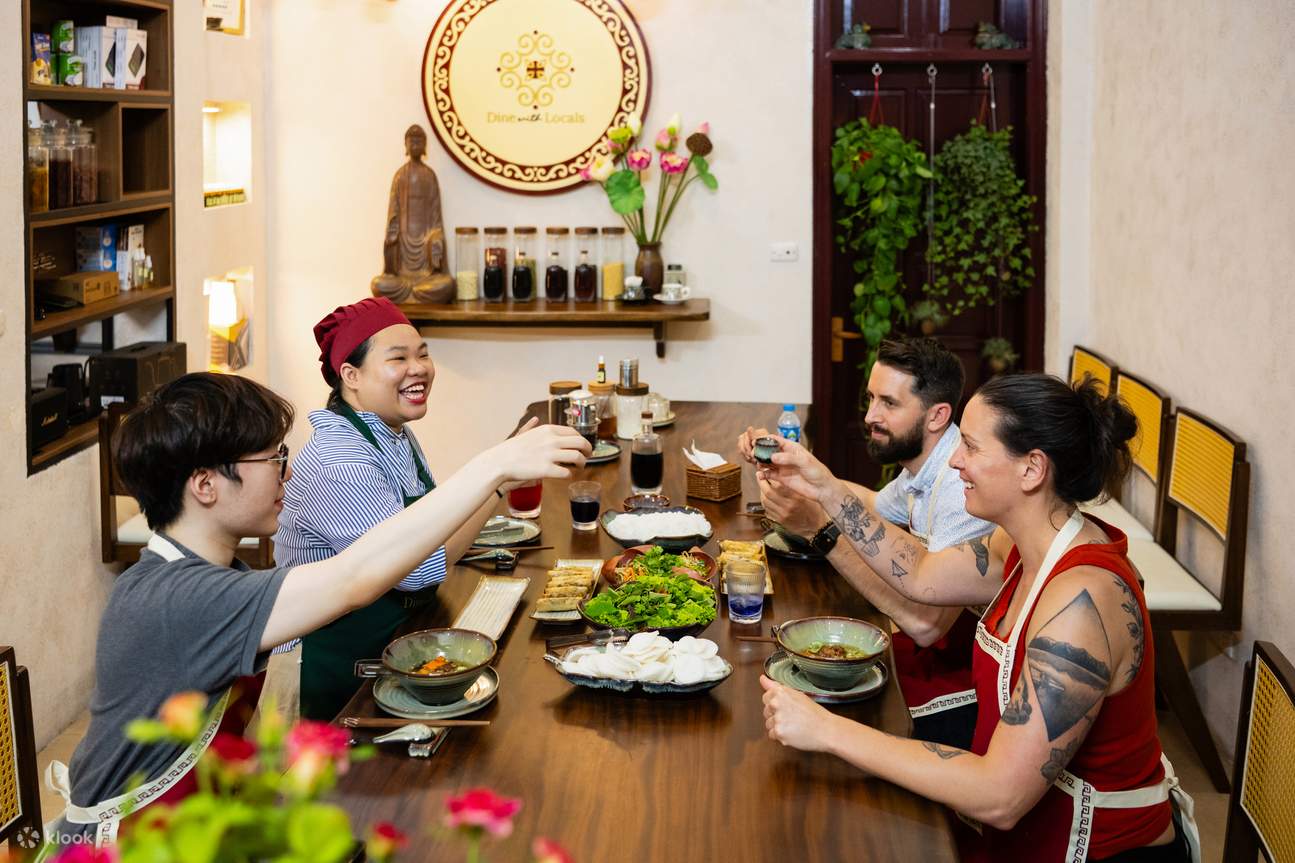
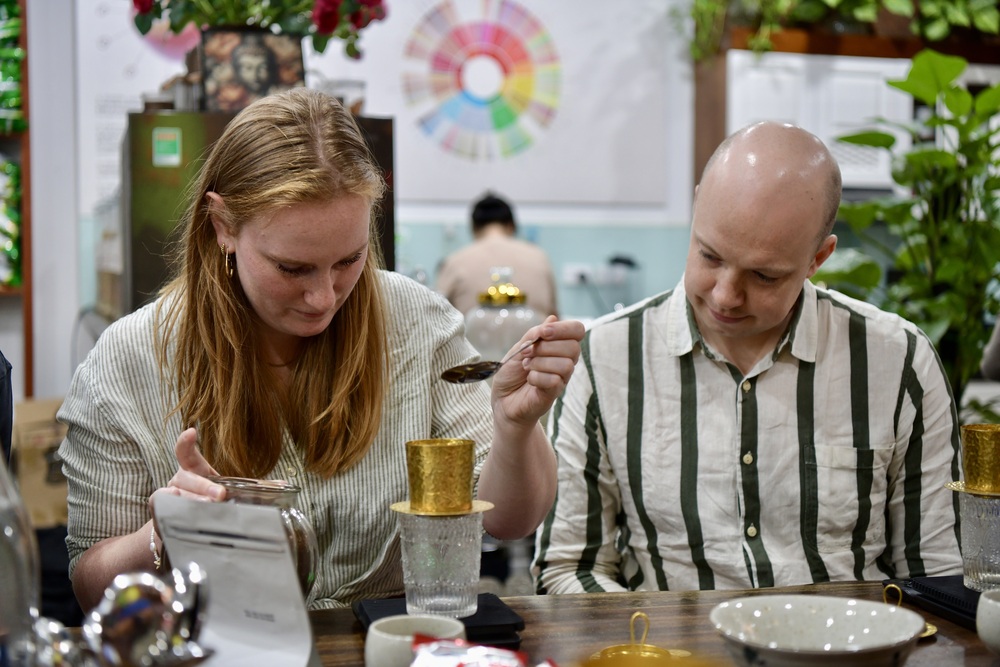
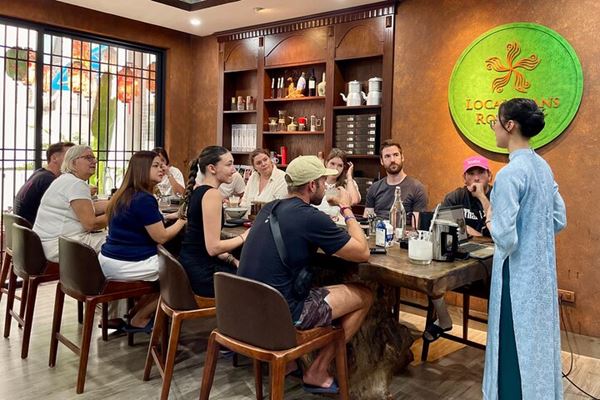
Travelers who like the idea of pairing can start or end the day with a hands-on class in the city itself, from a coffee brewing session to a full cooking class at a local market.


Common mistakes visiting craft villages
Most of what disappoints visitors here comes down to timing and where they shop rather than the villages themselves, and the same handful of avoidable mistakes shows up again and again among first-time visitors to this part of the Red River Delta.
- Buying only from the shops right at the entrance, where prices run higher than the workshops a few streets further in.
- Visiting Chuong on a day that is not one of its six market dates, and finding the pagoda garden empty.
- Showing up on a weekend expecting a quiet visit, when tour buses crowd Bat Trang's main lanes.
- Skipping the hands-on pottery class to save money, then regretting it once back in Hanoi.
- Trying to fit all four villages into one day instead of pairing the two closest pairs separately.
FAQ
How to get to Bat Trang from Hanoi?
Bus 47 from Long Bien station costs 8,000 VND and takes about 45 minutes, or a Grab runs 150,000 to 250,000 VND each way and takes 30 to 45 minutes depending on traffic.
Can you actually make pottery yourself at Bat Trang?
Yes, pottery wheel classes run 60 to 90 minutes for 100,000 to 200,000 VND, with materials, instruction and firing all included, and no prior experience needed.
Is Bat Trang too touristy to be worth visiting?
It draws tour buses on weekends, but a weekday morning visit, or a stop at one of the workshops further from the main gate, still feels close to an actual working village rather than a staged attraction.
Is one day enough to see a craft village?
Yes, a half day covers Bat Trang or Van Phuc comfortably on its own, and the two pair well together if you want both in a single day trip from Hanoi.
Do craft villages charge an entrance fee?
Most do not charge to simply walk through, though a specific workshop, class, or small museum, such as the one at Bat Trang, may have its own separate fee.
Our hands-on cultural classes in Hanoi let you learn a skill rather than just watch one, a good complement to a craft village day trip.










Comments